

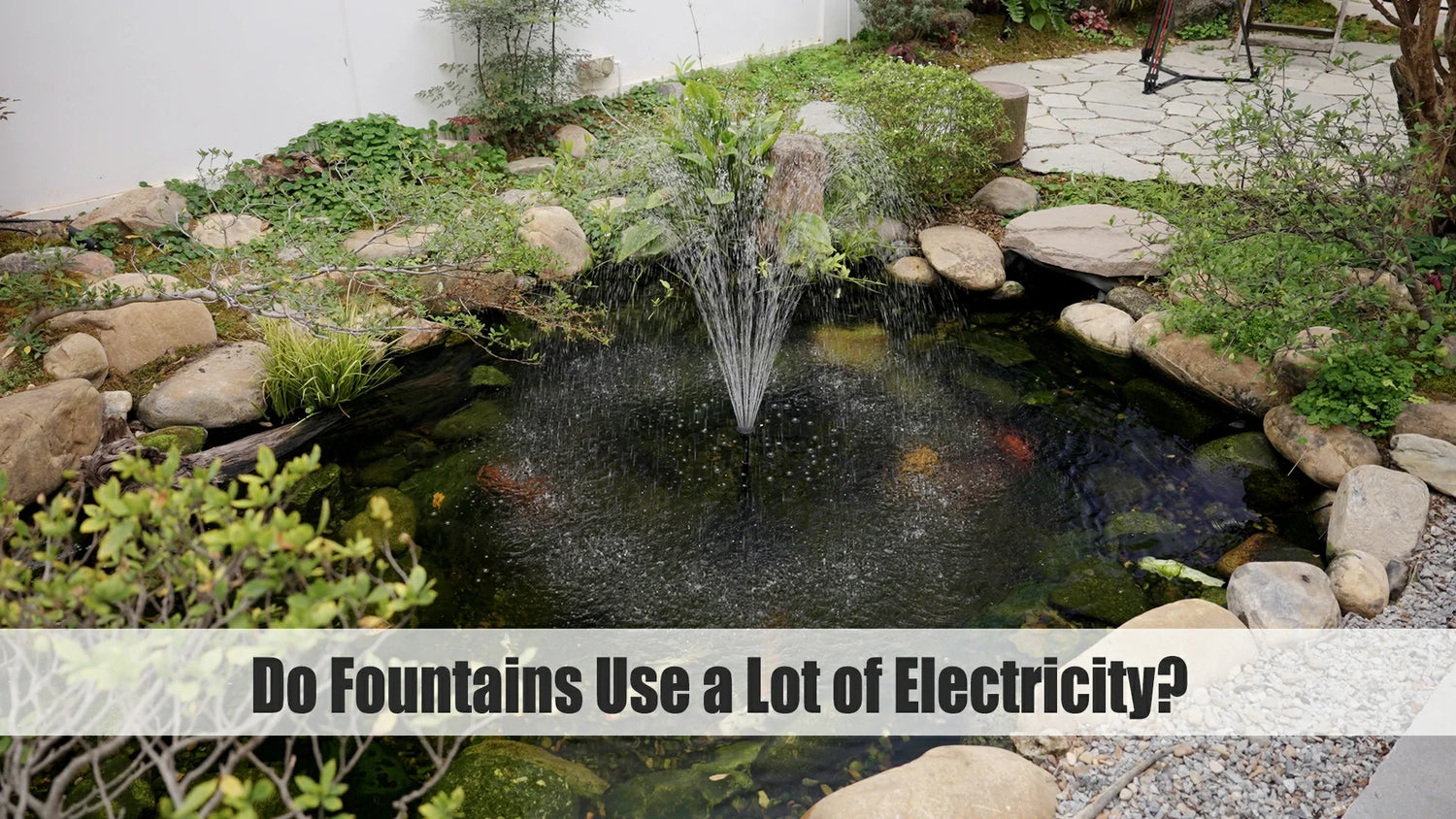
There is just something magical about a bubbling fountain-the gentle sound of water in movement carries life and calm into any outdoor setting. But beautiful as it looks, there is always that one practical question before anyone plugs it in: Do water fountains consume a lot of electricity?
The answer depends on the pump you're using, how long it runs, and whether it's powered by the grid or the sun. This article will explain exactly how much energy a typical fountain really uses, what affects those numbers, and why more homeowners are switching to solar-powered outdoor fountains like those from Poposoap to cut costs while keeping the charm.

How Electricity is Utilized in Fountains
Inside every fountain, there is a pump that drives the water movement, which then creates the soothing sound of water in flow. Most fountains rely on electric pumps, supplied by your home’s electricity. A given pump draws power-a measure of watts-to pump the water through the tubing and up to the spout or spray head.
The amount of energy used depends largely on:
- Pump size and wattage
- How long it runs each day
- Your local electricity rate
Small tabletop fountains can use as little as 5–10 watts, while large garden fountains can range from 100–500 watts or more. The good news is that even the higher-end models usually cost less to run than people think, especially if they are energy-efficient or solar-powered.
How to Calculate the Electricity Cost of a Fountain
You could easily estimate, with this formula, the cost of running your fountain:
(Pump wattage ÷ 1,000) × hours per day × electricity rate = daily cost
For example, based on the 2026 average U.S. residential rate of $0.1802/kWh. If your fountain pump is 100 watts and you run it for 8 hours a day at an electricity rate of $0.1802 per kWh:
(100 ÷ 1,000) × 8 × 0.1802 = $0.15 per day
That's about $4.50 per month, which isn't bad for the soothing sound of running water.
| Fountain Type | Wattage | Hours/Day | Est. Monthly Cost |
|---|---|---|---|
| Bird bath/Indoor | 5W | 24 | $0.65 |
| Garden Pond | 50W | 24 | $6.49 |
| Large Aerator | 150W | 24 | $19.46 |
| Commercial Display | 1,000W | 12 | $64.87 |
Smaller pumps often cost only a few cents a day to run, but if you want to eliminate that cost altogether, that's where solar powered outdoor fountains come in.
Factors that Affect Fountain Electricity Usage
Several factors can determine how much power your fountain consumes:
- Pump Efficiency: Brushless DC motors, such as those used in Poposoap pumps, consume up to 40% less energy compared to their predecessors.
- Flow rate times lift height: The higher you push the water, the more power it takes. Proper pump size to avoid waste:
- Operating hours: Running 24/7 increases usage dramatically; using a timer helps manage consumption.
- Water-resistance and tubing length: longer tubing increases pump workload, as does clogged filters.
- Voltage fluctuations: Inconsistent current reduces efficiency or lessens the pump's lifespan.
Average Fountain Pump Wattage by Type
While numbers vary by model and brand, here's a general idea of fountain pump wattage categories:
- Tabletop fountains: 5–10W
- Small patio or wall fountains: 10–25W
- Medium garden fountains: 40–120W
- Large waterfalls or pond fountains: 150–500W
Poposoap solar pumps, for example, range from 6W to 10W and offer great performance in flow with no consumption of grid electricity, making them ideal for a small to medium garden fountain.
How to Reduce the Electricity Use of Your Fountain
Even if you have a plug-in fountain, there are some easy ways to reduce energy use:
- Set up a timer. Operate your fountain only during daylight hours or when you're outside to enjoy it.
- Keep the pump clean. Debris in filters or tubing makes the pump work harder, drawing more power.
- Optimize water flow. Even a one-inch reduction in spray height can save energy.
- Choose powerful motors: Normally brushless pumps are more silent and long-lasting, such as in the Poposoap series.
- Go solar. Solar fountains run on free, renewable energy; there is zero operating cost once it's installed.
Solar vs Electric Fountains — Which Is More Efficient?

Let's compare:
| Feature | Solar Fountains (2026) | Electric Fountains (2026) |
|---|---|---|
| Energy Efficiency | Higher: Uses 100% renewable energy. | Lower: Relies on the power grid. |
| Operational Efficiency | Lower: Performance is weather-dependent; often stops at night without batteries. | Higher: Provides 100% uptime with steady flow and pressure regardless of weather. |
| Installation Efficiency | Higher: No wiring or trenching needed; "plug-and-play" setup anywhere with sunlight. | Lower: Requires proximity to outlets; may need professional wiring or burying of lines. |
| Cost Efficiency | Better Long-Term: $0 ongoing utility costs. | Better Short-Term: Lower upfront equipment cost, though monthly utility bills add up over time. |
- Electric Fountains: Reliably powerful and consistent, but require continuous access to power and have ongoing costs.
- Solar Fountains: These solar-powered fountains run entirely on sunlight, thus costing nothing to operate. Many Poposoap models also include the convenience of battery backup and may work in partial shade or even after sunsets.
As far as efficiency goes, no other variety stands in competition with solar fountains for small or medium applications. They automatically operate in the sun and extend their use through cloudy periods thanks to battery storage.
If you consider sustainability and low maintenance as important, then solar power isn't just efficient but also smarter.
When it's Time to Go Solar
A solar-powered outdoor fountain is a great upgrade for your garden if it gets direct sunlight for at least a few hours per day. It is especially worthwhile if:
- Your current electric pump runs several hours a day.
- Your outdoor area lacks appropriate power outlets.
- You would like to decrease your environmental footprint.
- You prefer a plug-and-play system with minimal wiring.
Solar kits from Poposoap are preassembled, equipped with durable panels, long cables that allow for flexible positioning, and efficient filtration that keeps the water fresh and clean without a single cent in running costs.
Additional Energy-Saving Tips
- Position wisely: Place your fountain where it gets sunlight but not excessive wind, which increases evaporation.
- Use LED lighting: If night illumination must be provided then select energy-efficient solar LEDs.
- Winter cover: Give your pump protection from freezing temperatures to make its life longer.
- Clean it regularly: Deposited dirt reduces flow efficiency.
- Consider hybrid power: The Poposoap electric fountains use solar + battery + USB charging for almost any reliable, year-round operation.
Conclusion — A Beautiful Fountain Doesn’t Have to Cost Much
Running a fountain doesn't have to mean running up your energy bill. With the right pump, smart maintenance, and-ideally-solar power, you can enjoy the sound of flowing water every day for little to no cost.
From Poposoap, these solar-powered outdoor fountains are a perfect combination of performance, style, and sustainability. With modern gardens in mind, they let you enjoy continuous flow powered by nature, in silence and efficiency, using no single watt from the grid.
Related reading: Simplifying Pond Equipment to Save on Electricity Bills
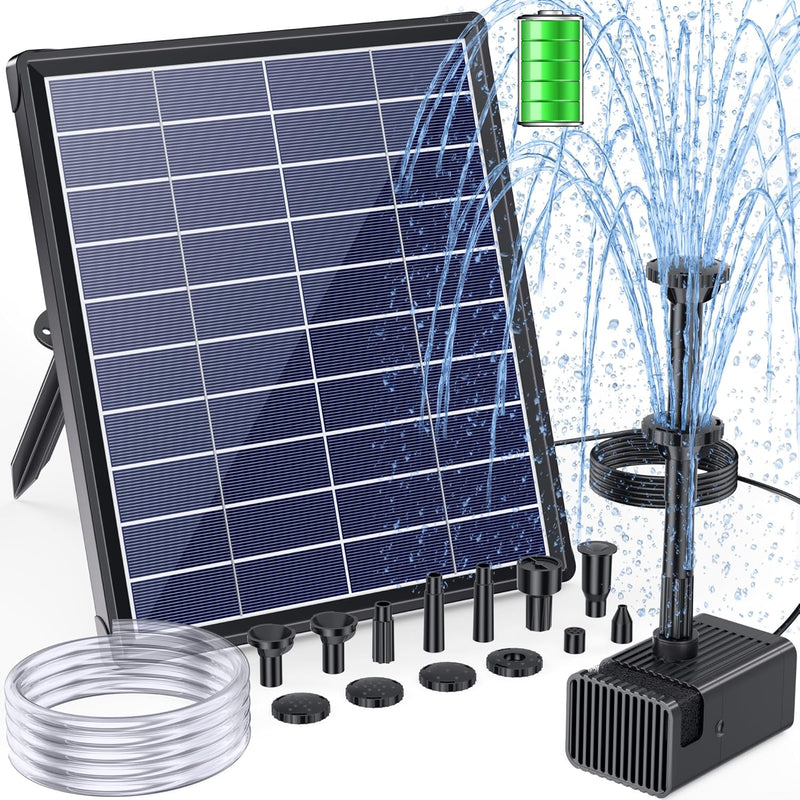
6.5W 80GPH Solar Birdbath Fountain Pump with 2400mAh Battery
$29.99
Enjoy continuous water flow with this 6.5W solar bird bath fountain. Built-in 2400mAh battery ensures smooth operation even on cloudy days.
FAQs — Fountain Electricity and Solar Alternatives
Not really. Most small outdoor fountains use less power than one standard light bulb — approximately 5–25 watts.
Yes, but you are going to pay more in electricity. Solar fountains can operate continuously for free whenever there is sunlight.
Between 10 W and 200 W, depending on the size and flow height.
Sure — especially models with battery storage, like those by Poposoap.
No, they require the same cleaning schedule but no wiring or electrical safety checks.

Leave a comment
All comments are moderated before being published.
This site is protected by hCaptcha and the hCaptcha Privacy Policy and Terms of Service apply.