

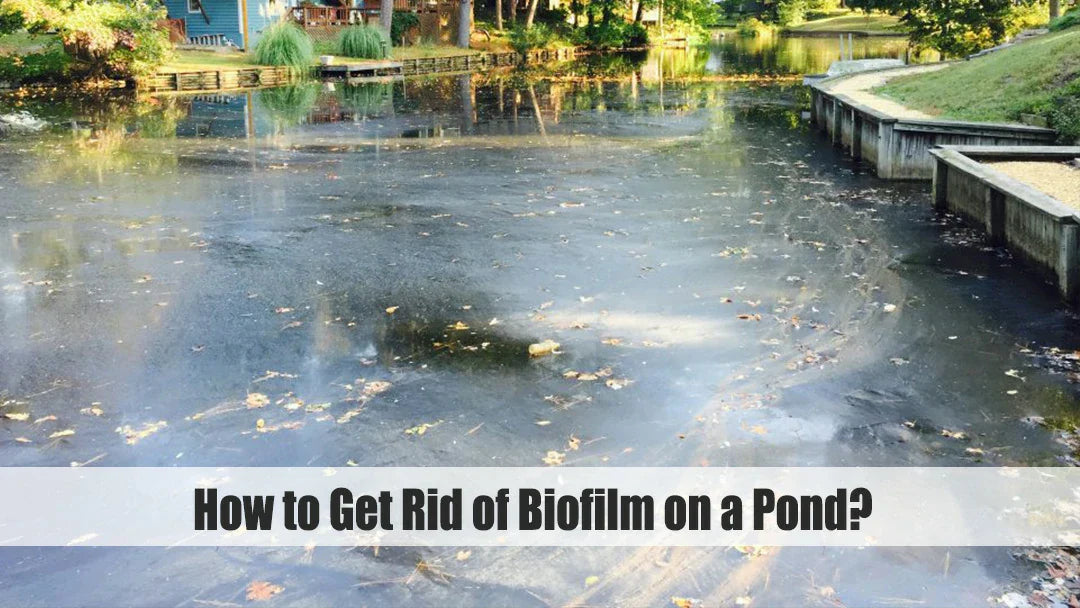
Most aquatic hobbyists notice it before they know its name. There will come a day when the pond surface has a haze or shine to it. If you try to stir it using your net or hands, it will not clump together like algae. It will not behave like algae, but it clearly isn't supposed to be there.
This is usually biofilm in pond water. It is commonly confused with algae, particularly if it forms a thin layer on the water surface. Biofilm by itself is not normally a concern — it is known to assist in the decomposition process and helps in the growth of beneficial bacteria.
In this article, you can learn what biofilm looks like, how it forms, the differences between biofilm and algae, and, most importantly, how to remove excess biofilm from your pond without harming the mechanisms that sustain your pond's health.
Understanding Biofilm in Pond Water
What Does Biofilm Look Like?
One question people ask is: how does biofilm differ from algae? This is a difference easier to feel than to observe.

Biofilm commonly presents as:
- A thin surface sheen that is clear or grayish in color
- Slippery layers on pond liners, stones, or plant pots
- Soft coatings that smear rather than easily wipe away
Unlike algae, biofilm is colorless. It can appear oily on water and is most visible in the morning when the surface of the pond is calm.
How Biofilm Forms in Water
In water, biofilm forms when bacteria adhere to surfaces that come into contact with water and start to build a protective covering — a natural survival technique. This allows several microorganisms to thrive together and convert organic compounds.
In ponds, biofilm grows on nearly everything:
- Liners and rocks
- Filter media
- Plant roots
- Any surface that remains underwater
This is a natural process that occurs rapidly in young ponds and continues in mature ponds as well.
Biofilm vs. Algae: Different Roles

Algae are plant-like organisms that require light and nutrients for survival. Biofilm is a colony of bacteria and microorganisms that consume organic debris.
Each has a distinct function:
- Algae absorb nutrients but can obstruct light and oxygen due to excessive growth.
- Biofilm assists with waste degradation and bio-filtration processes.
Scientific literature on micro-biofilms reveals that regulated micro-biofilm development can even increase nutrient cycling in ponds: WorldFish Center — Promotion of Substrate-Based Microbial Biofilm in Ponds.
When Biofilm Becomes a Problem
Problems arise if biofilm growth exceeds the capacity of the pond to control it. This situation may arise when:
- Water current is weak
- Organic material accumulates
- Filtration is undersized or clogged
At this point, the biofilm becomes obstructive rather than beneficial and could impede oxygen uptake from the surface.
How to Remove Biofilm from a Pond

1. Improve Water Movement First
Still water allows biofilm to grow unchecked. Enhanced circulation is usually the quickest fix.
A waterfall or fountain will break the surface tension and help prevent film from forming. Filtration systems that incorporate circulation — such as the 40W 660GPH AC Pond Filter Fountain with Light from Poposoap — can help distribute biofilm while preserving beneficial bacteria.
2. Decrease Organic Sources
Biofilm grows well in the presence of organic matter. Excess fish food, dead leaves, and sludge are common sources. Useful habits include:
- Skimming the surface frequently
- Feeding fish lightly
- Removing dead vegetation promptly
These simple steps have a far greater effect than chemical treatments.
3. Gentle Manual Cleaning
If biofilm is present on rocks or the liner, simple hand cleaning is possible using a pond cleaning brush or sponge.
Do not scrub too aggressively — it is important that some biofilm be left behind.
4. Resist Chemical Solutions
Chemical treatments might help reduce surface film; however, they can also destroy beneficial bacteria. As a result, both biofilm and algae could come back stronger.
Improving filtration and circulation is a safer and more sustainable approach.
Tips for Preventing Biofilm from Re-Forming
The key to preventing the regular re-accumulation of biofilm in pond water is consistency. Helpful practices include:
- Maintaining continuous water movement
- Keeping a balanced fish stocking level
- Performing regular filter maintenance
- Controlling seasonal debris
Water plants also help by competing for nutrients and regulating water chemistry.
Rather than reacting whenever a surface film is detected, prioritize maintaining an environment in which the biofilm remains in balance.
Conclusion
Biofilm is a component of a living pond, not a sign of pond failure.
Conversely, if the biofilm develops into an observable film-like layer, it is mostly an indication of either insufficient circulation or excess organic matter. In that case, the solution should not be aggressive cleaning — it should be adjustment.
Biofilm can be controlled without negatively affecting the ecological balance of the pond through water improvement, reduction of organic waste, and natural filtration.
If you are interested in finding more information about plant-based alternatives in pond filtration, the following guide may be useful: Best Plants for Natural Pond Water Filtration

P2326D 40W 660GPH AC Pond Filter Fountain with Light
$89.99
Keep your pond water clear with the P2326D AC pond filter fountain. Includes pump, multi-stage filtration system, and built-in light for night beauty.
Frequently Asked Questions
Is Biofilm Harmful to Fish?
In moderation, no. Too much biofilm on the surface may reduce oxygen or stress fish.
Is Biofilm the Same as Oil on Pond Water?
No. Biofilm may appear oily, but it is not a chemical substance.
Will a Waterfall Completely Prevent Biofilm?
It may not completely eliminate it, but it significantly reduces surface film.

Leave a comment
All comments are moderated before being published.
This site is protected by hCaptcha and the hCaptcha Privacy Policy and Terms of Service apply.