

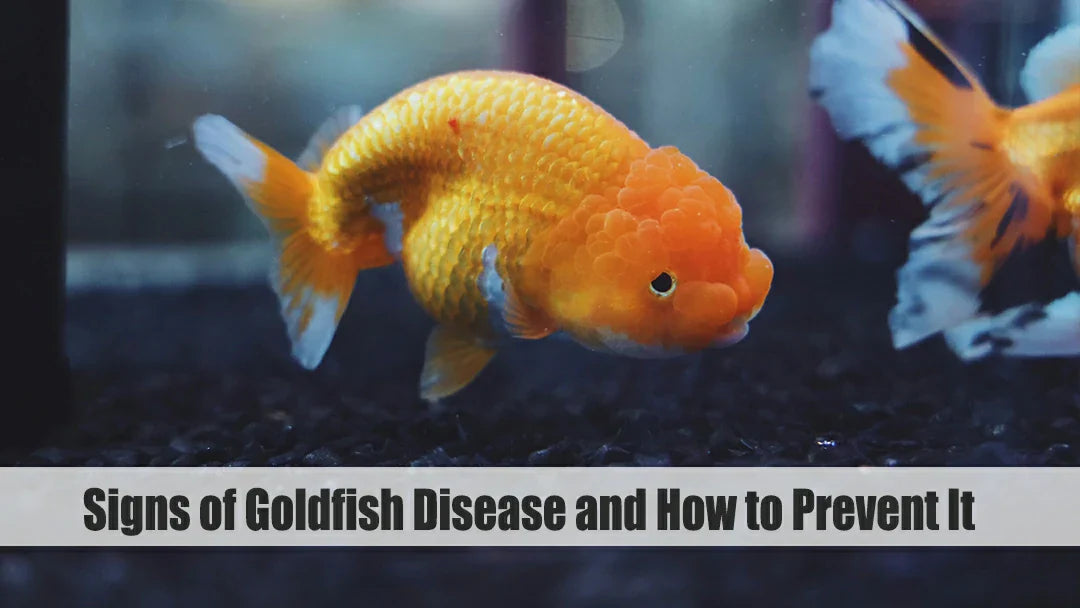
Goldfish do not suddenly become seriously ill. The fact of the matter is that symptoms manifest themselves slowly. A goldfish that swims less frequently, takes longer to respond to food, or lingers in a corner of the pond could be a sick goldfish.
Some symptoms are more obvious than others. Goldfish illness black spots are a good example. These are often something that pond owners worry about when, in fact, they are an indication of health rather than illness. Changes in posture, leaning or hovering near the surface, are often ignored as nothing much.
The truth of the matter is that many fish diseases could be treated if they are discovered earlier. There are also fish diseases that could cure on their own once the surroundings are improved. Observation is often the best treatment for fish. This article will tackle common symptoms of fish diseases, what they usually mean, and how daily maintenance could help prevent fish diseases.
Common Symptoms of Goldfish Disease
The first thing is to always recognize the change. Healthy goldfish display consistent patterns. Whenever there is a change in those patterns, something is not right.
Changes in Fish Behavior
Behavioral changes will occur before any visible damage is seen on the body. Goldfish that were swimming actively will begin to slow down and settle at the bottom. Fish will begin to isolate themselves from other fish and just stay there.

Watch for the following behavioral warning signs:
- Swimming near the top or gasping for air — could be a sign of oxygen stress.
- Staying at the bottom or difficulty remaining upright — could indicate an imbalance in the body or poor water quality.
- Loss of interest in food or spitting out food — a sign that the fish is stressed.
These behaviors do not often appear without warning. They are indicators and not accidental occurrences.
Physical Symptoms and Visible Signs
Physical symptoms will manifest at a later stage. Clamped fins, ragged edges, or too much slime on the body are the first visible signs. White spots on the body can be indicative of parasites, while red veins on the fins can be due to irritation caused by inadequate water conditions.
Dark spots are commonly misinterpreted. Goldfish sick black spots can be caused by the healing process when the fish is exposed to ammonia. This is the reason why a comparison with accurate images of fish diseases is important prior to assuming infection.
Cloudy eyes, a distended abdomen, or puffy scales are more serious indicators and should not be overlooked.

Most Common Causes of Goldfish Disease
Goldfish do not usually come down with an illness because of a single reason. Most of their diseases occur because of stress, which reduces their resistance.
- Poor water quality — high levels of ammonia or nitrite are harmful to gills and skin, providing an entry point for disease-causing organisms. Temperature fluctuations, especially in outdoor ponds, are also stressful to the fish.
- Parasites — can come in with new fish that are not under quarantine.
- Bacterial infections — will follow damage or stress rather than occur out of the blue.
- Fungal growth — will occur in weakened areas.
This is why so many fish ailments tend to recur if conditions remain the same. Simply treating symptoms rather than conditions tends to be ineffective.

How to Prevent Goldfish Disease
Prevention starts with stable water conditions. Regular filtration keeps waste materials from breaking down. A system such as the 40W 660GPH AC Pond Filter Fountain With Light keeps debris in motion rather than allowing it to settle.
The amount of oxygen also needs to be considered. Insufficient aeration makes fish weaker and upsets beneficial bacteria. Using a Pond Aerator — 15W Solar Oxygen Pump for Outdoor Fish Ponds can solve this problem.
Key prevention steps include:
- Maintain stable water quality — monitor ammonia, nitrite, and temperature regularly.
- Ensure adequate aeration — sufficient oxygen supports both fish health and beneficial bacteria.
- Control feeding — overfeeding leads to waste that quickly overloads filters. Feeding less puts less strain on water quality.
- Quarantine new fish — this will prevent many fish diseases from being introduced to the pond.
- Monitor consistently — regular observation is the best way to catch problems early.
What to Do If You Think Your Goldfish Has a Disease
When something seems wrong, slow down. Immediate medication is not always the answer.

- Test water quality first. Many symptoms can be alleviated by adjusting ammonia, nitrite, or oxygen levels.
- Isolate affected fish if possible, to minimize stress and prevent the disease from spreading.
- Do not mix treatments. It is possible to do more harm than good by introducing a variety of chemicals. Stabilize the environment, and when the symptoms indicate a particular problem, treat accordingly.
Sometimes, patience can prevent further loss.
Conclusion
Goldfish disease does not commonly appear without preceding symptoms. Behavior and physical changes are the first symptoms to appear.
The vast majority of problems can be traced back to stress rather than infection. With consistent water quality and ample oxygen, many diseases will never occur.
For further information on periodic losses, see the following article: The Reasons Your Goldfish Dies.

P2326D 40W 660GPH AC Pond Filter Fountain with Light
$89.99
Keep your pond water clear with the P2326D AC pond filter fountain. Includes pump, multi-stage filtration system, and built-in light for night beauty.
FAQs
Are Black Spots on Goldfish Always an Indication of Illness?
No. They are usually seen when there is healing from water irritation.
Is Polluted Water a Bigger Threat Than Parasites?
Usually, yes. It suppresses the immune system.

Leave a comment
All comments are moderated before being published.
This site is protected by hCaptcha and the hCaptcha Privacy Policy and Terms of Service apply.