

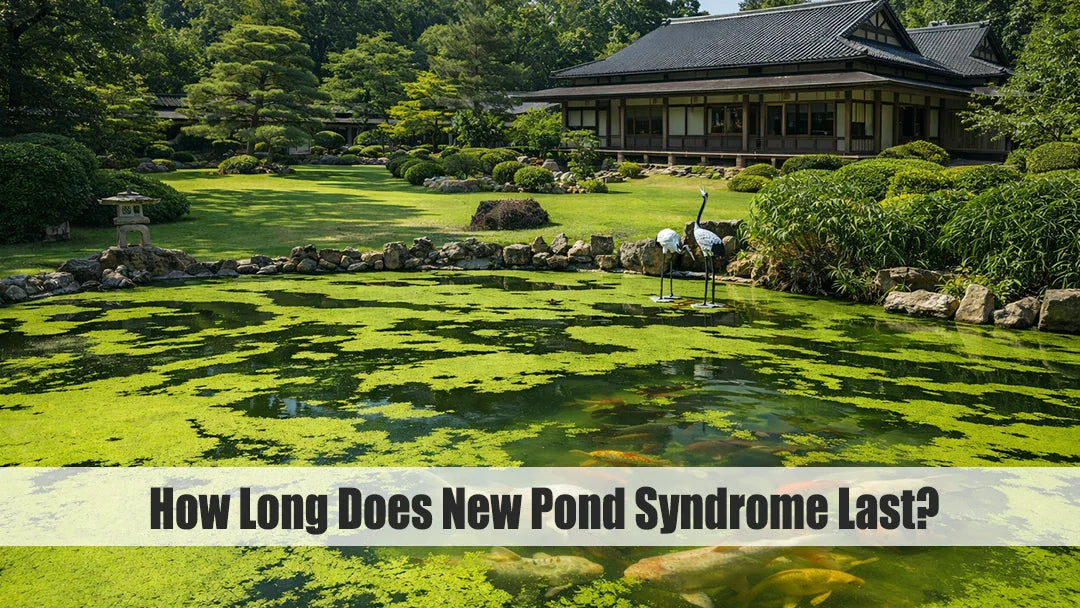
I thought that now, since the pond was finished, all the hardships were over. The liner was installed, the pump worked, and the water looked clean. Everything seemed right for a couple of days.
Then the water became cloudy. A green color emerged. The fish acted in an unusual way too. It is usually around this point that people hear of the term "new pond syndrome" for the first time, especially if they are already searching for solutions online.
So what is new pond syndrome, anyway? It's not a flaw, and it is definitely not a mistake. It is the period in which a new pond is biologically immature. Everything looks complete, but the ecosystem has not been established yet. The most common question asked at this stage is: how long will it last?
In most ponds, the answer is one to two months. In koi ponds, three months should be the norm. In this article, the reasons for this time period, what normally happens each week, and how to assist the pond in cycling — instead of "fixing" it every week — will all be explored.
What New Pond Syndrome Actually Means in Real Life
New pond syndrome does not often appear all at once. It comes in stages.
In the first week, the water may look fine. That's the trick. There has not been enough time for waste to accumulate. The fish look peaceful. The water circulation systems appear to be working properly.
By the second or third week, changes begin. The water turns milky or slightly green. Algae growth on surfaces accelerates beyond expectations. The fish become less aggressive about eating. This is when worries begin.
The main reason for all of this is straightforward: the bacteria responsible for breaking down ammonia into less hazardous compounds are still in the process of fully developing.
This is most noticeable in new pond syndrome koi environments. Koi tend to produce more waste than goldfish and are less tolerant of unbalanced water conditions. They don't create the problem — they just point it out.
The key is to recognize that this stage is situational, not structural. The pond isn't broken. It's unfinished.
How Long Does New Pond Syndrome Last, Week by Week?

The length of time varies, but it is remarkably consistent.
- Weeks 1–2: The pond is biologically empty. Water clarity can still appear decent. Ammonia begins to appear, but most people won't even detect it.
- Weeks 3–4: This is often the most frustrating period. There may be algae blooms. The water may appear worse before it appears better. Fish behavior may vary slightly. This represents the peak period for new pond syndrome.
- Weeks 5–8: Beneficial bacteria numbers increase. Water clarity improves. Algae growth rates slow down. The pond begins to heal by itself.
- Up to 3 months: In cases of large ponds or ponds with many koi, the stabilization process may take longer. At this stage, the system becomes more resilient than fragile.
Several factors impact the duration of this phase:
- Quantity of fish added and at what pace
- Feeding habits
- Filtration capacity
- Water movement and oxygen levels
- Temperature
The most important indicator that the pond is coming into balance is consistency. Water quality factors cease to vary. Fish behavior returns to normal. Algae growth stops exploding.
New Pond Syndrome Treatment: What Helps and What Backfires

The impulse to "do something" is strong during this phase. Unfortunately, the typical reactions tend to slow the process down.
Draining the water, scrubbing surfaces, or excessively washing filters will reset bacterial growth. Every reset extends new pond syndrome rather than remedying it.
Effective treatment of new pond syndrome involves support, not correction. Here is what actually helps:
- Feed less. The less that is eaten, the less that is wasted. The less that is wasted, the more easily the bacteria can catch up.
- Keep filtration running continuously. When cleaning the filter, rinse the filter media in pond water — not tap water — to avoid killing the bacteria.
- Maintain good circulation. Products such as a 40W 660GPH AC Pond Filter Fountain with Light by Poposoap offer both movement and filtration, ensuring oxygen is distributed throughout the pond and providing ideal conditions for bacterial growth.
What doesn't work is chasing perfect clarity. New ponds with clean-looking water don't stabilize any better than ponds with murky water. The water stabilizes when the biology has developed.
What If the Pond Doesn't Improve?
After three months, if your pond is still unstable, it may no longer be a case of new pond syndrome.
At this point, the most common culprits of poor water quality are overstocking, improper filtration, poor circulation, or too much organic material. Such issues do not resolve themselves with the passage of time.
This is an important distinction. New pond syndrome is self-resolving. Design or management problems are not.
How to Reduce New Pond Syndrome Next Time

You cannot skip this stage entirely, but you can moderate it.
- Add fish slowly. This allows the population of beneficial bacteria to grow in line with the increase in waste output.
- Use mature filter media from an established pond. This will help ensure the changeover period is much shorter. It is even better if the new filter media remains damp throughout the process.
- Avoid chemical treatments during the first few weeks. Chemicals are known to disturb bacteria that are just beginning to grow.
Conclusion
For most ponds, four to eight weeks is normal. Three months in koi ponds isn't uncommon. This period is temporary and should not cause concern.
New pond syndrome is not an indication that anything is wrong. It means that your pond is coming alive.
After this stage is over, the pond becomes more manageable to maintain — more predictable and forgiving. This is not the hardest part about pond maintenance. It is the waiting.
READ MORE: What You Need to Know About Pond Filtration?

P3203 20W 280GPH Solar Pond Filter Fountain
$119.99
Clean and oxygenate your pond with this 20W solar pond filter pump. Eco-friendly 280GPH flow ideal for small to medium backyard water features.
Frequently Asked Questions
Can New Pond Syndrome Affect Fish Negatively?
It can be stressful, particularly for koi, but it can be managed properly.
Should I Add Bacterial Products?
These might help a little, but what matters more are time and stability.
Will New Pond Syndrome Occur Every Year?
No. It occurs mostly in new or greatly altered ponds.
Can I Reduce New Pond Syndrome to Zero?
No. However, you can minimize it. You cannot eliminate it entirely.


Leave a comment
All comments are moderated before being published.
This site is protected by hCaptcha and the hCaptcha Privacy Policy and Terms of Service apply.