

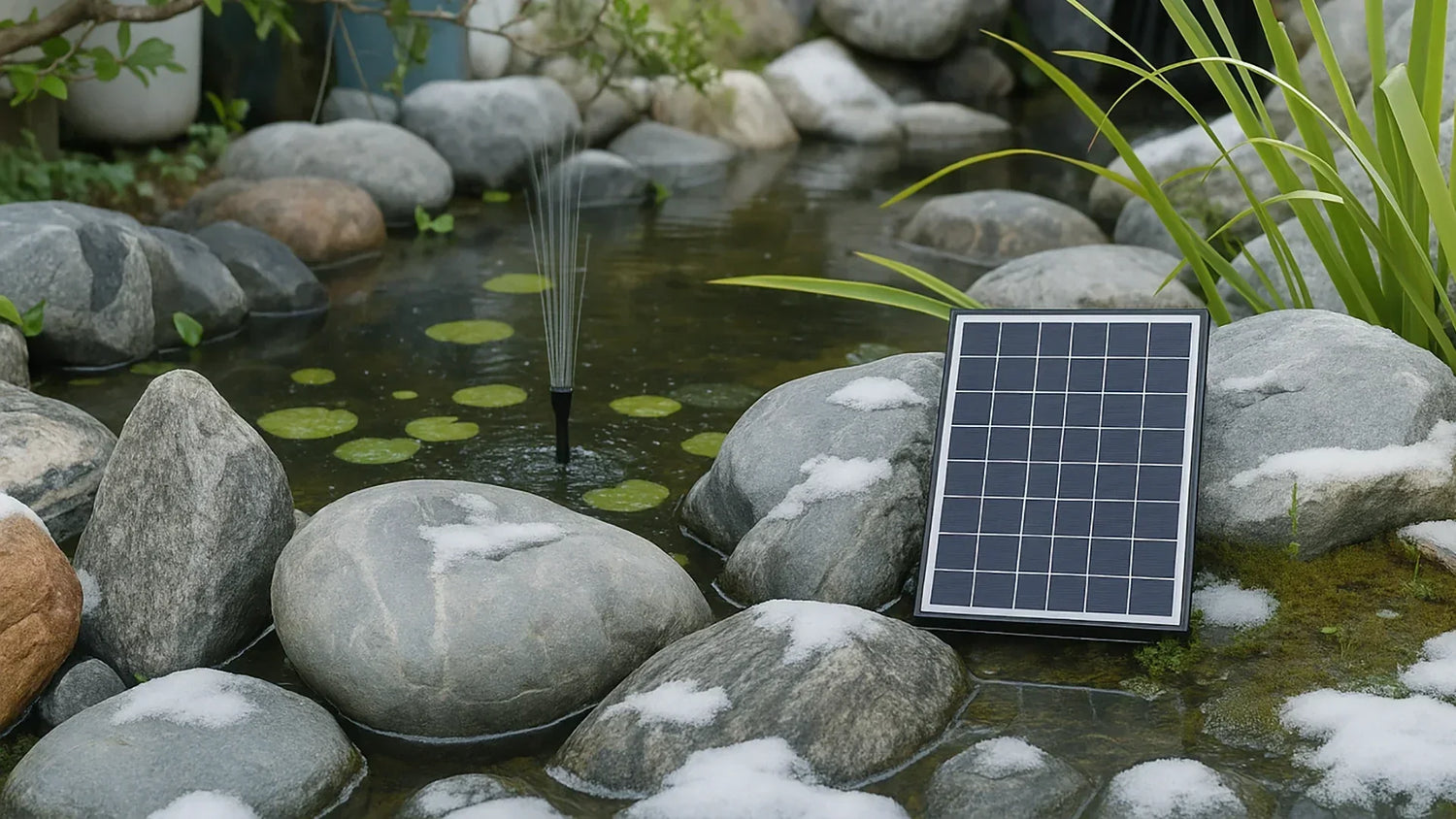
It's nice to dream about the sound of running water in your garden, but you certainly don't want the calming serenade to be silenced because the weather has gotten colder. But when the frost comes and the days are shorter, many pond owners ask themselves the same question: Do solar pond pumps work in winter?
The short answer is yes — solar pond pumps can work in winter, but their performance depends on several factors: sunlight strength, temperature, and how well you prepare your system for the cold. The good news is that with a few adjustments and the right equipment, your pond can stay healthy and active year-round.
Let's move closer to knowing how solar pond pumps work in winter and how you can preserve your system with smart maintenance and Poposoap's winter-resistant solar pump designs.

Understanding How Solar Pond Pumps Work
A solar pond pump captures the energy of the sun to power a miniature motor that circulates water in your pond or filtering system. The solar panel converts sunlight into electricity, which then operates the pump to maintain oxygen levels and avoid water stagnation.
Under perfect conditions — sunlight and open sky — the system works day and night. Others, like Poposoap's solar pond pump and filter kits, also have built-in batteries to store excess power for around-the-clock flow on cloudy days or during sunset.
In winter, however, lower intensity sunlight and shorter days naturally affect how much power the panels will generate.
Do Solar Pond Pumps Work in Winter?
Yes, solar pumps work in winter, but with restrictions. Even during cold seasons, provided there is sunlight, the panels will be able to provide energy to power your pump.
That being said, functionality is a matter of your location's climate:
- Mild winters (tropical climates): Pumps can function normally during the day.
- Cold and sunny days: Lower flow rate, but operational.
- Freezing temperatures: Pumps can be taken out or covered to prevent ice damage.

Top-of-the-range units such as Poposoap solar pond pumps utilize state-of-the-art monocrystalline panels that have their light-absorbing capacity unaffected even during weak winter sunlight, providing better performance than cheaper alternatives.
Do You Need to Run Your Pond Pump in Winter?
This will be determined by your type of pond and local temperatures.
- Mild climates: Operate continuously to prevent stagnation and surface ice. Continuous water movement provides oxygen levels and accepts overwintering fish.
- Cold climates (below freezing): Switch off and store the pump. Ice growth can be detrimental within and slow water flow, unnecessarily stressing the motor.
If your pond is shallow and freezes solid, draining or unhooking the pump is essential. For deeper ponds, you can have the pump push near-surface water so long as temperatures stay above freezing.
Why Cold Weather Hobbles Solar Pond Pump Performance
Cold weather hobbles solar pump performance in a number of ways:
- Less sunlight: Fewer hours of daylight and reduced UV power intensity equal less power generated.
- Battery discharge: Chemical reactions in batteries are reduced by low temperatures, which lower capacity.
- Ice formation: Intake ports or impellers can be blocked or ruined by ice-forming agent water.
- Condensation: Water will condense inside the motor housing if not sealed with abrupt temperature changes.
Poposoap pumps include weather-proof enclosures, brushless motors, and water-proof seals that allow them to withstand out-of-doors winter conditions better than most.
How to Prepare Your Solar Pond Pump for Winter
To keep your solar pond and filter system in top shape, do the following easy steps before the first frost:
- Clean the pump and filter: Remove debris, algae, and mineral buildup to prevent clogging.
- Check for damage: Check for cracks or deterioration of cables and seals.
- Drain water before freezing: Drain any water that might be in the pump or filter to prevent expansion damage.
- Store indoors (if freezing): Store the pump inside a dry, frost-free place until spring.
- Tilt your solar panel: In less severe winters, tilt the panel so it will receive the low winter sun to capture maximum light.
- Install a pond heater or bubbler: In fish ponds, utilize your solar system in conjunction with a small floating heater to maintain an open hole in the ice.
Poposoap's product manual includes exact winterization instructions so customers can safely store or operate their pumps according to regional climate.
Best Solar Pond Pumps for Winter Use
If you live in a seasonal area, not all solar pumps can handle it. Look for models with winter protection and reliable solar performance.
Poposoap Solar Pond Pump with Filter Box
- Made with durable, frost-proof materials.
- High-efficiency monocrystalline solar panel for optimal low-light performance.
- Brushless DC motor for extended use.
- Battery backup feature for continued water flow on cloudy winter mornings.
This system is appropriate for most temperate regions with accessible winter sunlight. For extremely cold climates, Poposoap recommends removing the pump and storing it until spring to reduce lifespan loss.

Winter Maintenance FAQ – Solar Pond Pumps
Q1: Can a pond pump be powered by solar in winter?
A1: Yes, solar pumps keep running when the sun is shining, even though power and flow can be diminished.
Q2: Must I run my pond pump in winter?
A2: Only if temperatures are above freezing. If your pond does freeze over, remove it and store it properly.
Q3: Freezing will ruin my pump?
A3: Yes, ice expansion can rupture the pump case or plug up impellers. Always drain and store on hard frost.
Q4: How do I oxygenate my pond during winter without running the pump?
A4: Use a small floating heater, aerator, or manually break surface ice to allow for gas exchange.
Q5: Will solar panels work under snow?
A5: Snow blocks sunlight. Brush it off every so often so the panel is still able to collect light efficiently.
Conclusion – Keep Your Pond Flowing Year-Round
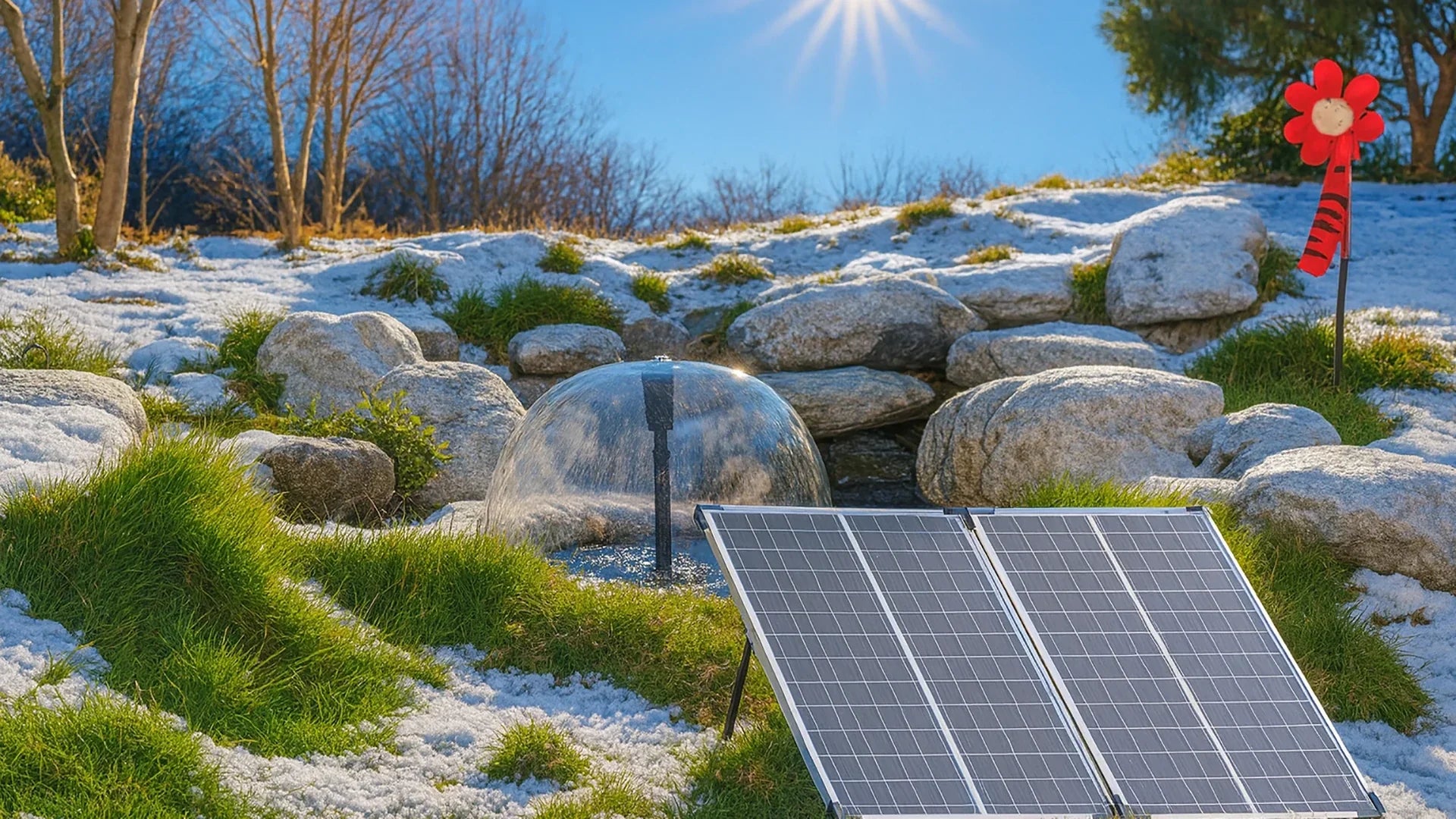
So, do solar pond pumps work in winter? Yes — assuming sunlight strikes the panel and the pump is properly cared for. While output will probably be lower in cold or cloudy conditions, a quality system like Poposoap's solar pond pump will still pump water effectively for most of winter.
For colder climates, winterizing your pump is the best way to ensure long-term reliability. With a little tender loving care, your solar system will be ready to bring life and movement back to your pond the moment spring arrives.

Leave a comment
All comments are moderated before being published.
This site is protected by hCaptcha and the hCaptcha Privacy Policy and Terms of Service apply.