

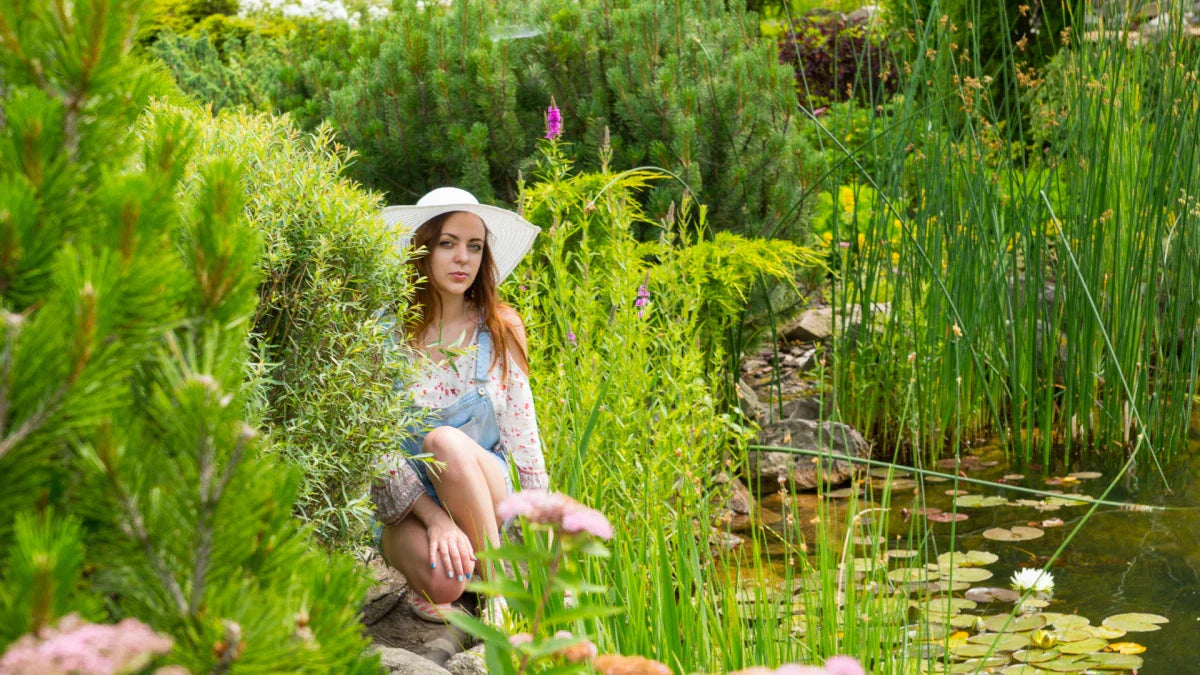
Choosing the right aquatic plants is key to creating a perfect solar water feature. This article has selected 15 aquatic plants best suited for solar water features, based on lighting conditions, maintenance requirements, and aesthetic appeal. These plants are categorized into three groups: emergent, floating, and submerged, helping you create a beautiful and ecologically sound waterscape.
Introduction: The Importance of Aquatic Plants
Aquatic plants not only add natural beauty to solar water features, but are also key elements in maintaining ecological balance. They can:
Ecological Functions:
- Water purification: absorbs nutrients such as nitrogen and phosphorus to prevent excessive algae growth
- Oxygen production: Providing oxygen to aquatic organisms through photosynthesis
- Habitat provision: creating a living environment for fish, amphibians and insects
- Soil stabilization: root systems help prevent soil erosion
Aesthetic Value:
- Rich layers: emergent water, floating leaves and submerged plants form a three-dimensional landscape
- Seasonal changes: Different plants show their unique charm in different seasons
- Color matching: a perfect combination of green leaves, red flowers and blue flowers
- Texture variation: visual enjoyment of different leaf shapes and textures
Perfect Combination with Solar Water Features:
- Plant transpiration helps regulate water temperature, improving solar energy efficiency
- Natural shading protects equipment from strong direct sunlight
- Plant roots can filter impurities from water, reducing equipment maintenance requirements
Emergent Plants: 5 Best Choices
Emergent plants are plants that have roots in the water and stems and leaves that emerge from the water. They provide vertical layers for waterscapes and are the backbone of solar waterscapes.
1. Lotus (Nelumbo nucifera)

Light Requirements: ★★★★★ (Full sun, at least 6 hours of direct sunlight per day)
Planting depth: 30-120 cm
Flowering time: Summer, flowering period from June to September
Flower colors: pink, white, yellow, red
Maintenance difficulty: Medium
USDA Hardiness Zones: Zones 3-11
Why Choose Lotus:
The lotus is a symbol of good fortune in traditional Chinese culture and the queen of water features. With its large, rounded leaves and elegant flowers, it adds a touch of classical charm to any solar-powered water feature.
Planting Tips:
- Use large containers to prevent excessive root spread
- Choose pond mud rich in organic matter as the substrate
- Lotus needs plenty of sunlight, make sure the planting location is not blocked
- Fertilize regularly, using a specialized lotus fertilizer
Combination with Solar Equipment:
The large leaves of the lotus can provide moderate shade for the solar panels to prevent overheating in the summer, but make sure not to completely block the sunlight. The best position is southeast of the solar panels, which is both beautiful and practical.
2. Acorus calamus

Light requirements: ★★★★☆ (full sun to half sun)
Planting depth: 10-30 cm
Flowering time: Spring to summer, flowering period from May to July
Flower color: green or yellow
Maintenance difficulty: Low
USDA Hardiness Zones: Zones 4-10
Why Choose Acorus:
Calamus is an excellent water purification plant that can effectively absorb heavy metals and harmful substances in water. It also has a unique aromatic smell that can repel mosquitoes.
Water Purification Capacity:
- Absorb nutrients such as nitrogen and phosphorus to prevent eutrophication
- The roots secrete antibacterial substances to inhibit harmful microorganisms
- Increase dissolved oxygen content in water
- Provides a surface for beneficial bacteria to attach
Maintenance Tips:
- Calamus grows quickly and needs regular division to control
- Tolerant to barrenness, no need for frequent fertilization
- Can grow in shallow water or moist soil
- The above-ground part withers in winter and sprouts again in spring
Winter Hardiness:
Calamus is very cold-resistant and can safely survive winters down to -20°C. In cold regions, it is recommended to remove dead leaves before winter sets in to protect the root system.
3. Phragmites australis

Light requirements: ★★★★★ (full sun)
Planting depth: 0-60 cm
Flowering time: Summer to autumn, flowering period from August to October
Flower color: brown or purple
Maintenance difficulty: Medium
USDA Hardiness Zones: Zones 3-11
Why Choose Reed:
Reeds are ideal for creating naturalistic water features. Their tall stems and feathery inflorescences add wild interest to any water feature and provide a habitat for many bird species.
Natural Style Matching:
- Paired with natural materials such as stone and wood
- Planting at the edge of the waterscape to form a natural transition
- Can create natural landscapes of wetlands or swamps
- Suitable for combining with wild bird watching
Growth Rate Control:
Phragmites australis grows very quickly and needs to be controlled:
- Use container planting to limit root expansion
- Regular pruning to control plant height
- Divide the plants every spring to prevent overcrowding
- Monitor and prevent the spread of invasive species
Wildlife Value:
Reedbeds are nesting sites for many birds, including sparrows, warblers, and ducks, and their seeds are an important winter food source for birds.
4. Cattail (Typha latifolia)

Light requirements: ★★★★★ (full sun)
Planting depth: 10-60 cm
Flowering time: Spring to summer, flowering period from May to August
Flower color: brown
Maintenance difficulty: Low
USDA Hardiness Zones: Zones 3-10
Why Choose Cattail:
Known for their distinctive sausage-shaped inflorescences, cattails are iconic plants in wetland landscapes. They are a strong attraction for wildlife and can add vitality to solar-powered water features.
Wildlife Attraction:
- Provide nesting material and shelter for birds
- Seeds are an important food source for waterfowl
- The interior of the stem provides a habitat for insects
- The root zone is a spawning site for fish
Maintenance Tips:
- Cattails are highly adaptable and require little maintenance
- Can grow in various water conditions
- Clean up dead leaves regularly to keep the landscape tidy
- Control the growth range to prevent excessive spread
Practical Value:
Cattail stalks can be used to weave baskets, mats, and other handicrafts. Planting cattails in a solar water feature is not only aesthetically pleasing but also allows you to experience the joy of traditional handicrafts.
5. Schoenoplectus lacustris

Light requirements: ★★★★☆ (full sun to half sun)
Planting depth: 10-40 cm
Flowering time: Summer, flowering period from June to August
Flower color: brown
Maintenance difficulty: Low
USDA Hardiness Zones: Zones 4-9
Why Choose Shallot?
With their slender green stems and cylindrical shape, plantains are well-suited to modern water features. Their clean lines blend seamlessly with modern architecture and solar panels.
Modern Style Adaptation:
- Clean lines are consistent with modern architectural style
- Green stems can soften hardscapes
- Suitable for matching with geometric shapes of solar equipment
- Can create a minimalist landscape effect
Reproduction Control:
Water plantain reproduces through underground rhizomes, so you need to pay attention to control:
- Use container planting to prevent root spread
- Divide plants regularly to keep them healthy
- Monitor and promptly remove excess seedlings
- Avoid planting in natural water bodies to prevent invasion
Landscape Applications:
Water plantains are suitable for planting at the edge of solar water features to form a green border. They can also be planted in containers and placed at different locations in the water feature to add a sense of layering to the landscape.
Floating Plants: Green Gems on the Water
Floating leaf plants have roots at the bottom of the water and leaves that float on the surface, providing horizontal layers and shading for solar water features.
6. Water Lilies (Nymphaea spp.)

Light requirements: ★★★★★ (full sun)
Planting depth: 30-150 cm
Flowering time: Summer, flowering period from June to September
Flower colors: white, pink, red, yellow, blue, purple
Maintenance difficulty: Medium
USDA Hardiness Zones: Zones 3-11
Why Choose Water Lily:
Water lilies are one of the most popular aquatic plants, with their beautiful flowers and floating leaves. They add a romantic touch to solar water features while also providing important ecological functions.
Recommended Varieties of Different Colors:
Tropical water lily varieties:
- 'Blue Bird': large, fragrant blue flowers
- 'Red Scarlet': Deep red flowers, vibrant and bold
- 'Yellow Queen': Golden flowers, elegant and graceful
Cold-resistant water lily varieties:
- 'James Brydon': Pink flowers, suitable for colder regions
- 'Gonnere': White flowers with double petals
- 'Perry's Orange Sunset': Orange-red flowers with a gradient effect
Detailed Explanation of Lighting Requirements:
Water lilies need full sun to bloom:
- At least 6 hours of direct sunlight per day
- Best planting location: Due south or southeast
- Avoid obstructions from buildings or trees
- Provide shade during high temperatures in summer to prevent leaf burns
Planting Container Selection:
- Use a special water lily pot with drainage holes at the bottom
- The size of the pot should be chosen according to the variety: 20-30 cm in diameter for small varieties and 30-50 cm for large varieties
- Place pebbles at the bottom of the pot to prevent the substrate from being lost
- Use organic-rich pond mud as a planting medium
7. Water Chestnut (Trapa natans)

Light requirements: ★★★★★ (full sun)
Planting depth: 30-100 cm
Flowering time: Summer, flowering period from July to September
Flower color: white
Maintenance difficulty: Medium
USDA Hardiness Zones: Zones 5-10
Why Choose Water Chestnut:
Water chestnuts are not only beautiful ornamental plants but also have high edible value. Their edible fruits and uniquely shaped leaves can add interest to solar water features.
Edible Value:
- The fruit is rich in starch, protein and multiple vitamins
- Can be eaten raw, cooked, or processed into starch
- It has the effects of clearing away heat and detoxifying, strengthening the spleen and stomach
- It is a traditional medicinal and edible plant
Planting Container Selection:
- Choose a larger container, at least 40 cm in diameter
- Container depth 30-50 cm
- The pot needs to have drainage holes at the bottom
- It is recommended to use a mesh container to facilitate root expansion
Planting Tips:
- Plant in spring when the temperature is stable above 15°C
- Seeds need to be soaked in warm water to germinate
- Planting depth should be enough to cover the seeds
- Keep the water clean and replace some water regularly
8. Euryale ferox

Light requirements: ★★★★★ (full sun)
Planting depth: 60-200 cm
Flowering time: Summer, flowering period from July to August
Flower color: purple
Maintenance difficulty: High
USDA Hardiness Zones: Zones 7-11
Why Choose Gorgon Fruit?
Euryale ferox is an ancient aquatic plant known for its large, spiny leaves. They have high ornamental value and cultural significance, making them ideal for creating distinctive water features.
Ornamental Value:
- The leaves are huge, up to 1-2 meters in diameter
- The leaves have thorns on the surface, which has a unique texture
- Purple flowers are elegant and beautiful
- The fruit has a unique shape and is decorative
Growth Environment Requirements:
- Requires full sun and warm climate
- Suitable for growing in deeper water
- The water quality must be clean and rich in organic matter
- Requires a larger growing space
Cultural Significance:
Gorgon fruit, known in traditional Chinese culture as "ginseng in water," has high nutritional and medicinal value. Planting gorgon fruit in a solar waterscape is not only aesthetically pleasing but also reflects the charm of traditional culture.
9. Water Chestnut (Nymphoides peltata)

Light requirements: ★★★★☆ (full sun to half sun)
Planting depth: 10-60 cm
Flowering time: Summer, flowering period from June to September
Flower color: yellow
Maintenance difficulty: Low
USDA Hardiness Zones: Zones 5-10
Why Choose Nymphoides:
Nymphoides are fast-growing, floating plants that quickly cover the surface of water, creating a beautiful green carpet. They are excellent water purifiers and are easy to maintain, making them a great choice for beginners.
Rapid Coverage Capability:
- It grows fast and can cover the entire water surface in 1-2 months
- Propagates by stolons and spreads rapidly
- Can effectively inhibit algae growth
- Provide shelter for aquatic life
Water Purification Effect:
- Absorb nutrients such as nitrogen and phosphorus in water
- Increase dissolved oxygen content in water
- Provides a surface for beneficial microorganisms to attach
- Reduce water surface evaporation and maintain water stability
Maintenance Management:
- Water spinach grows quickly and needs regular pruning to control
- Overgrowth can be controlled by hand-pulling or using herbicides
- The above-ground part withers in winter and sprouts again in spring
- Tolerant to barrenness, no need for frequent fertilization
10. Water Poppy (Hydrocleys nymphoides)

Light requirements: ★★★★★ (full sun)
Planting depth: 10-30 cm
Flowering time: Summer to autumn, flowering period from June to October
Flower color: yellow
Maintenance difficulty: Medium
USDA Hardiness Zones: Zones 9-11
Why Choose Water Poppy:
Water poppies are loved for their bright yellow flowers and heart-shaped leaves. They add a tropical touch to solar-powered water features and are ideal for warmer climates.
Tropical Atmosphere Creation:
- Bright yellow flowers that resemble poppies
- Heart-shaped leaves are green and lovely
- Long-lasting flowering time and long viewing period
- Suitable for pairing with tropical fish
Winter Protection Measures:
Water poppies are less cold-tolerant and require winter protection in colder regions:
- Move indoors in winter when the temperature drops below 10°C
- Can be grown as an annual and restocked in spring
- Can grow year-round in warm regions
- Reduce watering in winter and keep the soil moist
Planting Tips:
- Use small containers for easy transport
- Choose a substrate rich in organic matter
- Maintain a sunny and warm environment
- Fertilize regularly to promote flowering
Submerged Plants: Underwater Ecological Engineers
Submerged plants grow completely underwater and are key to maintaining the ecological balance of waterscapes. They provide oxygen to solar waterscapes, purify water, and provide a habitat for fish.
11. Ceratophyllum demersum

Light requirements: ★★★☆☆ (half-sun to diffuse light)
Planting depth: 30-200 cm
Flowering time: Summer, flowering period from June to August
Flower color: light green
Maintenance difficulty: Low
USDA Hardiness Zones: Zones 4-11
Why Choose Hornwort:
Dermatophytes are one of the most popular submerged plants, providing oxygen and habitat for aquatic life. They are adaptable and require minimal light, making them a great choice for beginners.
Oxygen Production Capacity:
- High photosynthesis efficiency and large oxygen production
- Can significantly increase the dissolved oxygen content in water
- Provides breathing space for fish and other aquatic life
- Helps prevent eutrophication of water bodies
Fish Habitat Features:
- Provide shelter for small fish from larger fish
- Provide a place for fish to lay eggs
- Provide a food source for juvenile fish
- Helps maintain a balanced fish population
Planting and Maintenance:
- Dermatophaga can be planted directly on the bottom of the water or in a container.
- Low requirements on water quality and strong adaptability
- Rapid growth, requires regular pruning to control
- Spend the winter safely underwater
12. Hydrilla verticillata

Light requirements: ★★★★☆ (half sun to full sun)
Planting depth: 30-250 cm
Flowering time: Summer, flowering period from June to August
Flower color: white
Maintenance difficulty: Medium
USDA Hardiness Zones: Zones 6-11
Why Choose Black Algae:
Black algae are excellent water purification plants that can effectively absorb nutrients and harmful substances in water. They grow rapidly and have strong adaptability, making them an important species for maintaining the ecological balance of waterscapes.
Water Purification Capacity:
- Efficient absorption of nutrients such as nitrogen and phosphorus
- Able to remove heavy metals and organic pollutants from water
- Increase dissolved oxygen content in water
- Inhibit algae growth and prevent algal blooms
Growth Control Methods:
Black algae grows quickly and requires proper control:
- Regular pruning to control plant height
- Can be controlled by herbivorous fish such as grass carp
- Avoid planting in natural water bodies to prevent invasion
- Monitor growth and take timely control measures
Ecological Value:
Hydrilla provides important ecological services to aquatic ecosystems:
- Provide food and habitat for aquatic animals
- Helps maintain water clarity
- Promote the growth of beneficial microorganisms
- Helps in self-purification of water bodies
13. Myriophyllum spicatum

Light requirements: ★★★★☆ (half sun to full sun)
Planting depth: 30-200 cm
Flowering time: Summer, flowering period from June to September
Flower color: red or pink
Maintenance difficulty: Medium
USDA Hardiness Zones: Zones 4-11
Why Choose Foxtail Algae:
Myriophyllum, named for its feathery leaves, has high ornamental and ecological value. They can add dynamism and vitality to solar water features.
Ecological Value:
- Provides rich habitat for aquatic animals
- Helps maintain the ecological balance of water bodies
- Able to absorb a large amount of nutrients
- Provide oxygen to water
Maintenance Method:
- Foxtail algae grows quickly and requires regular pruning.
- Can be grown in containers to control growth
- Low requirements on water quality and strong adaptability
- Spend the winter safely underwater
Landscape Applications:
Foxtail algae are ideal for deep-water solar water features, creating an underwater forest effect. Their feathery leaves sway in the water, adding movement and vitality to the waterscape.
14. Vallisneria spiralis

Light requirements: ★★★☆☆ (half-sun to diffuse light)
Planting depth: 30-200 cm
Flowering time: Summer, flowering period from June to August
Flower color: white
Maintenance difficulty: Low
USDA Hardiness Zones: 5-11
Why Choose Vallisneria:
Vallisneria is an elegant submerged plant, beloved for its elongated leaves and unique propagation method. Its slow growth and low maintenance make it an ideal choice for tranquil water features.
Natural Reproduction Method:
Vallisneria propagates by stolons, allowing it to spread naturally:
- Runners spread underwater to form new plants
- No human intervention is required, natural reproduction
- Able to form dense underwater lawns
- Moderate growth rate, no need for frequent maintenance
Landscape Effect:
- The slender blades sway in the water with an elegant movement
- Can form a green underwater background
- Suitable for planting with other aquatic plants
- Add dimension and depth to water features
Planting Suggestions:
- Vallisneria is suitable for planting in deep water areas of solar waterscapes
- Can be planted directly in the water or in a container
- Low requirements on water quality and strong adaptability
- No need for frequent fertilization and maintenance
15. Potamogeton crispus

Light requirements: ★★★☆☆ (half-sun to diffuse light)
Planting depth: 30-200 cm
Flowering time: Spring, flowering period from April to June
Flower color: green
Maintenance difficulty: Low
USDA Hardiness Zones: Zones 4-11
Why Choose Potamogeton Crispus:
Water chestnuts are evergreen submerged plants that can provide year-round greenery for solar waterscapes. They are highly adaptable to their environment and are crucial for maintaining the ecological balance of waterscapes.
Evergreen Characteristics:
- Water chestnut is one of the few submerged plants that can remain green in winter.
- Even in the cold winter, the leaves remain green
- Add vitality and vibrancy to winter waterscapes
- Able to continue photosynthesis at low temperatures
Strong Adaptability:
- Water chestnut has low requirements for water quality and can grow in various water bodies.
- Low temperature resistant, able to safely survive winters down to -10°C
- It does not require much light and is suitable for growing in a semi-shady environment.
- Able to tolerate a certain degree of pollution
Ecological Functions:
- Provide year-round food and habitat for aquatic animals
- Helps maintain the ecological balance of water bodies
- Able to absorb nutrients and pollutants from water
- Provide oxygen to water bodies and improve water quality
Plant Matching Plan
We offer three plant matching options based on different environmental conditions and personal preferences:
Option 1: Plant Combination for a Sunny Environment
Applicable conditions: sunshine time is more than 6 hours per day, and the water surface is open and unobstructed

Recommended Pairing:
Emergent plants:
- Lotus (1-2 plants): As the focal plant of the waterscape
- Reeds (3-5 plants): Planted at the edge of the water feature to create a natural border
- Cattails (2-3 plants): Adds wildness and ecological value
Floating leaf plants:
- Water lilies (2-3 pots): Choose different colors to increase the visual effect
- Water Poppy (1-2 pots): Add a tropical touch to your waterscape
Submerged plants:
- Dermatophaga (appropriate amount): provides oxygen to the water
- Black algae (appropriate amount): helps purify water
Matching Features:
- Rich colors and distinct layers
- There are many flowering plants and the viewing period is long
- Complete ecological functions and stable water quality
- Suitable for taking photos and viewing
Option 2: Plant Selection for Semi-Shady Environment
Applicable conditions: 3-6 hours of sunshine per day, with some shade
Recommended Pairing:
Emergent plants:
- Acorus calamus (3-5 plants): Shade-tolerant and water-purifying
- Water plantain (2-3 plants): modern style, clean lines
- Iris (2-3 plants): Shade-tolerant flowering plant
Floating leaf plants:
- Nymphoides (appropriate amount): quickly covers the water surface and has strong shade tolerance
- Water chestnut (1-2 pots): unique leaves, high ornamental value
Submerged plants:
- Vallisneria sinensis (appropriate amount): strong shade tolerance, slow growth
- Water chestnut (appropriate amount): evergreen all year round, strong adaptability
Matching Features:
- Use green as the main color to create a tranquil atmosphere
- Easy to maintain, suitable for beginners
- Mainly shade-tolerant plants with stable growth
- Suitable for small space waterscape
Option 3: Low-Maintenance Lazy Combination
Applicable conditions: users with limited time and want to reduce maintenance work
Recommended Pairing:
Emergent plants:
- Calamus (3-5 plants): requires little maintenance
- Cattail (2-3 plants): Strong adaptability and stable growth
Floating leaf plants:
- Nymphoides (appropriate amount): natural growth, self-regulation
- Water lily (1 pot): Choose a cold-resistant variety to reduce winter maintenance
Submerged plants:
- Ceratophyllum (appropriate amount): stable growth, simple maintenance
- Water chestnut (appropriate amount): evergreen all year round, strong adaptability
Matching Features:
- Low maintenance, suitable for busy users
- Plants are highly adaptable and less prone to problems
- Ecosystem stability and self-regulation of water quality
- Good long-term effect, more beautiful as you grow
Planting and Maintenance Guide
Preparation Before Planting
Tool Preparation:
- Planting containers (flower pots of various sizes or specialized aquatic plant pots)
- Pond mud or special substrate for aquatic plants
- Pebbles or coarse sand (for covering the substrate)
- Gardening shears or pruning shears
- Bucket or basin
- Gloves

Matrix Selection:
- It is best to use special pond mud or aquatic plant substrate
- If you use ordinary garden soil, you need to add an appropriate amount of organic fertilizer
- The substrate should be rich in organic matter to provide nutrients to the plants
- Avoid using substrates containing chemical fertilizers
Planting Steps
Step 1: Container Preparation
- Choose the right size container to ensure your plants have enough room to grow
- Place a layer of pebbles at the bottom of the container to prevent the substrate from escaping
- Add the substrate to a height of 2/3 of the container height
Step 2: Plant Treatment
- Check the plant's roots and remove any dead or damaged parts.
- For bare-root plants, prune any excessively long roots
- For plants with a soil ball, gently remove some of the soil to expose the root system.
Step 3: Planting Process
- Place the plant in the center of the container and adjust it to the appropriate depth.
- Secure the plant with substrate, ensuring the roots are fully covered
- Cover the substrate surface with a layer of pebbles or coarse sand to prevent the substrate from floating up.
Step 4: Placement
- Choose a suitable location based on the plant's light needs
- Make sure the plants get enough sunlight
- Adjust the depth of the container to meet the planting depth requirements of the plant
Daily Maintenance
Watering Management:
- Keep water levels stable and adjust according to plant needs
- Increase water changes during high temperatures in summer
- Reduce watering in winter and keep the substrate moist
- Regularly clean up debris on the water surface to keep the water clean
Fertilization Management:
- Spring and summer are the peak growth periods for plants, so regular fertilization is required.
- Use specialized aquatic plant fertilizers and avoid chemical fertilizers
- Fertilization frequency: 1-2 times a month, adjusted according to plant growth
- Avoid excessive fertilization to prevent water pollution
Pruning Management:
- Regularly trim dead or aging leaves
- Control the range of plant growth to prevent over-spreading
- Remove dead leaves floating on the water surface promptly
- Clean the above-ground parts in winter to protect the root system during the winter
Pest and Disease Control:
- Check plants regularly to detect pests and diseases
- Prioritize biological control methods
- Use environmentally friendly pesticides when necessary
- Keep water clean and prevent pests and diseases
Seasonal Management
Spring Management:
- Clean up dead leaves and debris that accumulated during the winter
- Check plant growth and divide or replant in time
- Start fertilizing to promote plant growth
- Adjust water levels to meet plant growth needs
Summer Management:
- Increase the frequency of water changes to keep the water clean
- Provide adequate shade to prevent plant leaves from burning
- Increase fertilization to promote flowering
- Timely prevention and control of pests and diseases
Autumn Management:
- Reduce the frequency of fertilization to prepare plants for winter
- Clean up dead leaves and keep the landscaping tidy
- Check plant health and treat problem plants
- Getting ready for winter
Winter Management:
- Clear ice from the water surface to prevent frostbite on plants
- For plants that are not cold-tolerant, move them indoors or take protective measures
- Reduce watering and keep the substrate moist
- Check equipment to ensure the solar system is operating normally
FAQs
Q1: Will the plants in the solar water feature affect the normal operation of the equipment?
A1: Proper selection and placement of plants will not affect the normal operation of solar equipment. In fact, plants can also provide the following benefits to the equipment:
- Provide adequate shade to prevent equipment from overheating in summer
- Purify water and reduce equipment maintenance requirements
- Provides a natural aesthetic package for the device
- Regulate water temperature and improve equipment efficiency
Suggestion:
- Make sure the plants do not completely block the solar panels
- Regularly clean up fallen leaves and debris that may affect the equipment
- Choose plant varieties that won't overgrow
- Regularly check the operating status of the equipment
Q2: How do I choose aquatic plants suitable for my area?
A2: The following factors need to be considered when choosing aquatic plants:
Climate Conditions:
- Learn the USDA Hardiness Zone for Your Area
- Choose plant varieties suitable for your climate
- Consider winter protection measures
Water Quality Conditions:
- Understand the water quality of your waterscape
- Choose plants that are suitable for local water conditions
- Consider water purification needs
Personal Preference:
- Consider your preferred landscaping style
- Choose plants that match your maintenance abilities
- Consider the ornamental value of plants
Suggestion:
- Consult a local gardening expert or aquarium
- Start small and expand gradually
- Choose local native plants, which are more adaptable
- Consider the ecological value of plants
Q3: How long does it take for aquatic plants to grow?
A3: The growth rate of aquatic plants varies depending on the species, environmental conditions and maintenance management:
Fast Growing Plants:
- Nymphoides, black algae, etc.: Landscape effects can be formed in 1-2 months
- Suitable for users who want quick results
- Need to strengthen management to prevent overgrowth
Medium Growing Plants:
- Water lilies, lotus, etc.: 3-6 months to form a complete landscape
- Stable growth and relatively simple management
- Long viewing period and good flowering effect
Slow Growing Plants:
- Vallisneria, Euryale ferox, etc.: 6-12 months to form a landscape
- Slow growth and low maintenance
- Good long-term effect, more beautiful as you grow
Suggestion:
- Be patient; plants need time to adapt to their new environment.
- Provide suitable growing conditions to promote plant growth
- Fertilize regularly to meet the nutritional needs of plants
- Don't rush things, enjoy the process of your plants growing
Q4: How to prevent excessive excessive growth of aquatic plants?
A4: Preventing excessive growth of aquatic plants requires comprehensive comprehensive measures:
Planting Control:
- Use container planting to limit root expansion
- Choose varieties with a moderate growth rate
- Control planting density to avoid overcrowding
Management Measures:
- Prune regularly to control plant growth
- Remove excess plants and propagules promptly
- Apply fertilizer appropriately to avoid excessive nutrition
Biological Control:
- Introducing herbivorous fish, such as grass carp and crucian carp
- Utilize beneficial microorganisms to regulate ecological balance
- Build a complete ecosystem that is self-regulating
Suggestion:
- Regularly monitor plant growth
- Take timely control measures to prevent the problem from escalating
- Understand the growth habits of plants and develop corresponding management strategies
- Maintain ecological balance and avoid over-reproduction of a single species
Q5: Can aquatic plants purify water? How effective is it?
A5: Aquatic plants do have strong water purification capabilities, mainly through the following mechanisms:
Physical Purification:
- Root system filters suspended matter in water
- The leaves block sunlight and inhibit the growth of algae
- Increase water surface area and promote gas exchange
Chemical Purification:
- Absorb nutrients such as nitrogen and phosphorus in water
- Decomposition of organic pollutants and heavy metals
- Adjust water pH value and improve water quality
Biological Purification:
- Provides a surface for beneficial microorganisms to attach
- Promote nitrification and denitrification processes
- Inhibit the growth of harmful microorganisms
Purification Effect:
- Able to remove 60-80% of nitrogen, phosphorus and other nutrients in water
- Significantly improve water clarity and dissolved oxygen content
- Effectively inhibit algae growth and prevent algal blooms
- Establishing a stable aquatic ecosystem
Suggestion:
- Choose plant varieties with strong purification capabilities
- Reasonable arrangement of different types of aquatic plants
- Regularly clean up dead plant tissue
- Combined with other purification measures, such as filtration systems
Expert Advice
Expert Profile
Dr. Emily Johnson
An expert in aquatic botany with 20 years of experience in aquatic plant research and application, she currently serves as a director of the American Society of Aquatic Plants. She has published over 50 academic papers on aquatic plant ecological restoration and landscape applications.
Mark Wilson
A landscape designer who has been focusing on waterscape design for 25 years. He has participated in the design and construction of many well-known solar waterscape projects and is good at perfectly combining modern technology with natural landscape.
Sarah Chen
Environmental engineer, focusing on water ecological restoration and sustainable development, with rich experience in the ecological design and maintenance of solar waterscapes.
Expert Opinion
Dr. Emily Johnson's Advice:
"When selecting aquatic plants, we should consider not only aesthetics but also ecological function. A healthy aquatic ecosystem should include a balanced mix of emergent, floating, and submerged plants, forming a complete food chain and ecological cycle. The application of solar energy technology offers new possibilities for waterscape design, allowing us to utilize clean energy to maintain the long-term, stable operation of waterscapes."
Regarding Plant Selection:
- Give priority to local native plants, which are more adaptable
- Consider the ecological function of plants, not just their ornamental value
- Pay attention to plant growth habits and avoid invasive species
- Reasonable combination of different types of aquatic plants
Mark Wilson's Design Philosophy:
"Modern waterscape design should be a perfect fusion of technology and nature. Solar energy equipment is no longer a cold machine, but a work of art that can coexist harmoniously with natural elements such as plants, water, and stone. Our goal is to create a living space that is both technologically advanced and full of natural charm."
Design Points:
- Consider both aesthetics and functionality when positioning solar equipment
- Plant configuration should be coordinated with the style of the equipment
- Consider the landscape effects in different seasons
- Creating a multi-layered viewing experience
Sarah Chen's Environmental Advice:
"Solar water features are a model of sustainable landscape design. Through reasonable plant configuration and equipment selection, we can create a zero-emission, low-maintenance, high-ecological-value waterscape system. This not only beautifies the environment but also contributes to urban ecological construction."
Environmental Protection Measures:
- Choose energy-efficient solar equipment
- Prioritize the use of local plants to reduce transportation carbon emissions
- Establish a rainwater collection system to save water resources
- Avoid using chemical agents and protect the ecological environment
Summary of Practical Advice
1. Plant Selection Principles
- Choose the right variety based on local climate conditions
- Consider the ecological function and ornamental value of plants
- Choose low-maintenance, adaptable varieties
- Avoid invasive species
2. Configuration Tips
- Forming a three-dimensional arrangement of emergent, floating and submerged plants
- Consider the landscape effects in different seasons
- Allow enough growing space
- Regularly adjust and optimize configuration
3. Maintenance Points
- Establish a regular maintenance schedule
- Pay attention to water quality monitoring and management
- Deal with pest and disease problems promptly
- Seasonal management should be in place
4. Technology Application
- Reasonable configuration of solar energy equipment
- Using intelligent control systems
- Integrate rainwater collection and recycling
- Adopting eco-friendly management methods
Aquatic plants are the soul of solar waterscapes. They not only add natural beauty to the waterscape, but are also key elements in maintaining ecological balance. By selecting appropriate plant species and rationally configuring plant communities, we can create a solar waterscape system that is both aesthetically pleasing and ecologically sound.
This article introduces 15 aquatic plants, covering three major types: emergent, floating, and submerged. Each has its own unique ornamental value and ecological function. Whether you are a beginner or an experienced gardener, you will find a plant that suits you.
Remember, creating the perfect solar water feature is an ongoing process. Over time, the plants will grow and change, and the water feature will take on a different look. Let's enjoy the process together, feel the charm of nature, and experience the perfect fusion of technology and nature.
May your solar water feature become the most beautiful corner of your home, bringing you endless joy and relaxation.
Contact Us:
If you have any questions about plant selection or the growing process, please leave a message or join our Facebook group where we will share guidance and advice.

Leave a comment
All comments are moderated before being published.
This site is protected by hCaptcha and the hCaptcha Privacy Policy and Terms of Service apply.