

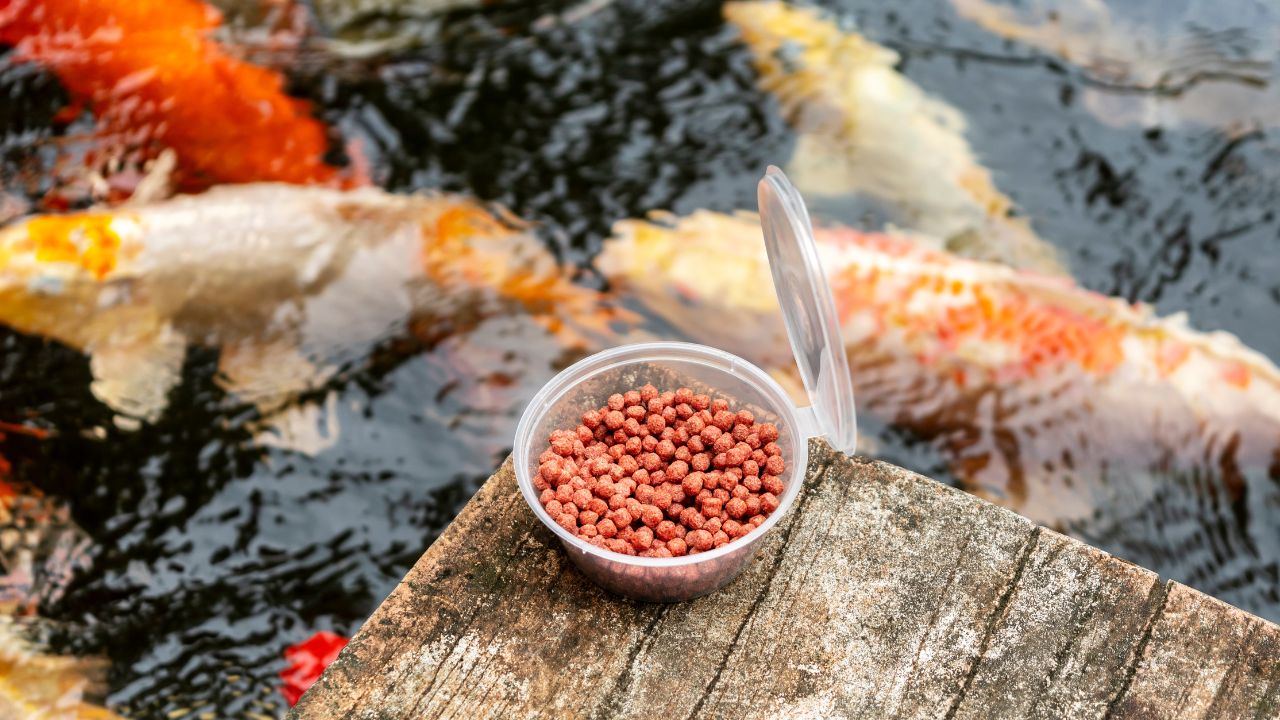
A garden pond should be a living kaleidoscope, with goldfish flashing under lilies and koi flaring crimson in the sun. However, nothing derails that picture faster than the wrong menu. Feed too much or offer the wrong food, and you’ll trigger cloudy water, ammonia spikes, and sluggish fish. Feed too little, and colors will fade while growth stalls. This guide answers the real-world questions hobbyists type into search bars every day. These include food for fish pond, fish food for ponds, and food for pond fish. It also builds a year-round plan you can trust.
Why Proper Pond Fish Feeding Matters
- Water quality – Too much protein decays into ammonia, making filters do extra work.
- Disease resistance – Balanced nutrients strengthen immune systems against parasites and temperature stress.
- Growth & color – High-grade ingredients (spirulina, krill) intensify reds and blacks, while empty calories wash them out.
- Equipment Longevity – Less waste improves equipment lifespan, slowing sponge clogging and extending the life of biological media. This saves you from emergency clean-outs. Combine good feeding habits with a Poposoap Solar Pond Filter, and you’ll spend more weekends watching fish than rinsing pads.
What Pond Fish Eat in the Wild vs. Captivity

Wild carp, goldfish, and shubunkins graze on algae films, insect larvae, fallen seeds, and even tender plant shoots. That roughage keeps gut bacteria diverse. In captivity, we replace that mosaic with pellets or flakes that must balance:
- Protein (for tissue growth and repair)
- Lipids (for energy and insulation)
- Carbohydrates (for quick fuel)
- Pigments & vitamins (for color and immune resilience)
Commercial pond diets adapt to seasonal temperature changes to optimize fish metabolism and nutrition.
Types of Fish Food for Pond Use

- Floating pellets – Ideal for observing appetite and removing leftovers.
- Sinking pellets or sticks – Better for shy bottom feeders or windy ponds where food blows away.
- Wheat-germ formulas – Easily digested at cool temperatures (< 55 °F / 13 °C).
- Color-enhancing diets – Contain astaxanthin, spirulina, or shrimp meal for vivid hues.
- Natural treats – Orange slices (vitamin C), shelled peas (fiber), silkworm pupae (protein punch).
- Live foods – Daphnia or earthworms stimulate hunting instincts but carry pathogen risk—quarantine or gut-load first.
Reading the ingredient list is just as important as watching koi swim. Choose specific ingredients like "fish meal, wheat germ, soybean meal, krill." Avoid vague terms like "meat derivatives."
How Often and How Much to Feed
- Rule of three – Offer only what fish finish in three minutes.
- Water temperature guides frequency:
- > 75 °F (24 °C) – 3–4 light meals per day
- 65–75 °F (18–24 °C) – 2 meals per day
- 55–65 °F (13–18 °C) – Once daily, lower-protein diet
- 45–55 °F (7–13 °C) – Once every other day, wheat-germ only
- < 45 °F (7 °C) – Stop feeding; fish rely on fat stores
Uneaten pellets swell, sink, and decompose, turning pristine ponds into nutrient soup. If you consistently find leftovers, cut the ration by 25 %.
Seasonal Feeding Guide (Text Format)
Spring (50–65 °F | 10–18 °C)
Fish restart metabolism. Offer small portions of wheat-germ pellets once the water holds above 50 °F for a week. Introduce color foods gradually.
Early Summer (66–75 °F | 19–24 °C)
Metabolism surges. Shift to a higher-protein, color-boosting pellet. Feed twice daily; supplement with peas or earthworms for variety.
Mid–Late Summer (76–84 °F | 24–29 °C)
Digestive enzymes peak. Three micro-feeds prevent oxygen dips caused by heavy single meals. Floating pellets let you observe vigor and spot disease early.
Autumn Cool-down (65–55 °F | 18–13 °C)
Reduce frequency to once daily; transition back to wheat-germ formulas to build fat for winter without stressing kidneys.
Winter Dormancy (< 45 °F | < 7 °C)
Do not feed. Fish enter torpor; digestion stops. Maintain an opening in surface ice with a Poposoap Floating Solar Fountain so gases escape while filters slumber.
This rolling schedule keeps protein in sync with enzyme efficiency, curbing waste and maximizing growth.
What Not to Feed Your Fish
- Bread or crackers – Swells in the gut, offers zero nutrition.
- Fatty meat – Rancid oils foul water; koi can’t metabolize mammal fat.
- Raw rice or pasta – Expands internally, causing blockage.
- Leftover dog/cat food – Wrong amino-acid profile, excessive phosphorus.
- Stale or moldy pellets – Aflatoxins trigger liver damage.
Remember, every foreign crumb becomes pond food for fish and for algae—choose wisely.
Poposoap Product Recommendations

- Solar Pond Filter Kits (8–70 W ranges) include multi-layer foam, bio-balls, and an optional UV filter. These components help clarify the water, which tends to cloud from feeding. Zero utility bills, quick-connect pumps.
- Floating Solar Fountains (10–55 W) – Circulate surface film, distribute oxygen after heavy summer feeding, deter mosquito larvae.
- RGB Solar Pond Lights – Extend viewing into evening so you can watch fish finish meals and remove leftovers before they sink.
By pairing smart feeding with Poposoap circulation, you prevent the “green-water penalty” that often follows enthusiastic feeding sprees.
Conclusion: Healthy Feeding = Healthy Pond
Mastering fish food for pond fish is more about rhythm than a strict recipe. Temperature determines the portion sizes. Digestion influences the choice of ingredients. Observation is more important than following rigid charts. Offer a variety of season-appropriate diets for your fish. Follow the three-minute rule when feeding. Allow solar-powered Poposoap filters to maintain a clean ecosystem. This ensures your pond stays healthy and well-balanced. Do that, and your pond will reward you with brilliant colors and crystal-clear reflections. The fish will rush to greet you, not because they're starving. They’ll come because you've learned to feed them just right. This will create a thriving, healthy pond environment.
(Related reading: What Can Fish Eat Besides Fish Food? Safe Household Foods for Your Pet Fish)

P3202 20W 280GPH Solar Pond Filter Fountain
$98.99
Eco-friendly solar powered pump and filter system designed for small to medium ponds.
FAQs
Yes! Poposoap solar pumps work on cloudy days, although the water flow may decrease. For stable output, choose a model with a built-in backup battery.
Absolutely — they use low-voltage, fish-safe, animal-friendly motors. Birds, koi, plants and backyard wildlife are completely safe.
Clean the pump every 1-2 weeks, remove leaves, and ensure the solar panel faces direct sunlight. Maintenance usually takes less than 30 seconds.

Leave a comment
All comments are moderated before being published.
This site is protected by hCaptcha and the hCaptcha Privacy Policy and Terms of Service apply.