

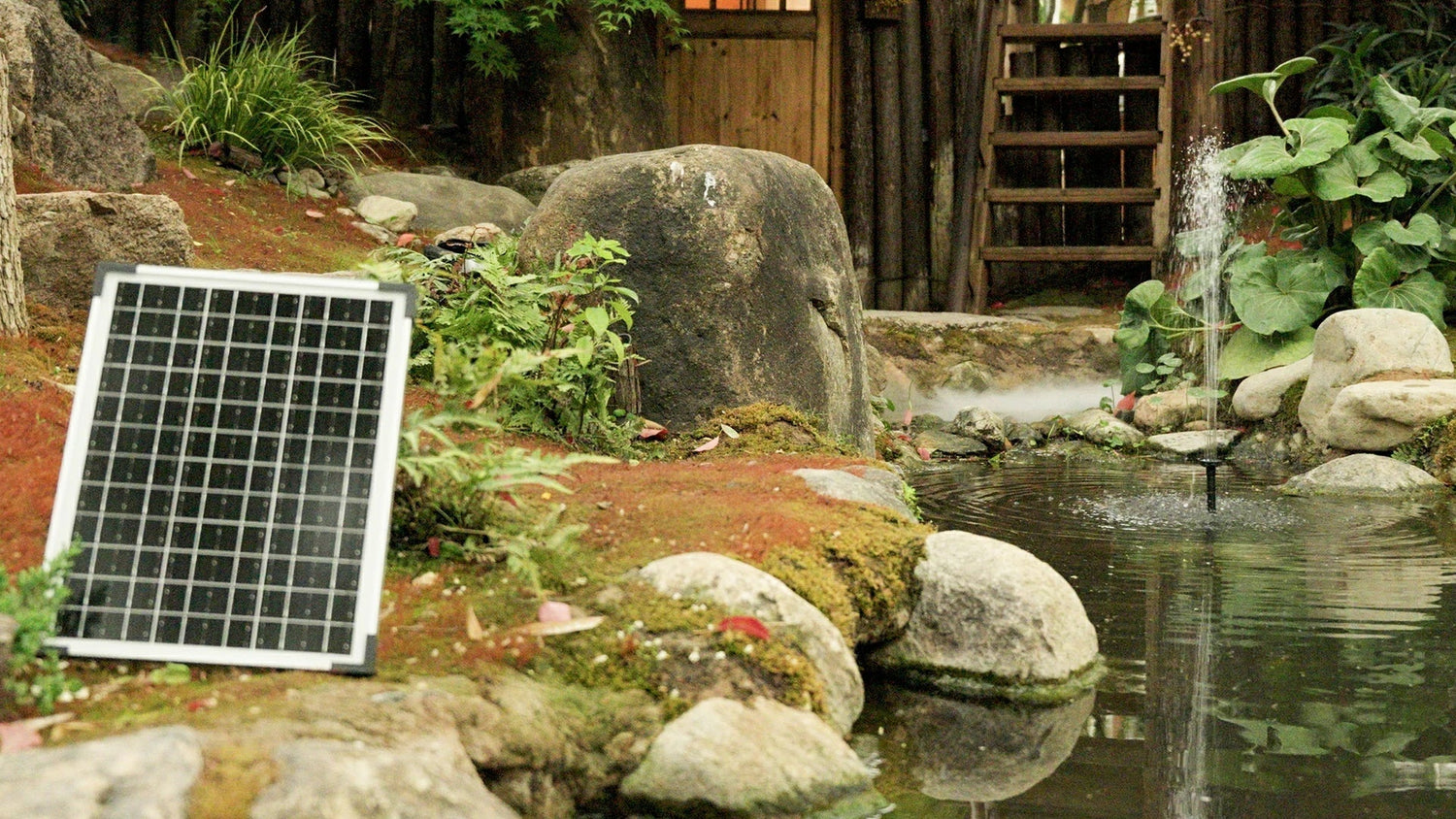
If you have a backyard pond in a place where electricity isn’t easy to reach—or you simply prefer a more natural, low-energy approach—one of the first questions you’ll run into is: "How can I filter my pond without electricity?"
You're not alone. Many pond owners want clean water, clear visibility, and healthy fish or wildlife—without running power lines across the yard or depending on high-watt pumps. Maybe your pond is in a remote corner. Maybe you are trying to cut utility costs, or perhaps you just want a more natural system—one that's eco-friendly.
But here's the good news: it's possible to keep the water of a pond clean without electricity. In fact, that's how many traditional ponds have been maintained worldwide for centuries. With modern solar technology and smart natural filtration methods, it is easier than ever today to create a balanced pond that keeps itself clean with little intervention.
Below, we will walk through the best solutions for how to filter a pond without electricity, including solar-powered options. For small backyard ponds, efficient and low-maintenance solar pumps are recommended. Poposoap designs solar-powered pumps for the circulation of clean water without using any wiring or energy waste.
Why Filter a Pond – Even Without Electricity
Even in a small garden pond, water naturally collects:
- Algae
- Fish waste
- Decaying leaves
- Pollen
- Fine debris
Without filtration, the pond may turn cloudy, smelly, or become uninhabitable for wildlife.
Many beginners also ask: "Do pond filters need electricity?" Not necessarily.
Electric pond filters rely on pumps—but filtration itself can be done naturally, using gravity, plants, bacteria, or sunlight-driven circulation.
A healthy pond is a matter of balance, and sunlight-powered systems—like the solar pumps from Poposoap—support that balance by keeping water moving, oxygenated, and less prone to stagnation, all without electrical wiring or ongoing cost.
Option 1 — Use a Solar-Powered Pond Filter

If you want movement, circulation, and filtration without running electric lines, the easiest solution can be a solar system.
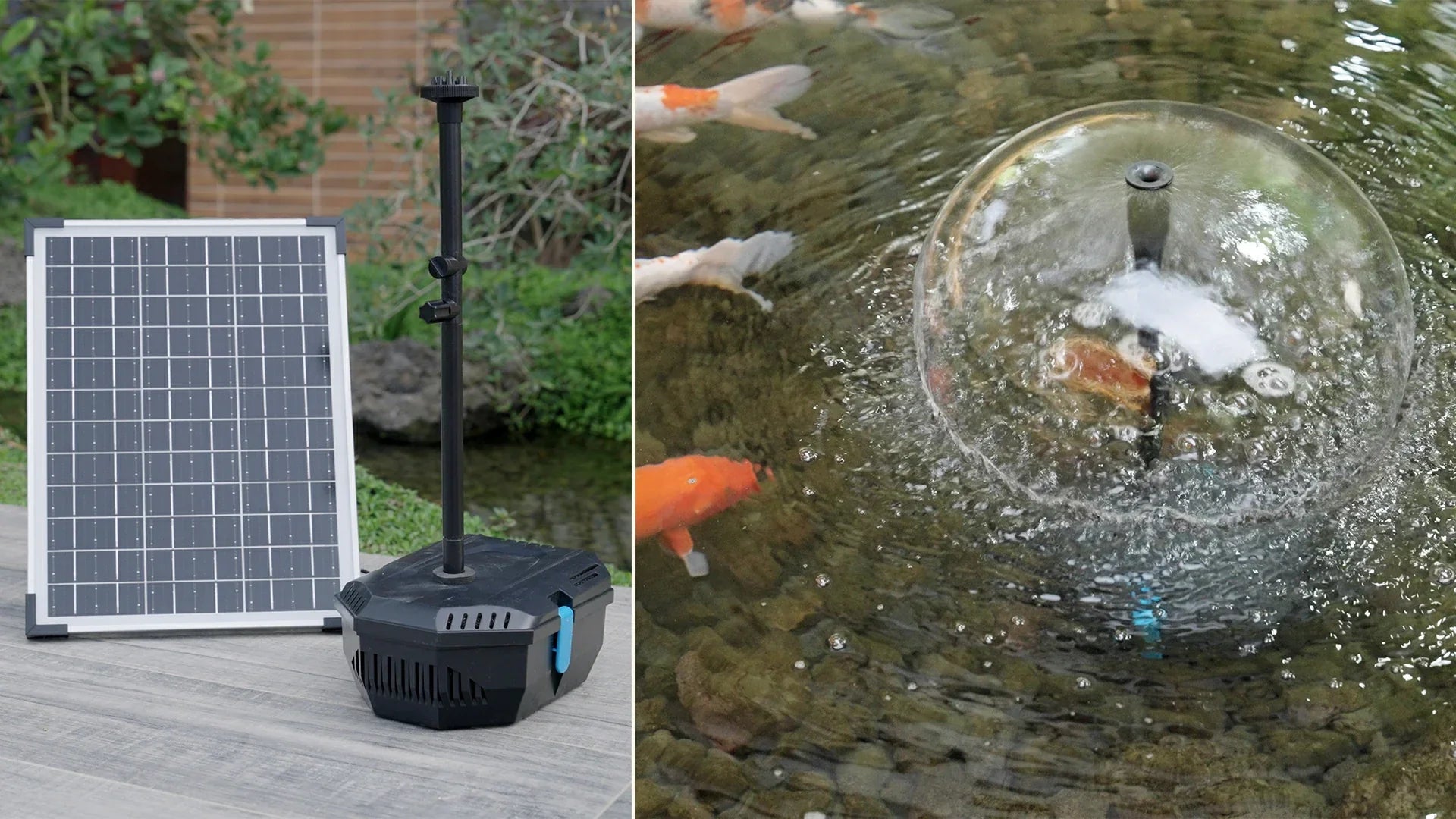
A solar-powered water pump for small pond filtration works by:
- Using sunlight to power the pump
- Recirculating water through a small filter sponge or bio-media
- Helping oxygenate the pond
- Stagnation prevention reduces algae growth.
This idea is further realized in Poposoap's solar fountains and pond pumps that are lightweight, energy-free, easy to clean, and designed to keep the water cleaner through natural circulation, all fully powered by sunlight.
This method is particularly suitable for:
- Small backyard ponds
- Wildlife ponds
- Container ponds
- Remote gardens
- Ponds without outlets nearby
If you're looking for how to run a pond without electricity, then a well-placed solar pump is the most modern, practical solution.
Option 2 — Construct a Gravity-Fed Filter System

Before electric pumps were invented, people filtered their water entirely using gravity.
Gravity-fed filters work by:
- Placing a container containing filter materials above or beside the pond
- Allowing water to flow naturally through the media
- Letting it return slowly to the pond
- Using gravity instead of a powered pump
Media may include:
- Lava rock
- Crushed stone
- Fine gravel
- Filter sponges
- Natural bio-material
The flow is soft, but effective for small ponds. It is a nice answer to how to make a pond filter without electricity, as long as you like DIY projects.
Option 3 — Employ Natural Filtration (Plant-Based Pond Filter)

Aquatic plants are some of nature's most efficient filters. They help to remove nitrates, impede excess sunlight, reduce algae, and add oxygen.
Good filtering plants include:
- Water lettuce
- Hornwort
- Water hyacinth
- Duckweed
- Iris
- Pickerel
- Cattails
This is the perfect method for those people who wonder how to keep a pond without a filter, as the pond itself acts as a living filter. Combined with gentle water circulation—solar pumps work beautifully alongside plants—this can create a self-sustaining aquatic ecosystem.
Option 4: Add a Floating Bio-Filter or Skimmer

A floating bio-filter is a low-tech tool that:
- Traps debris on the surface
- Encourages favorable bacteria growth
- Oxygenates the water naturally
- Provides shade
- Slows algae formation
Others incorporate porous material and plant roots in a type of natural 'biological island'.
Floating skimmers collect leaves and pollen, keeping excess organic matter from sinking to the bottom and feeding algae.
Solar circulation goes very well with floating filters, as movement pushes debris towards the surface for easier collection.
Option 5 — Manual Water Maintenance (Low-Tech Method)

For very small ponds, clear water can be maintained by simple care:
- Remove leaves daily
- Skim the surface every few days
- Change part of the water weekly
- Scrub algae off the sides
- Vacuum sludge with a simple hand tool
- Keep the pond partially shaded
This is the most hands-on approach, but it works for miniature ponds where filtration systems—both electric and solar—would be too powerful.
For small wildlife ponds without fish, this can be a surprisingly effective way to keep water clear through the season.
Which Method Works Best?
No single option is 'best.' It all depends on the size of your pond and how much hands-on you'd like to get.
For most small backyard ponds, the most effective combination is:
- Solar-powered circulation: well-matched for this role are Poposoap-style pumps—low-watt, wildlife-friendly, sunlight-powered circulation.
- Natural plant-based filtration
- Moderate manual maintenance
If your pond is larger, add extra support with gravity-fed or floating bio-systems.
To get ultra-low maintenance, a solar pump paired with filtering plants provides the best balance of oxygenation and natural cleaning power.
FAQ — Pond Filtration Without Electricity
How can I filter my pond water without electricity?
Use solar pumps, plants, gravity-fed filters, and natural debris control.
How to filter a pond without electricity?
The most straightforward modern system is solar circulation and plant filtration.
Do pond filters require electricity?
No, filtration can be natural, mechanical, or solar-powered.
How to make a pond filter without electricity?
Construct a gravity-fed box filter, or utilize floating bio-media.
How to maintain a pond without a filter?
Plants, shade, partial water changes, and surface skimming.
How to run a pond without electricity?
Solar pumps and natural filtration systems built around sunlight and biology.
Conclusion – Nature and Sunlight Are the Best Filters
Electric pumps and filters can be useful, but they aren't the only route to a clear, healthy pond. Rather, with just the right mix of sunlight-powered circulation, natural biological filtration, and some strategic placement, any pond—large or small—can stay clean without electricity.
The sun-powered and wildlife-friendly pond pumps by Poposoap have been developed to convert sunlight into movement and oxygenation, as well as gentle filtration in tune with eco-friendly pond care principles. Sometimes the best filter is just nature itself—aided by a little bit of solar energy.

Leave a comment
All comments are moderated before being published.
This site is protected by hCaptcha and the hCaptcha Privacy Policy and Terms of Service apply.