


 Unpack
Get to know the pieces.
Lay out the pump, tubing, fittings and filter media before you begin. Compare the parts with the packing list.
A filter box, a few hands-on steps, and that first rush of water. Follow @fix.thismess0 as an electric pond filter brings circulation to a backyard stream.

From unpacking the filtration box to placing the media and seeing the first water return, this is the part of DIY that makes the work feel worth it.
“Finally set up the new filtration box for our backyard stream, and watching the water start to flow is so satisfying!”— @fix.thismess0, from the reel caption
Jump to a moment
A short project story. Use the kit manual for the full installation and electrical connections.
Open the filmSee the parts, the filtering layers and the return to the stream. These moments show how the creator brought the system together.
UnpackLay out the pump, tubing, fittings and filter media before you begin. Compare the parts with the packing list.
 Assemble
Watch the creator work with the shelves, pad and lava rock. Follow the manual for their correct placement.
 Position
The box sits beside the stream. Plan stable support, a clear return path and access for future cleaning.
The film shows assembly and the first return flow. Plan your water route and use the PF580 manual for placement, connections and maintenance.
That first rush of water.
A reason to keep going.
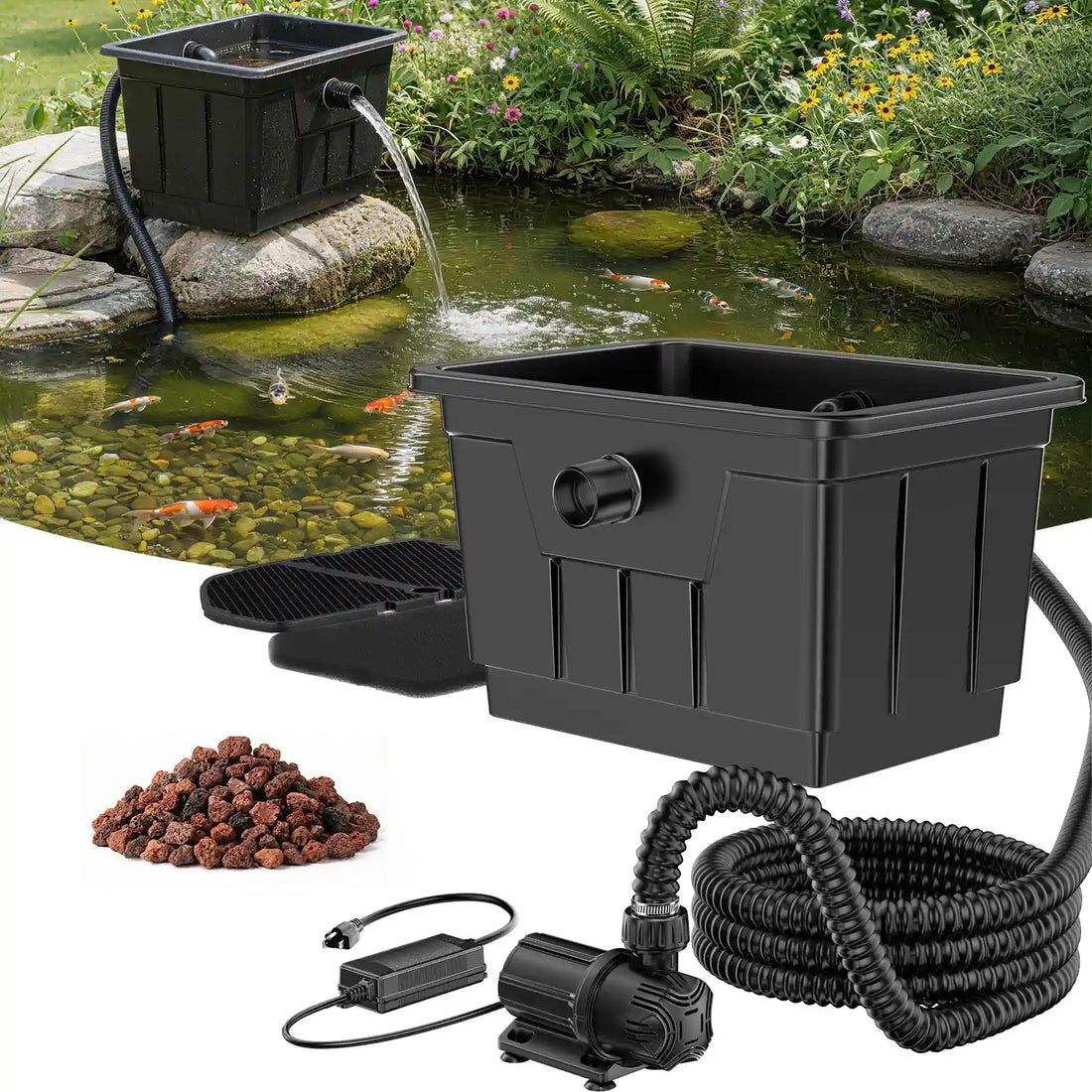
PF580 · Pond filter kit
The PF580 above-ground pond filtration kit helps circulate water through physical and biological filter media, with an accessible box that makes routine maintenance more convenient.
POPOSOAP 1200GPH Pond Filtration System
$314.99
The kit includes the filter box, pump, adapter, tubing, fittings, filter pad, support shelves and lava rock. The pond, stream and landscaping are your own project.
Explore the PF580 filter kit*Actual flow depends on lift, tubing and filter condition. This kit uses mains power through its adapter. Read the installation manual
The same filter has different volume guidelines for a decorative pond and a pond with fish. Compare yours, then check the rest of the setup.
A starting point for planning. Volume alone does not establish system suitability.
WHAT TYPE OF POND?Listed maximums: 1,200 US gallons for decorative ponds; 600 US gallons for fish-stocked ponds.
Also check: an appropriate electrical supply, a clear return route, lift and tubing length, fish load and debris. Heavy stocking can require more filtration. The kit has no UV clarifier.
Short, practical answers to the questions that come up between watching a video and building your own water feature.
No. PF580 uses a 42W electric pump connected through its supplied power adapter. Plan for a suitable GFCI-protected outlet, and keep the adapter in the dry, weatherproof location specified in the manual.
The current product guidelines are up to 1,200 US gallons for decorative ponds and up to 600 US gallons for fish-stocked ponds. Volume is only a starting point: fish load, debris, lift and tubing also affect the filtration you need.
This creator uses the filter as part of a stream return. Check that you can place the box on a stable pond edge, route the pump hose and keep the outlet and return path clear. Confirm the layout against the manual before choosing the kit.
The filter box sits above ground at the pond edge. The pump goes in the water and must remain submerged. Leave room to access the filter pad, fittings and drain valve.
1,200 GPH is the pump’s maximum rated flow. Lift, tubing length, bends and filter condition reduce actual flow. The listed maximum lift is not a promise of full flow at that height; check your planned route before buying.
The kit includes the filter box, pump, adapter, tubing, fittings, filter pad, support shelves and lava rock. Your pond, stream, landscaping and suitable electrical installation are separate. Use the current packing list for exact components.
The film shows water circulating, not a timed water-clarity result. Physical and biological filtration can help manage debris and water quality, but the kit does not include a UV clarifier. Persistent green water may need additional treatment and pond care.
No. The bottom valve lets you flush accumulated waste more conveniently. You still need to inspect the pad, pump and tubing, and clean them as instructed. Disconnect power before maintenance.
The manual calls for weekly filter-pad cleaning and pump cleaning about every two weeks, or when flow decreases. Debris and stocking affect how quickly it needs attention. Flushing the bottom valve does not replace these checks.
Follow the manual when rinsing or replacing media. It advises against detergents and chemicals that can harm beneficial bacteria. Keep a regular inspection routine rather than waiting for a major blockage.
Disconnect power before inspection. Check the water level and pump intake, then look for debris, kinks, leaking connections or blocked filter media. If the pump will not run, follow the manual’s power and GFCI troubleshooting steps.
In freezing areas, the manual says to remove, clean and dry the pump and store it indoors. Drain water from the pump and hoses before storage. Plan for seasonal care rather than leaving water trapped in the system.
No. The original edit is about 21 seconds long and shows selected build moments. Follow the PF580 manual for the full setup, including media placement, tubing, power connections and testing.
The brand’s setup message does not time this particular build. Preparing the pond edge, landscaping, plumbing and electrical supply are separate from assembling the kit. Plan around your own site and experience.

Easy water features, more nature for all
Poposoap Your Water Feature In 10 Min
Kit assembly and landscape preparation are separate.