

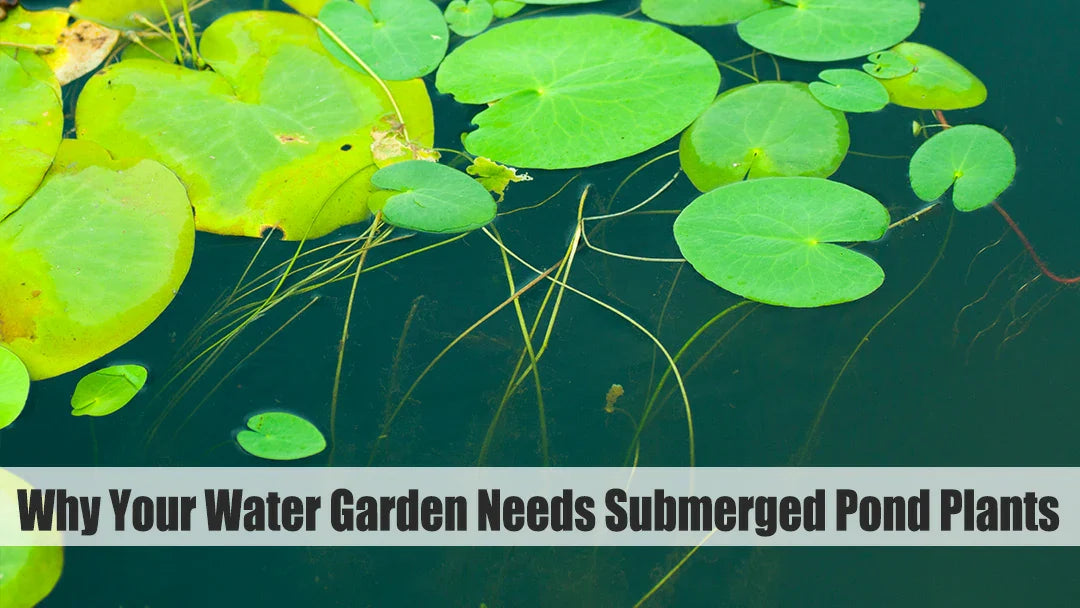
But if you are one of those water gardeners that have been maintaining your water garden beyond one year, you can easily identify with this reality. Everything is fine at first. The water is clean, it seems that your floating plants are doing fine, and it seems that your garden is in harmony. But then, without apparent reason, you start to encounter issues. The algae becomes harder to manage. The water becomes more temperamental. Maintenance becomes more daunting.
Often, the problem is far from that which appears on top. It is that which lies beneath.
Submerged pond plants are generally not self-promoting but are working hard in the background at a number of tasks required for ensuring a functional water garden.
Introduction -- The Hidden Heroes of Every Pond
However, when people design a pond or a water garden, nothing much is done below the water level. Floating plants, marginal plants, rocks, and even light are always given prime importance. Submerged plants are sometimes introduced or are left untouched.
I suppose so. You don't really look at them. They don't bloom above water. Also, at first, your pond appears normal without them.
However, for ponds that lack subaqueous plants, the reliance on pumps and filters increases. The system functions well, but it seems rather vulnerable. Just a week of hot weather or an imbalance, and everything starts to go wrong.
The submerged plants are like passive supports. Just think about the presence of these plants. You don't notice them. But their absence can be felt. The submerged plants are passive supports.
What Are Submerged Pond Plants?

Submerged pond plants, as the name implies, completely submerge in water. These plants entirely hide in water and remain undetectable since the roots are either fixed on the ground or float on water.
In contrast to floating plants, these plants do not prevent sunlight from penetrating. These plants directly act on the water.
Most of these plants are oxygenating plants. These plants produce oxygen gas when light is available for a period of time. This contributes to a significant aspect of maintaining water conditions.
They aren't purely ornamental, in the classical sense, but they are highly useful, in a manner in which very few other plants are.
The Ecological Role of Submerged Pond Plants
Submerged pond plants are also known for their ability to produce high levels of oxygen. This is a crucial component in ensuring fish thrive. It also supports pond-life.
The other key function is that of nutrient control. It is nutrients that exceed the required levels that algae thrive upon. The presence of underwater plants sees them compete for these same nutrients. This results in a reduced incidence of green water and algal blooms.
Another function of the submerged plants is to offer shelter. The small fish, fries, and useful microorganisms find shelter in the plants. This enhances the overall ecosystem even in a small pond garden.
Ecologically speaking, underwater plants also play a role in evening out extremes. The quality of the water is not as drastically affected, as it becomes more pond-friendly when changes occur.
How to Plant Submerged Plants in a Pond

Planting submerged plants is usually simple, but patience helps.
Some aquatic plants can be bought already weighted, and they can be carefully added to the pond. In some instances, some aquatic plants thrive well in aquatic baskets filled with pond materials. Aquatic plant placement in a pond can be achieved by considering the area where water currents are not strong but steady.
Do not immediately submerge them in strong pump output. The plants would have circulation to sustain them rather than plant them. This balance is considered in Poposoap circulation systems that promote plant movement.
Spacing also counts. Planting too much in one spot may impede flow. Planting too little may not yield much advantage. Moderation in this case seems to be the golden rule.
Submerged Pond Plants Maintenance Tips
One reason why people like underwater plants is the fact that they do not require constant care.
That being said, they do require occasional maintenance. During the warmer months of the year, some thinning may be required in order to avoid overcrowding. This will also help keep the decomposing plant material from adding nutrient-rich water back into the tank.
Sometimes, leaves can accumulate around submerged plants. Removing them helps to ensure that plants receive adequate water flow.
Seasonally, it is worth examining the quality of the plant. Healthy subaqueous plants will be supple and green.
Best Submerged Plants for Water Gardens
Not all submerged plants have the same characteristics.
Some are more concerned with oxygenation and are excellent for ponds with fish. Some are more concerned with nutrient uptake and clarity.
A combination of choices may be a good approach rather than a single type. Factors that should be considered in the selection of water garden plants include pond depth and the type of climate.
Plants that are suitable for your environment are known to grow faster and need less work.
Integration of Submerged Aquatic Plants with Other Aquatic Plants Used as Fish Foods

For submerged plants, it's more effective to plant them using a layered approach.
Floating plants give shade to the surface. Marginal plants give support to the edges. Submerged plants help in maintaining water quality from beneath.
This, in turn, gives way to a pond ecosystem designed in such an interactive manner, relying on balance rather than correction. This bears testament to the principles preferred in Poposoap pond design, to let nature take its course.
When plants and circulation are considered together, maintenance becomes easier and more predictable.
Common Errors to Be Avoided in Submerged Plant Cultivation
One of the biggest misuses is when people expect miracles in a short period of time. For plants that are submerged underwater, it takes time for them to grow and for their
Also, overplanting can be a problem. Submerged plants can be beneficial but can also impede water movement, leading to dead zones.
The area where plants are placed can pose a challenge too. When there is aggressive flow, plants can be knocked uprooted or hinder development.
At last, disturbance is some way in making progress. Submerged aquatic plants thrive in environments where they are not constantly having to adjust.
Conclusion -- Building a Balanced, Thriving Water Garden
Submerged aquatic plants don't call for maintenance and don't accentuate themselves through sight. Their work is to humbly serve other components of the pond.
By increasing oxygen content, taking in excessive nutrients, and helping grow plants and other organisms that live in the water, they stabilize and maintain water gardens very effectively.
Pond ecosystems constructed in ways that incorporate submerged plants, circulation, and multiple layers of plants look and feel much more like nature, and much less like a machine that is always in need of repair.
READ MORE: Best Plants to Keep Your Pond Water Crystal Clear

P3203 20W 280GPH Solar Pond Filter Fountain
$119.99
Clean and oxygenate your pond with this 20W solar pond filter pump. Eco-friendly 280GPH flow ideal for small to medium backyard water features.
FAQs About Submerged Pond Plants
Occasionally briefly, but clarity generally increases as plants mature.
Yes. Most fish find the habitat and oxygen provided by these structures useful.
No, but they reduce the workload on mechanical systems.
Progress is sometimes seen after a few weeks.


Leave a comment
All comments are moderated before being published.
This site is protected by hCaptcha and the hCaptcha Privacy Policy and Terms of Service apply.