

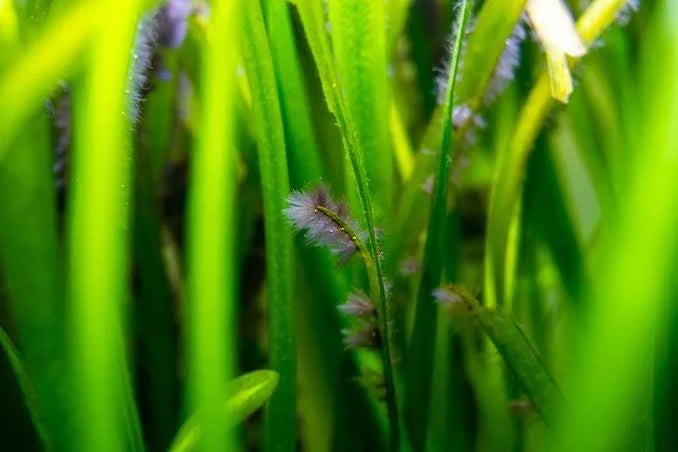
Black beard algae is often considered the most unpleasant of all algae in ponds. It appears in the form of dark crusts on the bottom, plants, rocks, filters, and any other surfaces. The thing is that black beard algae is very stubborn and hard to remove, unlike ordinary green algae. Many people wonder how to remove black beard algae because traditional methods rarely help. But if you know the cause of its appearance, the removal process, and ways of prevention, then you can solve this problem.
What Is Black Beard Algae?
Black beard algae is a kind of brushy, dark algae that attaches firmly to underwater surfaces. It should not be confused with algae that can be easily wiped off and are in the form of a thin layer. This algae forms clusters and becomes quite persistent under favorable conditions.
Appearance of Black Beard Algae
Usually, this algae looks like short hair.
The color of black beard algae may change depending on the growth stage. It may be in the following forms:
- Black crust
- Dark-green growth
- Gray or purple spots
Initially, black beard algae may resemble dirt on a certain surface. Further, it turns into a crust and becomes thicker.
An easy way to recognize black beard algae is by its consistency. It is rough and firmly attached to the substrate despite water movements.
Places of Growth
This algae may appear almost anywhere in the pond.
Most common locations are the following:
- Rocks
- Waterfall stones
- Leaves of plants
- Parts of the pump
- Boxes of the filter
- Decorations
Black beard algae tends to appear in areas with accumulation of waste products or low water circulation.
For instance, the corner of a pond with poor circulation may become a suitable place for algae growth.
Why It Is Difficult to Remove
Black beard algae is very difficult to control because it attaches to surfaces firmly.
Unlike floating algae, it will not wash away with water changes.
Smaller pieces may remain in the pond and start growing anew.
That is why the removal of visible algae alone is not enough. It is important to correct the pond conditions.
What Causes Black Beard Algae?
The main reason for the appearance of black beard algae is a violation of the balance in the pond.
The development of this algae occurs due to excess nutrients, unstable conditions, and stagnation areas in the pond.

Excess Nutrients
One of the possible answers to the question of what causes black beard algae is excess nutrients in the water.
All waste products from fish feeding, uneaten food, and decayed leaves serve as sources of nutrients.
If the amount of organic material is too high, algae have plenty of nutrients to grow.
Common causes are the following:
- Excessive feeding of fish
- Too many fish in a small pond
- Excessively large amount of plant waste
- Unhygienic filter media
It is necessary to note that a healthy pond cannot lack nutrients, but their balance should be maintained.
Lighting and Flow Violation
Poor circulation and too much light may contribute to the growth of black beard algae.
A pond receiving sunlight all day may experience faster development of this algae.
Stagnation areas may also serve as favorable zones for algae appearance.
Good circulation is needed to move water through the filtration system and stabilize oxygen levels.
A pond does not require strong water waves but should have constant water movement.
Buildup of Organic Waste
Another significant cause is organic waste.
The process of decomposition of leaves, dead plants, and fish waste produces a lot of nutrients.
Regular maintenance can reduce this problem.
Several simple measures are:
- Removing fallen leaves
- Cleaning filter pads
- Monitoring water clarity
- Not overfeeding the fish
How to Remove Black Beard Algae
The best way to get rid of black beard algae is to combine the removal of visible algae with improved pond care.
Unfortunately, there is no universal way to eliminate this algae. A long-term solution always involves several small steps.
Physical Removal and Pruning
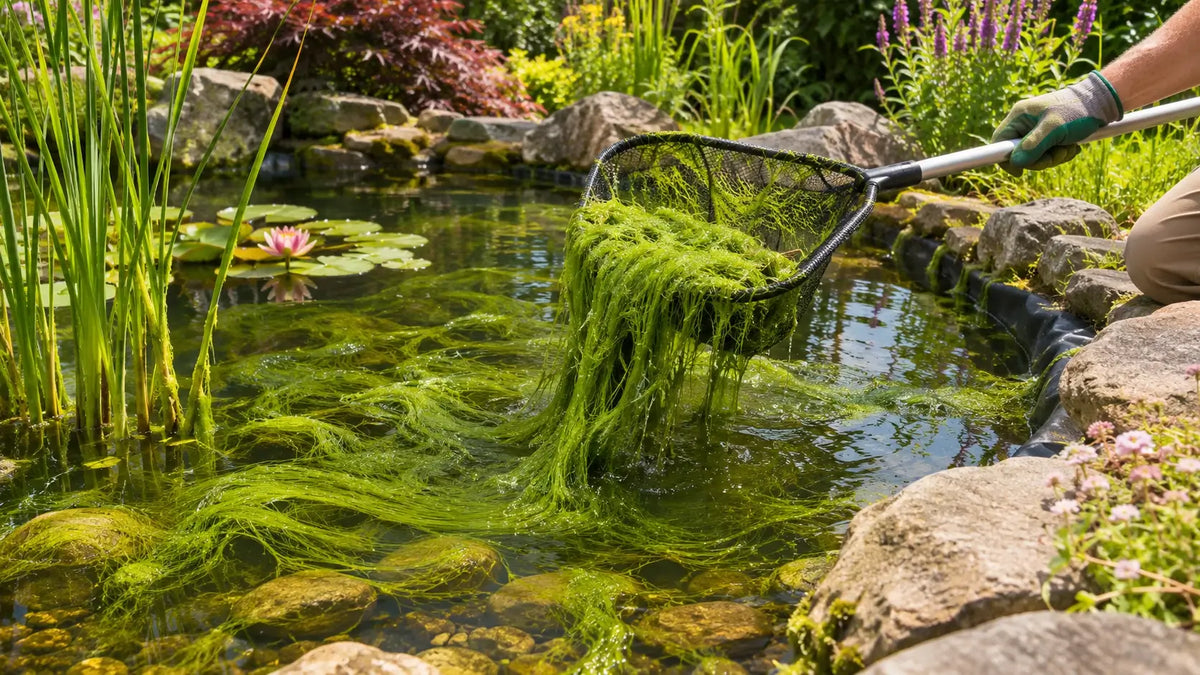
The first step of black beard algae elimination is the removal of visible algae.
In case of rocks and decorations:
- If possible, remove them from the pond
- Scrub the affected areas
- Rinse off the loosened algae
In case of plants:
- Cut off heavily affected leaves
- Remove the damaged parts
Do not leave the removed algae in the vicinity of the pond because it decomposes and provides new nutrients.
In case of large ponds, it is easier to clean areas one by one rather than to try to clean everything at once.
Spot Treatments
Some pond owners prefer using spot treatments.
Spot treatment means applying a product only to the affected area to reduce patches.
But care is required.
Excessive use of chemicals may damage the following:
- Fish
- Water plants
- Beneficial bacteria
Always follow the instructions.
Spot treatment is helpful if it is combined with improved filtration and regular cleaning.
Fish That Eat Black Beard Algae
Often people wonder what eats black beard algae.
The fact is that black beard algae is not a food source for most fish in the pond.
There are several aquarium species that may eat black beard algae.
These are:
- Siamese algae eaters
- Algae-eating shrimps
But the addition of fish is not a guaranteed solution.
When talking about fish that eat black beard algae, it should be remembered that every species requires specific conditions. An additional fish population can bring extra waste and exacerbate the problem with algae.
The right approach is maintaining the balance in the pond.
How to Prevent Black Beard Algae
The prevention of black beard algae is much easier than eliminating the already existing algae.
A proper pond environment gives little chance for algae to grow.

Keep the Balance Between Lighting and Nutrients
Controlling sunlight and nutrients is essential.
Some actions will be useful:
- Add shading plants
- Avoid excessive lighting
- Feed fish properly
- Remove organic waste regularly
Pond plants may compete with algae for nutrients in the water.
The purpose is not to remove all nutrients. You need to maintain balance.
Improving the Circulation
Good circulation helps to avoid zones favorable for algae growth.
Good circulation ensures:
- Improved oxygen distribution
- Clean water
- Effective filtration
A properly selected pump and filter can improve general pond conditions.
For those who want to simplify pond maintenance, there is a line of Poposoap pond filtration solutions that provides water movement and filtration support for outdoor ponds.
Maintenance of Equipment and Decorations
Pond equipment requires regular checking.
You need to check:
- Performance of the pump
- Cleanliness of the filter
- Water flow
- Decorations with algae accumulation
Do not replace all the filter materials at once. Filters contain the beneficial bacteria necessary for the pond's health cycle.
Some small habits can prevent big problems in the future.
Control Black Beard Algae Before It Spreads
Black beard algae may be difficult to remove, but you can easily control it.
The best approach is the combination of removal of visible algae and better pond management.
Remove the visible algae, improve circulation, control nutrients, and keep filtration efficient.
A clean pond is not formed by one fast action. It requires regular maintenance and stability of conditions.
Those who own outdoor water features can choose simple solutions for pond maintenance.
Poposoap focuses on practical water solutions for backyard ponds.
The sooner you deal with black beard algae, the easier it is to control.

20W Solar Pond Filter & Fountain Kit
Built-in 280 GPH water pump, filter box and bio-filter media
Shop NowFAQ
1. What causes black beard algae in ponds?
Black beard algae usually grows due to excess nutrients, poor water circulation, too much light, and accumulation of organic waste.
2. How do I remove black beard algae from my pond?
Remove the affected areas manually, improve water circulation, and maintain stable conditions.
3. What fish eat black beard algae?
Some aquarium fish may eat it, but most pond fish do not. Prevention is usually more effective.
4. Is black beard algae harmful to pond fish?
It does not cause any harm directly but can point out that something is going wrong with the water conditions.

Leave a comment
All comments are moderated before being published.
This site is protected by hCaptcha and the hCaptcha Privacy Policy and Terms of Service apply.