

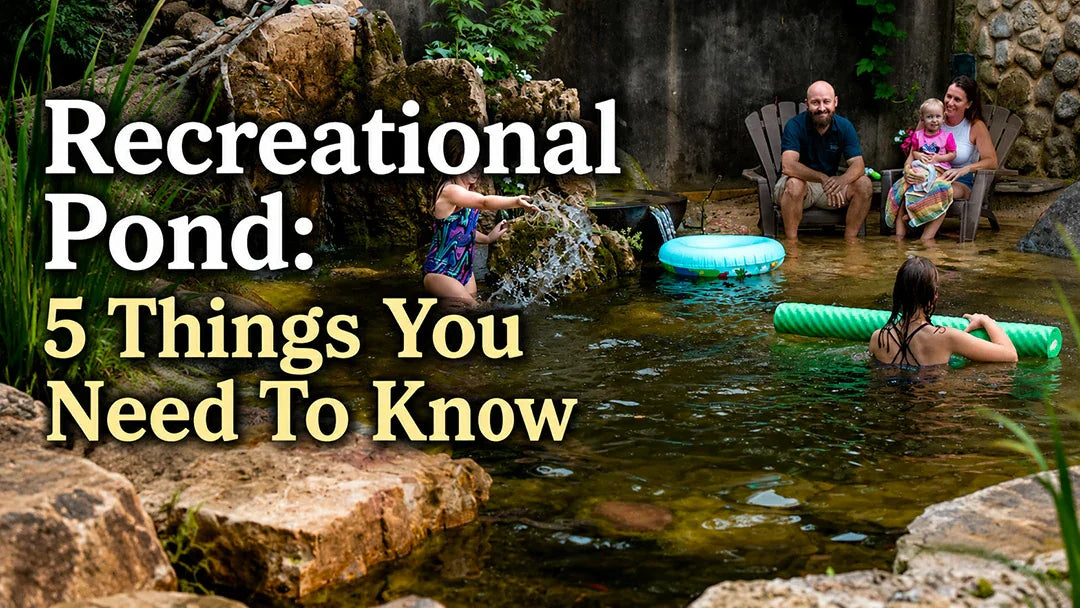
They are not just ponds that you look at, but that you use. We build recreational ponds to swim in, to cool off in, or just to use as an amenity — to be around water but not feel like a traditional swimming pool. In the last few years, recreational ponds have become more and more common in private gardens and the countryside. They are very natural and blend right in. This article will inform you what a recreational pond is, why a recreational pond might be a good choice, and what you should know to get started with a recreational pond project.
What Is a Recreational Pond and How Is It Different from an Ornamental Pond?

A recreational pond is created for recreational activities by humans, not for aesthetic value only. You can go in it, sit around it, or swim in it according to how you have created it.
However, an ornamental pond is not the same as an ordinary garden pond. It has an important function to fulfil: to look good! It is often centred around plant life, fish, and water movement. It is appreciated from the outside only.
The first major difference is with regard to the structure or features of a pond created for recreation purposes, as it will have a gentle slope and depth in certain areas since it is intended for recreation purposes. This is not necessary with regard to an ornamental pond.
Another difference is the care of the water. Recreational ponds require the water to be constantly circulating and filtered. The water has to be clear and fresh for constant human contact.
It is important to know what type of pond is desired to avoid any confusion in the future.
5 Things You Need to Know Before Building a Recreational Pond

1. What You Expect to Do with the Pond
Before you think in terms of size and shape, you should think in terms of use. Will people swim in the pond? Will children play in the shallow water? Will people just relax and cool off in the water?
Each use alters the design. A shallower recreational pond will be more secure and economical. A deeper pond provides more flexibility but requires more robust filtration.
Be realistic about how often it will be used. That helps keep the project balanced.
2. Planning the Space Matters More Than You Think
Where the pond is located will also affect its maintenance. If the pond gets full sun, this will make the water warmer as well as promote more algae growth. If the pond gets a lot of shade, this will make the water colder; however, it will also slow algae growth.
Soil conditions also vary. Soils have different retentive properties for water. Soils of poor quality might need additional protection with underlayment.
Early planning is needed for accessibility for maintenance. A beautiful pond that is difficult to reach can be frustrating.
3. Understanding Recreational Pond Costs
The question many individuals pose is: "How much does a recreational pond cost?" The answer is not based upon size alone.
A small recreational pond can be budget-friendly. However, if you plan to construct a swimming pond, it will require more digging, liners will need to be stronger, and filtration systems will be needed.
Costs of maintenance are also important, especially when considering the electricity, cleaning, and replacement parts that will be needed. It should also be considered that good quality filtration will be needed from the outset, as this will help manage future costs. Some owners like to use integrated systems, like a pond filter fountain that also comes with a lighting option: Poposoap AC Pond Filter Fountain with Light.
4. Maintenance Is Part of Ownership
A recreational pond is not a no-maintenance pond. Leaves will fall into the pond. Water levels will fluctuate. If the pond is not circulating well, algae can develop.
However, the good news is that in ponds that are maintained in their natural way, harsh chemicals are often avoided. Light maintenance is better than heavy maintenance that starts when the problem has already appeared.
The little details make a big difference: skimming debris from the pond weekly helps stabilise the water quality.
5. Safety Should Be Designed In
Safety is more than just rules and regulations; rather, it's more about design — having edges that slope downwards, firm footing for standing on, and depth changes that can be easily identified.
When children, as well as visitors, make use of a pond, well-defined borders will create a sense of comfort for every party involved. The design will incorporate safety in a manner that does not call too much attention to itself.

Conclusion
A recreational pond is another form of home-based water recreation. This is a more personal and less commercial form of water recreation at home. The important thing is to know what you are building and why.
It is beneficial to understand that there is a difference between recreational ponds and ornamental ponds. This helps to manage expectations.
Reliable filtration ensures water clarity and comfort in the long term. Many pond owners opt to install filtration systems that provide long-term performance: browse Poposoap Filtration Solutions.
If you are interested in a more natural swimming experience, you may find this article helpful: Natural Pond Pool.
For recreational ponds to work effectively, there must be a good match between design decisions and real-world use.

P3203 20W 280GPH Solar Pond Filter Fountain
$119.99
Clean and oxygenate your pond with this 20W solar pond filter pump. Eco-friendly 280GPH flow ideal for small to medium backyard water features.
Frequently Asked Questions
Is a Recreational Pond Suitable for Swimming?
Yes, if it is done in a proper manner.
Can Fish Be Kept in a Recreational Pond?
Ponds can provide space for fish, but many ponds separate areas for swimming and areas for fish.
Are the Same Types of Chemicals Needed for a Recreational Pond as Those Needed for a Pool?
Most recreational ponds rely upon filtration and circulation rather than chemicals.
How Long Does It Take to Build a Recreational Pond?
It depends on the size and complexity, but most take several weeks.

Leave a comment
All comments are moderated before being published.
This site is protected by hCaptcha and the hCaptcha Privacy Policy and Terms of Service apply.