

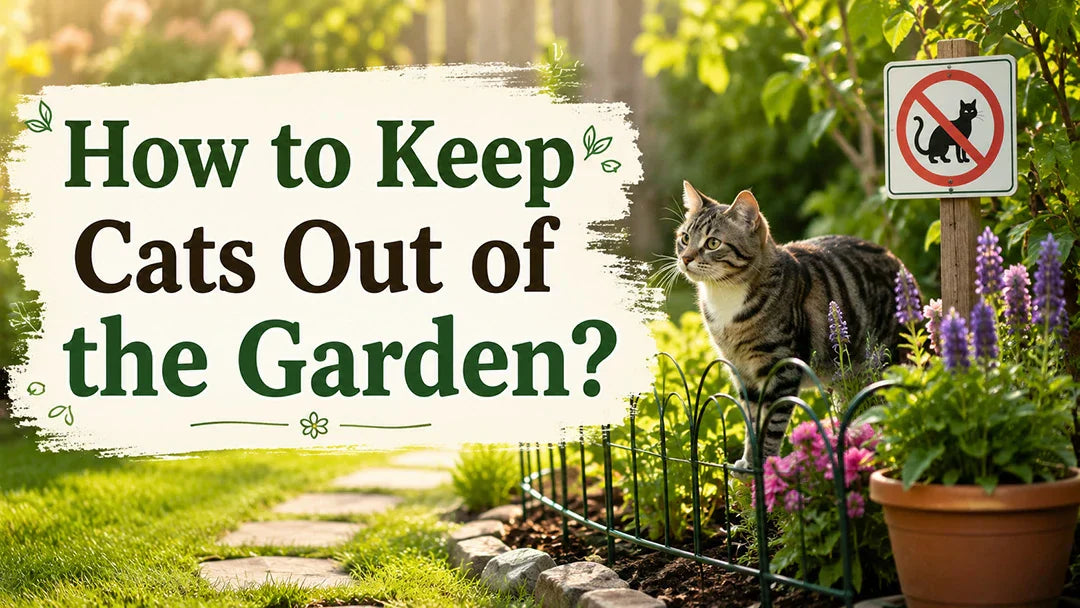
While some gardeners like sharing their gardens with animals, cats can be problematic when they get into the garden. Cats dig up the soil, leave their waste behind, and may even destroy young plants. These behaviours may be natural for cats, yet for gardeners who take great care of their gardens, it may be frustrating. In this article, we shall look at how to keep cats out of the garden through humane and non-toxic methods. The aim should not be to harm them but to redirect them away from the garden through humane methods.
Why Do Cats Keep Coming Into Your Garden?

To find out how to keep cats away from the garden, it may be important to first understand why cats enter the garden. Cats do not enter the garden with the intention of being problematic. They enter the garden for their comfort and for natural instincts.
- Soil: Cats find it comfortable to dig up the soil. New gardens may be especially attractive for them as the soil may be loose.
- Comfort and shelter: Plants may offer them cover from traffic, humans, and other animals. The garden may be especially attractive as it may offer them a nice spot for rest.
- Scent and territory: Cats use smell as their primary sense when it comes to marking territory. Once they have marked the area, other cats may be attracted to it. Thus, it may not be just one cat that is the problem but all the cats that may be attracted to the area.
- Entertainment: The garden may be attractive as it may have birds and other animals for them to play with.
Natural Cat Deterrent Methods That Are Safe and Humane
There is no single solution that will work for all gardens. The best results are usually achieved by combining a few gentle methods. The following are proven natural cat deterrents that are harmless to cats and the environment.
Scent and Plant Interventions

Cats have a strong sense of smell. Some smells can make a particular area unappealing without causing any form of harm.
Cat repellent plants can also help, but they should be carefully selected. The plant should not be harmful to cats.
Safe and commonly used cat repellent plants include:
- Lavender: has a strong smell and is usually not appealing to cats.
- Rosemary: has a strong woody smell and can mask soil smells.
- Rue: is effective when used as a border plant.
These plants should be used collectively for best results. The use of a single plant is not effective.
Other scent-based deterrents include citrus peel, used coffee grounds, or diluted vinegar placed in small containers. These smells will fade over time and should be frequently replaced.
Physical Barriers That Do Not Cause Harm

Physical barriers are one of the most effective deterrents and can provide long-term results. The objective is to make digging uncomfortable for cats but not painful.
Physical barriers include:
- Garden netting placed flat on the ground and covered with mulch.
- Chicken wire buried just beneath the soil.
- Rough materials such as bark chips or pinecones.
Cats dislike digging on rough ground. When digging is uncomfortable for them, they will go elsewhere.
A low fence can also help to protect specific garden beds such as vegetables. It does not have to be a high fence. Cats dislike entering an area that is a little more challenging to access.
Never use sharp objects or traps. These can cause injuries to the animals. In addition, using such objects is dangerous.
Water and Startling Mechanisms
Most cats are not comfortable with the presence of water. This makes the use of water an effective method.
Motion-Activated Sprinklers
These are effective. The device releases water when it recognises movement. The water is only sprayed for a brief time. The device does not harm the cat. It, however, ensures that the cat understands the boundary. After some time, the cat will avoid the region.
Redirecting the Behaviour
Some cats may be entering the garden to look for water. The use of an alternative can be an effective solution.
Redirecting the cat's behaviour can be done by providing an alternative source of water. For instance, the cat may be entering the garden to look for water. An alternative source can be provided. This will minimise the interest shown in the garden bed.
For instance, providing water in a corner may minimise the interest shown in the garden bed. A shallow dish or a fountain may be provided. A compact solar bird bath fountain ensures the water is constantly moving without the use of electricity. For example, the Poposoap Solar Bird Bath Fountain Pump is a practical option.
The presence of moving water may attract other animals such as birds. This minimises the presence of the cat in the garden bed.

Building Long-Term Strategies That Actually Work
Most temporary solutions are not effective. This is due to the ability of the cat to adapt.
Protecting the New Soil
New soil is the most vulnerable area. Most cats are attracted to new soil. The use of netting or texture can be applied.
Combination Methods
Most cats are not comfortable with the presence of water. In addition, the use of scent or texture is effective. The combination ensures the cat is deterred on multiple fronts.
Be patient. Humane methods are all about learning. Eventually, cats will not come back to a space that is no longer comfortable for them.
Conclusion
If you are looking for answers to the question of how to keep cats out of your garden, the solution is not in fighting the cats but in understanding their behaviour. Cats need comfort, security, and familiarity. If you can gently take these away, you can protect your garden without harming the cats.
Cat repellent plants, barriers, and natural cat repellents can be very effective, as can distracting them with water features. This is precisely what the products from Poposoap can help you achieve, as they offer quiet, solar-powered products that can be easily integrated into garden design.
A garden that is peaceful for both humans and cats is very achievable.
If you are looking for more information on how to keep cats away from your garden, you might be interested in the following article: How to Prevent Dogs from Damaging Your Pond.

SPF130 8W 80GPH Solar Pond Filter Fountain with Battery
$59.99
Solar pond filter with battery backup: 8W panel + 3000mAh battery, multi-stage media, quiet dry-run protection. Solar powered pond filter with battery backup.
Frequently Asked Questions
What Is the Best Way to Keep Cats Away?
A combination of texture, scent, and motion-activated water is more effective than using one of these methods alone.
Do Cat Repellent Plants Actually Work?
While they can be helpful, they can be more effective if used in conjunction with other methods.
Is Vinegar Safe for Use in the Garden?
No, it is not safe to use vinegar directly on the soil. Only use it in containers.
Will Cats Learn Not to Come Back?
Yes, cats learn that if they don't like the space, they can go elsewhere.

Leave a comment
All comments are moderated before being published.
This site is protected by hCaptcha and the hCaptcha Privacy Policy and Terms of Service apply.