

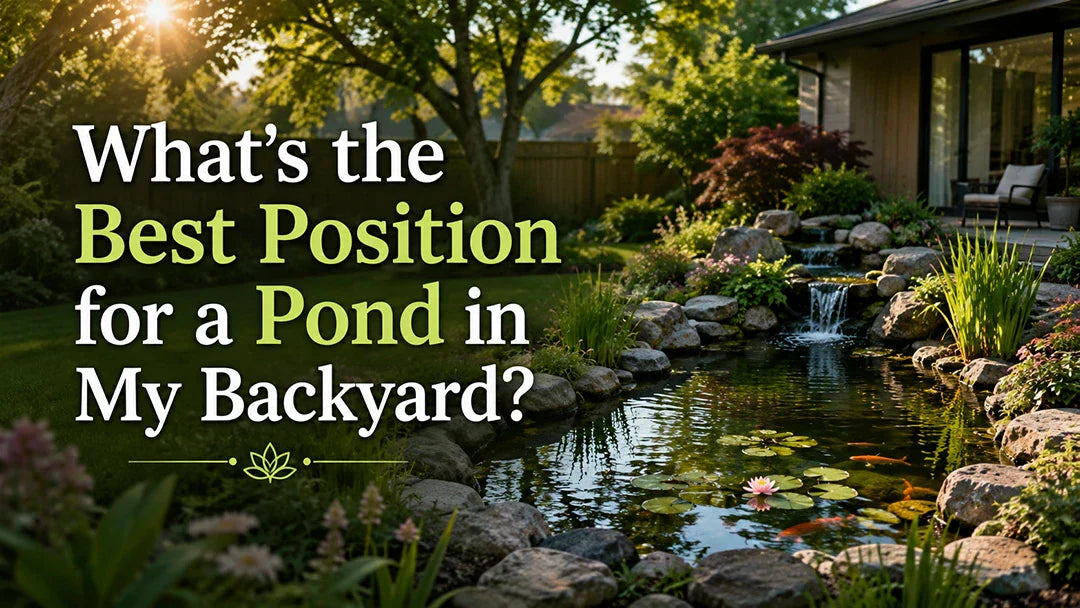
Pond placement is one of those decisions that, on the surface, seems rather simple but quickly turns into a confusing puzzle. Most people consider the aesthetics of the pond. Eventually, however, problems of algae growth, stress on the fish, or perpetual cleaning will arise. The placement of a pond affects much more than the look of the pond. This article will explore pond placement from a number of angles, ensuring you find a position that is not only aesthetically pleasing but functional too.
Why Pond Placement Is the Most Important Step in Pond Construction
Pond placement is the foundation on which all other decisions are made. Once the hole is dug, most problems are extremely costly to correct. This is why experienced pond builders spend more time on pond placement than on decorations.
One of the most important aspects of pond placement is sun exposure. A pond exposed to direct sunlight all day will quickly warm up. Warm water contains less dissolved oxygen, which can stress fish. Too much sun will cause algae growth. A pond in complete shade will be cold and lifeless. A combination of sun and shade will yield the best results.
Soil condition is another factor to consider. A pond on unsteady ground will cause the pond to settle unevenly. This will stretch the pond liner or cause the pond walls to dip. A flat, compacted soil base will provide a sturdy foundation.
Another concern is water movement around the pond. A pond that is not well placed may be affected by heavy rainfall. This rainfall may wash away a lot of dirt and lawn chemicals. Once this water enters the pond, it becomes nutrient-rich. This causes cloudy water and algae problems.
Another factor is visibility. A pond that is easily seen from your home is one that is well maintained. A pond that is not easily seen tends to be neglected. When a pond is not easily seen, problems tend to develop.
Key Factors to Consider When Choosing a Pond Location
The best pond location is one that is well chosen. This requires an in-depth understanding of your yard. The following are factors to consider.

Sunlight Patterns
The sun is an important factor to consider. Morning sun is soft and helps to warm up your pond. Afternoon shade helps to prevent overheating. A pond that receives four to six hours of sunlight is best.
Nearby Trees and Plants
Large trees shed leaves, seeds, and pollen into your pond. This causes sludge to form. Sludge is decaying matter. Trees also have large roots that may interfere with your pond. Keeping a distance between trees and ponds is a great idea.
Wind Direction
Wind is another factor to consider. Wind causes floating matter to blow across your pond. A well-placed pond is one that takes this into consideration.
Access for Maintenance
A well-maintained pond is a happy pond. A well-maintained pond is one that is close to your home. A pond filter is an important part of a pond. A well-placed pond filter is one that is easily accessible. This allows you to easily maintain your pond.
Yard Safety
A well-placed pond is one that is easily seen. A pond that is not easily seen is one that is not well maintained. A pond that is not well maintained can become a safety hazard.
These factors will help you in choosing a location for the pond, considering both its aesthetic appeal and functionality.
Best Pond Location Tips: Koi Pond Placement and Equipment Positioning
In having a fish pond, additional planning is required, especially for koi ponds, considering the nature of these fish, which are very sensitive to temperature changes.

Koi Pond Placement and Fish Health
Koi fish, like any other fish, prefer a steady environment. Ponds with some shade tend to be cooler in the summer, thus maintaining oxygen levels in the water. Also, it is best to avoid placing the pond near noisy equipment, like an air conditioner, as it will create vibrations, causing stress for the fish.
When choosing a location for the pond, it is best to consider the depth of the water, as deeper ponds will help keep the fish from temperature fluctuations.
Pond Filter Placement and Water Flow
In maintaining a healthy environment for the fish, proper pond water circulation is essential. When choosing a location for the pond filter, it is best to position it in an ideal location for the water flow in the pond.
A pond filter, like the Pond Filter Fountain, works best in an open water location, where the water is circulated properly, avoiding any stagnant areas in the pond.
Easy access to the pond filter will also ensure timely cleaning, as it is usually neglected if it is hard to reach.
Common Pond Placement Mistakes to Avoid
Newcomers to having a fish pond usually commit the same mistakes, so it is best to know these mistakes to avoid any problems.

- Placing the pond at the lowest point in the yard: It will tend to accumulate rainwater, causing fertilisers to enter the pond.
- Concentrating solely on aesthetic appeal: Ground that slopes may be visually appealing but can also be unstable over time.
- Not planning for future growth: Small shrubs can grow into large shrubs. The ground can also change as a result of tree and weed growth.
- Not planning for equipment placement: Failure to plan for pump placement can result in a cluttered and disorganised setup.
- Choosing a location that is not easily visible: The location of a pond is crucial as it should be visible enough for maximum use and appreciation.
Conclusion
The ideal location for a pond is where there is enough sunlight and where the ground is flat. The location of a pond is crucial as it can be a source of comfort and joy. The placement of a koi pond is also crucial as it can be a source of comfort and joy. The placement of a pond filter is crucial as it can be a source of comfort and joy.
To learn more about flexible pond filter placement and designs, explore Poposoap pond filter solutions.
To learn more about pump placement and designs, explore our guide on the best place for a pond pump.
A well-placed pond is a lasting feature, not a constant nuisance.

P2326D 40W 660GPH AC Pond Filter Fountain with Light
$89.99
Keep your pond water clear with the P2326D AC pond filter fountain. Includes pump, multi-stage filtration system, and built-in light for night beauty.
Frequently Asked Questions
How Much Sunlight Is Necessary for a Pond?
Ponds require four to six hours of direct sunlight a day.
Can a Pond Be Placed Close to a House?
Yes, as long as there is enough drainage of water away from the house.
Are Koi Ponds and Plant Ponds Placed Differently?
Yes. Koi ponds require more shade and more depth.
How Are Pond Filters Placed?
Pond filters are placed where there is enough water flow and where they can be easily accessed for maintenance.


Leave a comment
All comments are moderated before being published.
This site is protected by hCaptcha and the hCaptcha Privacy Policy and Terms of Service apply.