

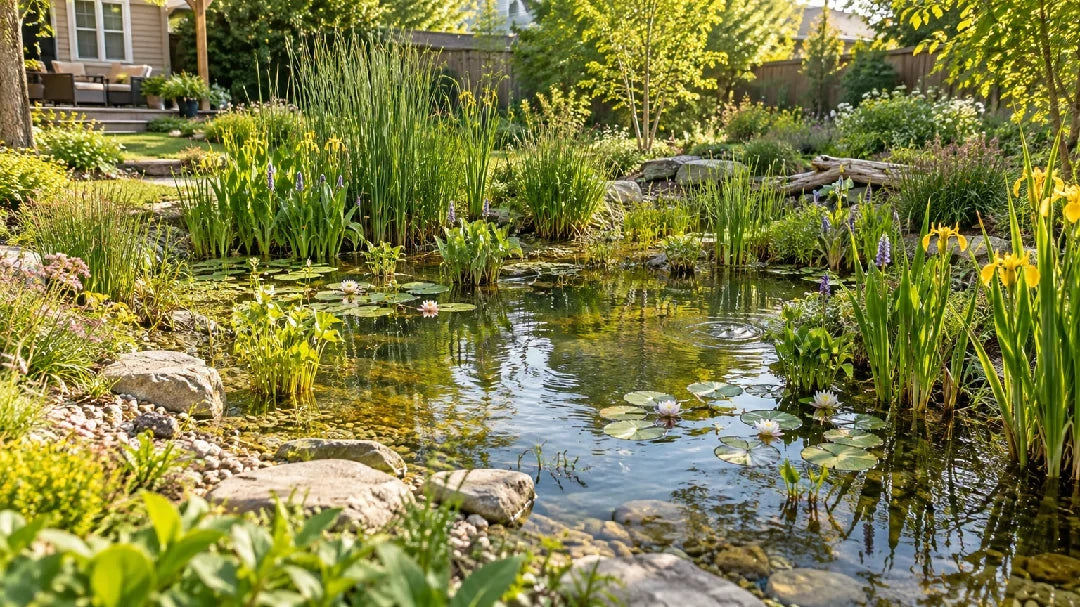
A backyard can be not only a place for planting flowers or grasses, but also a natural habitat for water, plants, and wildlife. A wetland garden does not necessarily mean creating a decorative pond with rocks and fish. An effectively created backyard wetland garden implies building an eco-friendly habitat. This guide will explain how a wetland garden differs from a pond, the preparation process, and the construction steps.
How Is a Wetland Garden Different from a Pond?
A wetland garden and a pond are not the same thing. While a pond usually implies creating something aesthetically pleasing, a wetland garden means building a small ecosystem.
There are some similarities between a pond and a wetland garden.
However, their purposes are quite different.
Here is what a pond usually includes:
- Large open water area
- Decorative elements
- Fish or fountains
- Mainly decorative purpose
Here is what a wetland garden usually includes:
- Shallow water areas
- Moist zones of soil
- Native plants
- Natural water filtration
The general idea of a wetland garden is creating a small ecosystem that can exist independently and support itself.
A wetland pond can combine open water and a planted area.
The plants around water serve as shelter for insects, birds, and other wildlife.
For example, a backyard wetland pond can consist of the following elements:
- A shallow edge with grasses,
- A center with water plants,
- A wet area on the outside.
Planning Your Backyard Wetland Garden Before Construction
Before building a backyard wetland garden, it is very important to plan its location and design properly.
Even a small mistake at the stage of planning can cause future maintenance problems.
Choosing a Location
First of all, you should find a proper place.
It should include:
- Enough sunlight for plants,
- Proximity for maintenance,
- Protection from big trees' roots,
- A pleasant view.
Most wetland plants require sunlight to thrive.
However, strong sun exposure may promote algae growth.
Thus, a sunny area with partial shading in the afternoons is usually a good solution.
Size and Water Source Planning
A wetland garden does not have to occupy a great amount of space.
Small backyard wetlands may include:
- Small shallow ponds,
- Container wetland gardens,
- Water features in the corners of the yard.
Large yards can have a couple of planting zones with various water depths.
In addition, planning the water source is a very important step.
Rainwater is a natural element of wetlands. But during a dry season, the water level may decrease dramatically.
Water stagnation leads to the appearance of unpleasant smells and mosquito breeding.
A gentle circulation system may preserve good water conditions.
An adjustable pond pump from Poposoap is useful for creating circulation in the wetland garden.
Adjustable flow is necessary since a wetland garden does not require strong water flow.
The goal is to maintain the freshness of water while preserving the natural look of the garden.
How to Build a Wetland Garden Pond Step by Step?
Creating a backyard wetland garden does not necessarily imply performing difficult tasks.
Following a simple construction scheme may help beginners to build a healthy water zone.
Step 1: Designing the Shape
The first step is choosing the pond's size and shape.
Natural curves usually give a more realistic look.
Try to avoid making the pond too regular.
An irregular shape often seems to be a part of a natural wetland.
You may mark the area before digging.
In this way, you will be able to estimate whether the chosen location corresponds to the rest of the garden.

Step 2: Creating Different Water Depths
Different plants require different depths of water.
Usually, a wetland pond contains several zones:
- Deep water for aquatic plants,
- Shallow water for wetland plants,
- Moist soil zones around the edge.
It gives the opportunity to create more space for plants and wildlife.
Step 3: Adding Liner and Natural Materials
A pond liner serves as a protective layer against leaking.
After putting in the liner, you should add some natural materials:
- Gravel,
- Rocks,
- Sand.
They can mask the liner and create a more natural look.

Step 4: Adding Gentle Circulation
Even though wetland gardens seem to be natural, some water circulation in them is quite useful.
Water stagnation may lead to:
- Bad odor,
- Mosquito breeding,
- Poor water conditions.
A small adjustable pond pump will help to create gentle circulation in the water.
Unlike a fountain pump, a wetland pump setup should not focus on creating strong water flow.
A Poposoap adjustable pond pump is perfect for maintaining circulation and controlling the water flow.

Step 5: Adding Plants Carefully
Plants play an essential role in creating a backyard wetland garden.
Start with a small amount of suitable plants.
Too many plants in the beginning may cause crowding.
While growing, plants will eventually occupy all the space.

Best Plants for a Wetland Garden
Choosing the appropriate plants can help to make a backyard wetland garden healthier and more beautiful.
Water Plants
Water plants grow in or near the water.
Among common water plants are:
- Water lilies,
- Pickerel plants,
- Arrowhead plants.
Such plants provide shade and shelter for small creatures.
Plants for Wetland Edges
The edge is one of the key elements of a wetland garden.
Suitable plants for this zone are:
- Irises,
- Rushes,
- Ferns,
- Native grasses.
Such plants create a natural transition between a pond and the garden.
Native Plants
Native plants are a good choice since they adapt to local conditions easily.
They usually require less maintenance and help local wildlife.
A healthy wetland garden can attract wildlife such as:
- Birds,
- Butterflies,
- Dragonflies,
- Beneficial insects.
It turns your backyard into a living garden.

Maintenance of a Wetland Garden
A wetland garden is meant to work naturally, but it still requires maintenance.

Managing Water Levels
Check the water level during hot weather.
Evaporation can reduce water levels very fast, especially in shallow areas.
Add water when it is necessary and do not let your pond dry out completely.
Controlling Plant Growth
Plants are very important, but balance matters.
You should remove:
- Dead leaves,
- Extra plants,
- Fallen branches.
Extra organic matter may spoil water conditions.
Circulation Equipment Maintenance
A pond pump should be regularly checked.
It should be cleaned when you notice:
- Reduced water flow,
- Debris accumulation,
- Strange noises.
Good circulation contributes to maintaining healthy water.
Poposoap products are designed to simplify water management in backyards.
Adjustable pumps give freedom for different pond sizes and designs.
Making Nature More Accessible with Poposoap
A wetland garden in a backyard is not only an ornamental object, but also a way of bringing natural elements into daily life.
With proper planning, even a small backyard can become a place for plants and wildlife.
Construction of a wetland garden starts with simple decisions:
- Choose the proper location,
- Create different water zones,
- Select suitable plants,
- Keep the water flowing.
With the help of Poposoap products, homeowners can create enjoyable water gardens.

20W Solar Filter Fountain
Built-in 280 GPH Adjustable-flow pump, filter box + bio media, 4 spray heads, 6.5ft tubing, low-water protection.
Shop NowFAQ
1. Can I build a wetland garden in a small backyard?
Yes. Containers and shallow ponds may help to create a simple wetland environment.
2. Does a wetland pond need a pump?
Not necessarily, but gentle circulation will help to maintain better water conditions.
3. Are wetland gardens high maintenance?
No. They require basic maintenance, but natural planting reduces maintenance in the long term.
4. Will a wetland garden attract wildlife?
Yes. Water and native plants will attract birds, butterflies, and insects.


Leave a comment
All comments are moderated before being published.
This site is protected by hCaptcha and the hCaptcha Privacy Policy and Terms of Service apply.