

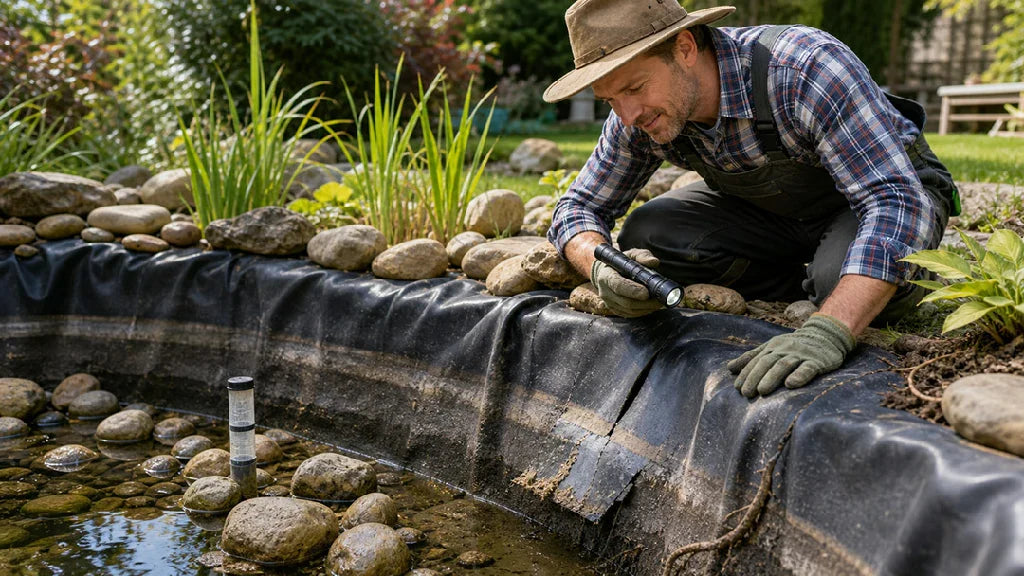
Pond liner is responsible for your entire pond's functionality.
When it stops working correctly, it causes many problems.
Water leakage, problems with plants, and fish dying are among them.
Liners tend to degrade due to sunlight exposure, tree roots, and age.
Also, some ponds have had problems since the beginning—poor installation is one of the factors.
This is why pond liner replacement is something you are likely to face one day.
This article will list the key points to consider.
Signs That Show You Need to Change Your Pond Liner
There are certain signs showing your pond liner requires replacement.
However, they do not always indicate that it needs to be replaced immediately.
Persistent Water Leakage
Leakage is a classic symptom of a problem with a pond liner.
However, a small hole can often be fixed by applying patches.
Yet, when you experience frequent problems, it usually means the liner has aged.
Material Deterioration
The material itself can show that it needs to be replaced.
For example, when it becomes hard and rigid, there may be no other option but replacement.
Cracks appearing on the surface near folds should also be taken seriously.
Tree Root Penetration
The presence of tree roots penetrating through the liner is another reason to replace it soon.
Such penetration means that further damage is almost inevitable.
Repeated Repairs
If you have already tried fixing your liner multiple times, it is often more cost-effective to replace it completely.
Modern liners tend to withstand the test of time.
EPDM liner (synthetic rubber) is popular due to its flexibility and resistance to UV degradation.
Poposoap uses this material for pond liners.
Best Time for Pond Liner Replacement

Timing is an essential aspect when installing a new pond liner.
Weather conditions should always be considered.
Spring and Early Fall Are Ideal
Usually, spring and early fall are recommended periods.
They allow you to work comfortably while protecting fish and plants from extreme temperatures.
Avoid Extreme Heat and Cold
During hot days, liner material becomes softer.
It may stretch irregularly and shift during installation.
During cold days, the material becomes stiff and more difficult to handle.
Consider Pond Life
Fish and plants tolerate relocation much better in moderate weather conditions.
Removing them during extremely hot or cold periods can be stressful.
Whenever possible, choose a period with several consecutive days of favorable weather.
This helps complete the project faster and more efficiently.
Cost of Pond Liner Replacement
Replacing a pond liner does not have a fixed cost.
Several factors determine the final expense.
Factors Affecting Cost
- Pond size
- Type and quality of liner material
- Labor costs
- Additional materials such as underlayment
Larger ponds require more material and therefore cost more.
Higher-quality materials also increase the price but provide longer service life.
Replacing a pond liner yourself is usually cheaper than hiring a professional.
Underlayment Costs
Underlayment is often required to protect the liner from punctures and damage.
Although it increases the initial cost, it helps extend the liner's lifespan.
Typical Price Range
Small ponds often require several hundred dollars for replacement.
For larger ponds, costs can exceed $1,000 depending on project complexity.
Thinking long-term is often the best approach.
Sometimes spending slightly more today reduces future maintenance and replacement costs.
How to Replace a Pond Liner
Step 1: Drain the Pond
Begin by draining the water from the pond.
Fish and plants should be moved to temporary containers.

Step 2: Remove the Old Liner
Remove the damaged liner carefully.
Clean the pond bottom and remove:
- Rocks
- Roots
- Sharp debris
These materials can damage the new liner.

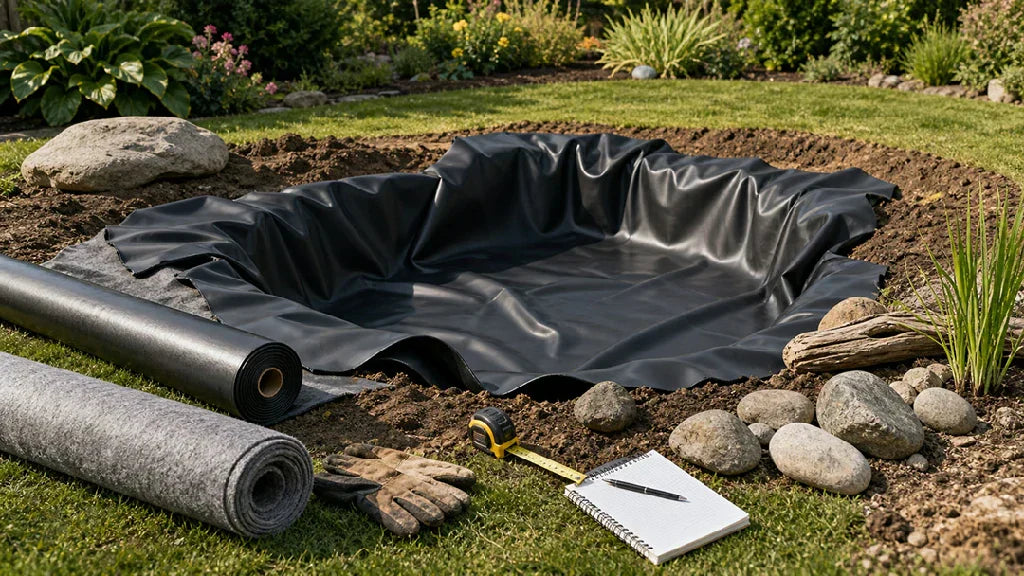
Step 3: Install Underlayment and New Liner
Lay the underlayment first.
Then position the new liner over it.
Try not to stretch the liner excessively because it will gradually settle into place.

Step 4: Refill and Adjust
As the pond fills with water, adjust the liner where necessary.
If you are upgrading the pond layout at the same time, a pond waterfall can create a natural-looking return flow and enhance the finished design.
Once the pond is full, return the fish and plants.
Poposoap pond liners are resistant to temperature extremes and contain no harmful chemicals, making them safe for fish and plants.
Poposoap underlayment is produced from 100% polypropylene non-woven fabric.
It resists mildew, insects, and rodent damage.

Advice on Maintaining the New Pond Liner
Monitor Water Levels
Checking water levels regularly is a good practice.
Sudden changes may indicate a leak or another issue.
Keeping a pond filter system clean and running properly can also help reduce debris buildup and support stable water quality.
Remove Sharp Objects
Sharp stones and debris should not remain inside the pond.
These objects may puncture the liner over time.
Protect the Liner Surface
Heavy objects should not be placed directly on the liner whenever possible.
Use protective materials underneath them.
Control Nearby Vegetation
Trim bushes and surrounding vegetation regularly.
This helps prevent roots from growing too close to the liner.
Conclusion
Replacing a pond liner requires preparation and understanding.
Recognizing the signs of deterioration early allows you to take action before larger problems develop.
Knowing the best time for replacement and understanding the associated costs also makes the process easier.
Proper planning, quality materials, and good maintenance practices all contribute to a longer-lasting pond.
For sunny ponds, a solar fountain can add gentle water movement and a more inviting finishing touch.
You can learn more about pond liners here: Pond Liner vs. Preformed Ponds

10' x 10' 45mil EPDM Pond Liner
$139.00
10' x 10' EPDM rubber pond liner in durable 45 mil thickness. Flexible, UV-resistant, fish-safe liner for small pond builds and irregular water garden shapes.
FAQ
1. How long does a pond liner last?
Most EPDM liners last many years, often more than ten years.
2. Can I patch the liner instead of replacing it?
Yes, small leaks can often be repaired. However, widespread damage usually requires replacement.
3. Which material should I choose when replacing a pond liner?
EPDM liner is generally preferred because of its flexibility and durability.
4. Should I use underlayment?
Yes, underlayment protects the liner and helps extend its service life.


Leave a comment
All comments are moderated before being published.
This site is protected by hCaptcha and the hCaptcha Privacy Policy and Terms of Service apply.