

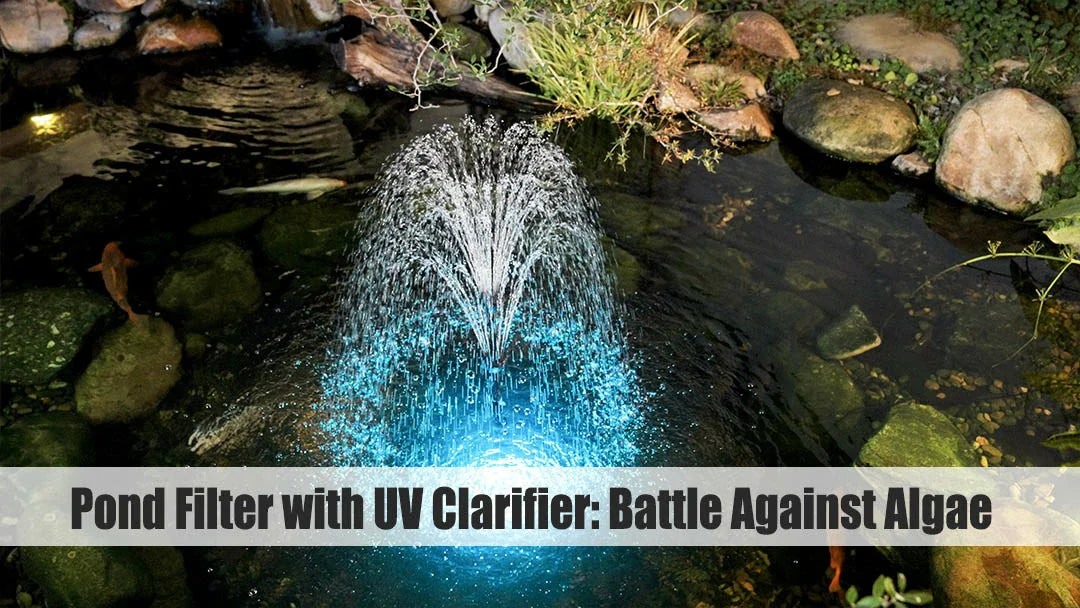
Anybody who has ever maintained a pond will eventually be faced with the problem of algae. Sometimes it will form gradually. Sometimes the water will turn green overnight. This is when they begin wondering if a UV clarifier is really necessary.
A pond filter and a UV clarifier can be said to be a kind of direct solution to pond algae issues. While this statement is correct, there is more to be said. A UV system does not somehow "cure" a pond. What it does is focus on one aspect of this algae problem.
This article helps you understand why UV clarifiers are used so universally, how they work in ponds, and where their limitations lie.
Why Algae Becomes a Problem in Ponds

Algae are not an indicator of pond failure. The truth is, algae are present in almost all pond environments. The problem comes when there is an imbalance of algae.
Ponds collect nutrients readily. Fish debris, fallen leaves, pollen, and leftover food decay to become nutrients that algae can utilize. Warm water and bright sunlight speed up the process. Still water supports the suspension of algae cells so that they can multiply.
As algae takes over, water becomes cloudy or green. These changes also impact the pond in other ways:
- Fish may face oxygen stress during nighttime hours.
- Plants get less sunlight.
- Care becomes more difficult.
Traditional mechanical filters eliminate unwanted debris, but they are not effective in preventing the reproduction of microscopic algae cells. This is where the UV clarifier comes in.
How UV Clarifiers Function within a Pond Filter System

The UV clarifier operates by illuminating moving water with ultraviolet light in pond systems. As water passes through this apparatus, single-celled algae are exposed to ultraviolet light.
This disrupts the reproduction of the algae. The cells start to clump together rather than reproduce. Once they are grouped, they are either filtered out or settle out of the water.
This results in an obvious question: "Will UV light kill algae?"
In practical terms, yes. But not immediately. UV does not kill the algae instantly. It prevents the algae from completing its growth cycle.
Also, because the treatment system is effective only for water that flows through the system, water circulation is important. A UV light for a fish pond performs best where water circulation is constant and evenly distributed around the pond.
Will UV Light Kill All Types Of Algae?
At this point, some people get confused. UV clarifiers work well against free-floating algae. Sometimes this type of algae is called green water algae. They tend to drift in the water and pass right through the UV chamber.
However, string algae and blanket weed have different properties. They tend to stick to the rocks, liners, or stems of aquatic plants. Due to their nature of being attached to surfaces, they do not pass through the UV unit.
This explains why a UV algae killer could eliminate green water algae but not algae on the surface. Yet the unit is still doing its job — it is eliminating the algae it is designed to target.
For it to be effective in the long term, it has to be used in conjunction with other initiatives. It is only one of the factors that can be used in maintaining clean water. Supporting practices include:
- Regular mechanical filtration to remove debris
- Biological filtration to manage nutrients
- Consistent water circulation and aeration
Choosing the Right UV Clarifier for Your Pond

The choice of UV clarifier to purchase depends on the size of the pond where the equipment will be used. A UV clarifier that is too small for the pond will not work well.
Flow rate is equally important. If the water is flowing too quickly through the UV chamber, it is not given sufficient exposure time. A slower and controlled flow rate works better.
For some pond owners, fully integrated systems may make pond setup easier. Kits available in the market that may help pond owners achieve filtration, circulation, and water movement functions simultaneously through only one design include the 5' x 5' Pond Decor Kit by Poposoap.
In the case of ponds which hold larger quantities of fish or have larger circulation requirements, units such as the 40W 660GPH AC Pond Filter Fountain by Poposoap would be more suitable.
Tips for Maintaining the Long-Term UV Performance of Displays
UV clarifiers require maintenance, even if they are working properly. The bulb will degrade with time, usually before it stops lighting. Manufacturers usually recommend changing UV bulbs annually.
Key maintenance steps include:
- Replace the UV bulb annually — performance degrades before the bulb fully stops working.
- Clean the quartz sleeve — biofilm on the sleeve will inhibit the passage of UV light.
- Turn off the UV unit during winter — particularly in colder regions where water is not being circulated.
Conclusion
Having a pond filter and a UV clarifier is not a panacea, but it is one of the best methods of controlling green water algae in a pond. The equipment functions properly if it is used in the correct manner.
Knowing how UV operates and what it does or does not do helps pond owners harness its potential without making misguided expectations. With proper filtration and basic pond maintenance, a UV clarifier becomes a formidable tool for pond owners battling algae.
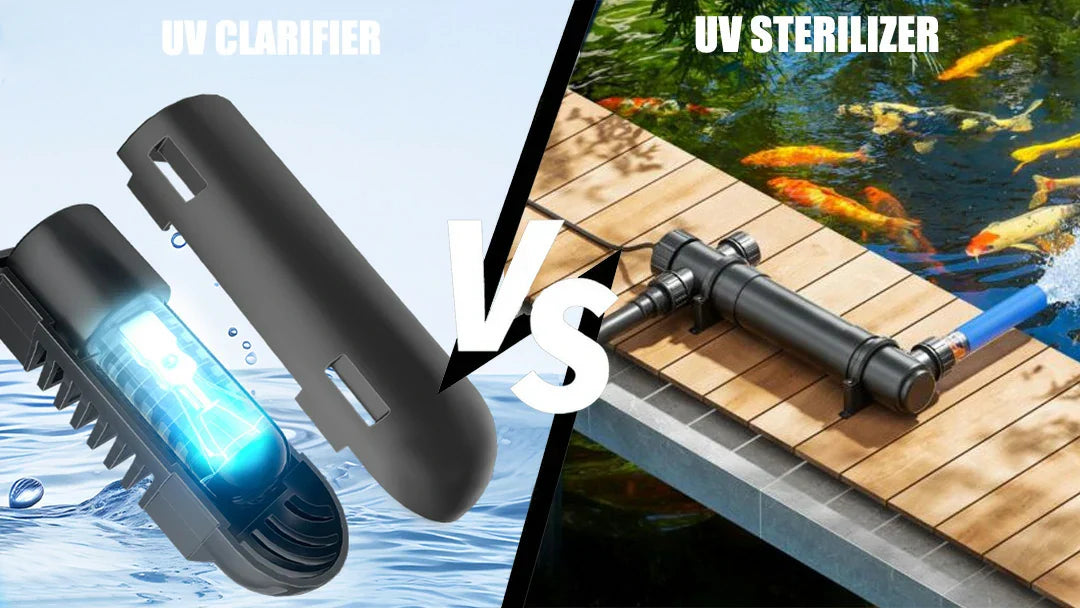
READ MORE: How UV Clarifiers & Sterilizers Work?

P2300 40W 660GPH AC Pond Filter Fountain with UV Clarifier
$89.99
All-in-one pond filter with UV light: 660GPH pump for 1180-gal ponds, 3 nozzles, diverter valve, multi-stage media. Fish pond filter with UV light.
FAQs
UV light: Does it harm fish or bacteria?
No. UV light affects only those organisms which pass through the UV chamber and doesn't harm the fish or biological filtration.
How long does it take to see results with UV Clarification?
In most cases, the ponds start to clarify within a few days depending on the pond size and circulation of water.
Are UV clarifiers constantly used?
Yes. It can be left operational throughout the algal season.
Will UV eliminate algae growing on rocks or liners?
No. UV only affects free-floating algae.
Do I still need filtration if UV is used?
UV works better when it's integrated within a full filtration and circulation system.

Leave a comment
All comments are moderated before being published.
This site is protected by hCaptcha and the hCaptcha Privacy Policy and Terms of Service apply.