
Fish anatomy is a fascinating subject, especially for koi and pond fish enthusiasts. Beyond their beautiful looks, knowing the structure of your fish is important. This keeps them healthy and creates a great pond environment. Let’s dive into koi and pond fish anatomy and see how it relates to their behavior and care.
Why Understanding Fish Anatomy Matters for Pond Owners
Learning about koi and pond fish anatomy is rewarding. This is true for both new and experienced koi keepers. The design of a fish dictates how they move through the water, feed, and interact with their environment. Knowing their anatomy can help you:
- Detect early signs of disease or injury.
- Customize care routines tailored to the fish’s needs.
- Appreciate how koi anatomy influences their graceful swimming and sociable nature.
By learning about their anatomy, pond owners can ensure their fish thrive in a healthy and balanced ecosystem.
External Anatomy of Koi and Pond Fish

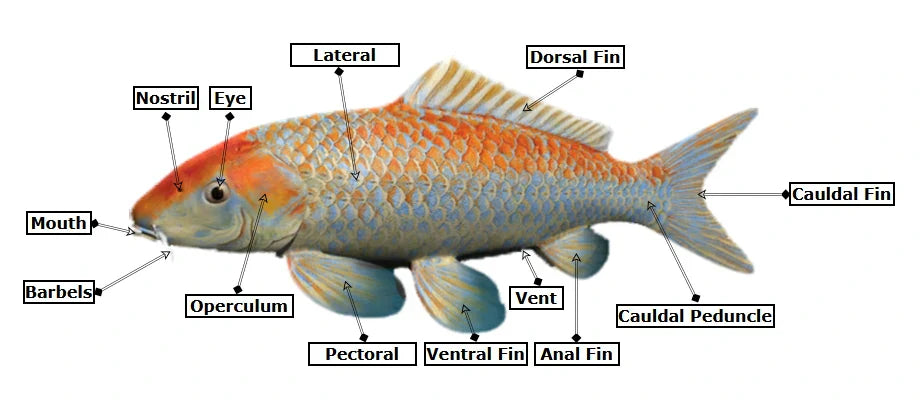
The external features of koi and pond fish perform several vital functions:
Scales
Scales act as a protective barrier against physical injury and infections. Koi scales also contribute to their stunning appearance, with variations in patterns and colors adding visual appeal.
Fins
The dorsal, pectoral, and caudal fins help koi maintain balance and swim efficiently. Healthy fins are essential for smooth and agile movement.
Gills
Koi rely on their gills to extract oxygen from water and expel carbon dioxide. Maintaining clean water is crucial to keeping their gills functioning properly. A solar fountain can help improve oxygen circulation and keep pond water moving naturally.
Eyes and Mouth
Koi have specialized eyes for underwater vision and a downward-facing mouth ideal for bottom feeding.
Internal Anatomy of Koi and Pond Fish

The internal structure of koi is just as fascinating as their external beauty:
Skeleton
Koi have a skeleton made of cartilage and bone, providing flexibility and strength for swimming. This allows them to glide effortlessly through the water.
Muscles
Muscles work in tandem with the skeleton, enabling koi to perform their characteristic graceful swimming motions.
Digestive System
Koi lack a stomach and rely on their intestines for digestion. This makes frequent, small feedings essential to avoid water pollution from uneaten food.
Respiratory System
Gills are vital for oxygen exchange, ensuring koi remain active and healthy.
Swim Bladder
This internal organ allows koi to regulate their buoyancy, helping them hover or swim at various depths with ease.
The Connection Between Anatomy and Behavior
Koi anatomy directly influences their behavior:
Feeding Behavior
Koi have mouths shaped to help them feed at the bottom of the pond. Their simple digestive system needs small, frequent meals to stay healthy.
Swimming Patterns
Fins and muscles enable koi to swim gracefully, making them a mesmerizing presence in your pond. A small waterfall can enhance water movement while creating a more natural pond environment.
Social Interaction
Koi are highly social and curious, using their sensory systems to explore their environment and interact with other fish. They are often the first to greet you at the water’s edge.
Tips for Maintaining Healthy Koi Based on Anatomy
To keep your koi healthy and happy, follow these anatomy-based care tips:
Provide Ample Space: Ensure your pond is large and deep enough to accommodate their growth and movement.
Feed Appropriately: Offer high-quality koi food in small portions to align with their digestive needs.
Monitor Water Quality: Regularly test and clean your pond to maintain ideal oxygen levels and prevent gill-related issues. A pond filter can help remove debris and support cleaner, healthier water conditions.
Handle with Care: Avoid overcrowding to protect fins and gills from injury and stress.
Elevate Your Pond with POPOSOAP
Understanding koi anatomy helps you create an environment where they can thrive, ensuring a healthy and vibrant pond. Ready to upgrade your pond care routine? Check out POPOSOAP’s Pond Collection for all the tools and accessories you need. Create a beautiful and thriving pond!

SPF130 8W 80GPH Solar Pond Filter Fountain with Battery
$59.99
Solar pond filter with battery backup: 8W panel + 3000mAh battery, multi-stage media, quiet dry-run protection. Solar powered pond filter with battery backup.
Frequently Asked Questions
Why do koi need clean water for anatomy health?
Clean water protects gills and supports proper oxygen intake.
What helps koi control buoyancy in water?
The swim bladder organ regulates their depth and flotation.
How should you feed koi based on their anatomy?
Feed small, frequent meals—they lack a true stomach.