

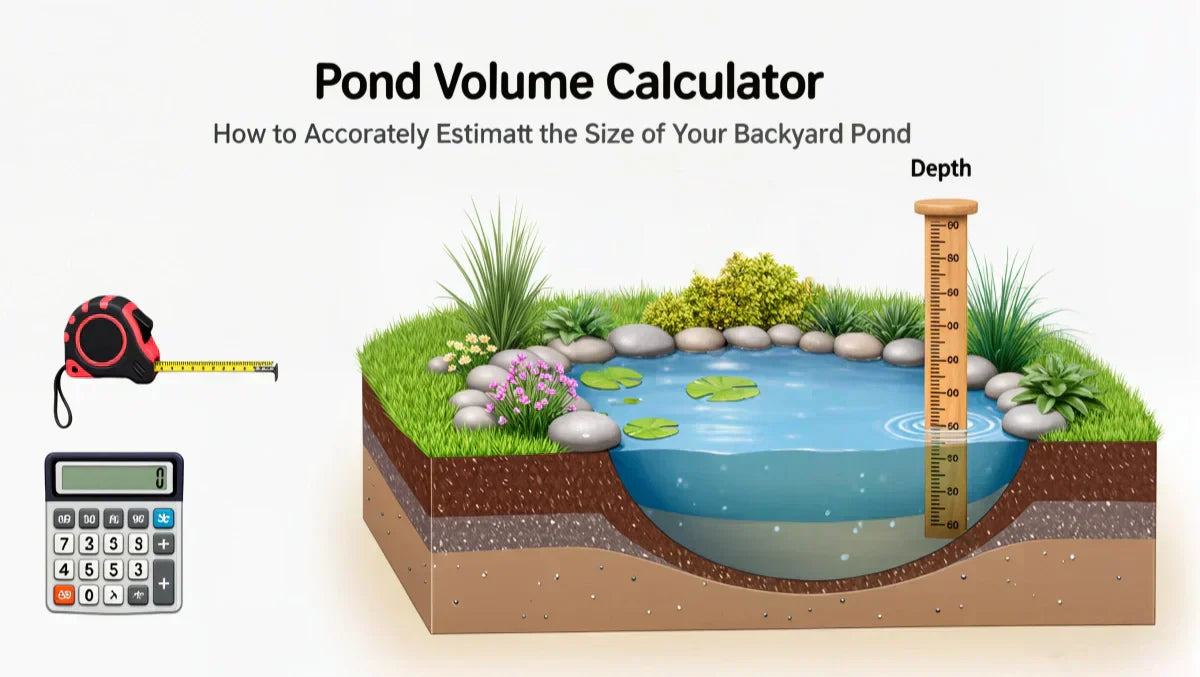
Imagine adding a new school of koi or dosing an algaecide only to learn—too late—that your pond holds twice the water you thought. Everything from filter sizing to medication safety hinges on one number: volume. In this guide, you’ll learn the fast math behind any pond volume calculator, how to handle free-form shapes, and why Poposoap’s solar pumps and waterfalls work even better once you know your true gallons.
Why Knowing Your Pond Volume Is So Important
- Correct filtration & pump flow. Filters are rated by gallons per hour; undersize them and waste wins.
- Accurate dosing. Meds, de-chlorinators, and beneficial-bacteria products are measured “per 100 gal.” Guess wrong and you stress fish—or waste money.
- Heating & cooling plans. Gallon count decides heater wattage and how much cold top-up water your koi can handle.
- Equipment purchase. A Poposoap 280 GPH solar filter box, for instance, comfortably turns over 200–280 gal ponds once per hour—if you know the number first.
Standard Formula for Pond Volume

For rectangular or roughly oval backyard ponds, treat the outline like a box and multiply:
Gallons (US):
Length (ft) × Width (ft) × Average Depth (ft) × 7.48
Liters:
Length (m) × Width (m) × Average Depth (m) × 1000
Average depth means measure the shallow shelf and the deepest pit, adding them, then divide by two.
A pond measuring 10 ft × 8 ft with an average depth of 2.5 ft holds
10 × 8 × 2.5 × 7.48 ≈ 1 496 gal.
Estimating Volume for Irregular-Shaped Ponds
- Divide & conquer. Sketch the pond, break it into simple rectangles or circles, calculate each, then add.
- Mean-diameter method (kidney shapes). Measure the longest and shortest diameters, average them, use that as “width.”
- Flexible depth probe. Push a broom handle to the liner at ten random points; average those readings for a truer depth.
- Bag-and-bucket check (small patio ponds). Time how long your pump fills a 5-gal bucket; multiply fill time by bucket volume to estimate gallons.

How to Calculate Pond Volume: Poposoap Pond Volume Calculator
We've created this calculator tool to help you plan your water garden, tailored to different scenarios and needs.
Input boxes: Length, Width, Deepest point, Shallowest point, shape selector (rectangle, oval, kidney, free form).
Outputs: Gallons, liters, suggested Poposoap pump/filter size, and an eco-upgrade tip—like adding a 12 W solar waterfall pump for extra turnover and aeration.
If you have any questions about the calculator or need assistance, please don't hesitate to contact us.

Why Accurate Volume Estimates Matter
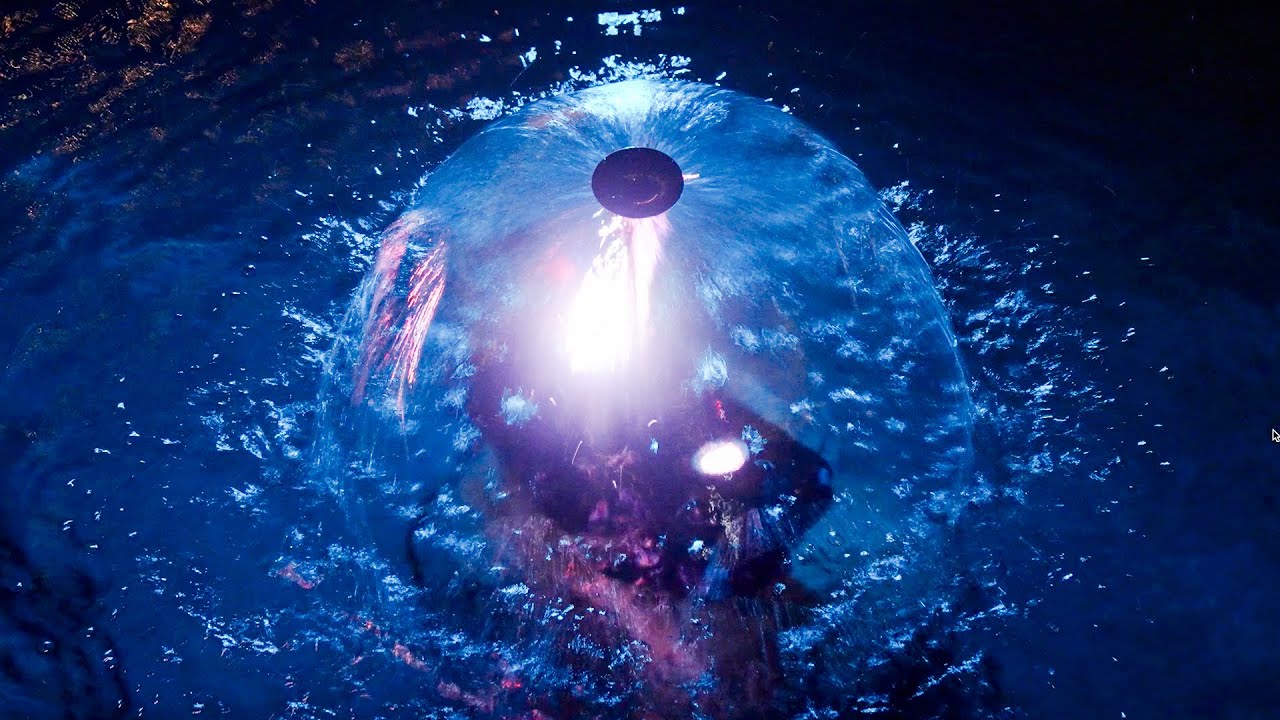
- Oxygen management. Hot weather slashes dissolved O₂. Matching pond gallons to a Poposoap floating fountain ensures the right 120–320 GPH plume for cooling and gas exchange.
- Chemical safety. Formalin-malachite treatments for Ich require 10 mL per 100 gal—double-check or risk gill burn.
- Energy savings. Oversized pumps waste watts; solar systems shine when perfectly matched to water volume.
- Fish stocking. A rule of thumb is 1 in. of koi per 10 gal. Without a reliable pond size calculator, “five cute juveniles” can overload bio-filters as they grow.
Quick Conversion Cheat-Sheet (Text Version)
Keep these reference points handy when you only have cubic feet or meters to work with:
- 1 cubic foot of water equals 7.48 US gallons or roughly 28.3 liters.
- 10 cubic feet translate to about 74.8 gallons (≈ 283 L).
- 25 cubic feet hold around 187 gallons (≈ 708 L).
- 50 cubic feet come to about 374 gallons (≈ 1 416 L).
- 100 cubic feet equal roughly 748 gallons (≈ 2 832 L).
A quick mental shortcut: multiply cubic feet by 7.5 for a close-enough gallon figure, then refine if needed.
What Size Pump Do I Need?
| Pond Volume | Suggested Flow Rate | Recommended Poposoap Product Range |
|---|---|---|
| Under 100 gal | 80–160 GPH | 6W / 6.5W / 8W Bird Bath or Small Solar Fountain Pumps |
| 100–250 gal | 160–320 GPH | 12W 160GPH or 200–320GPH Solar Fountain / Filter Pump |
| 250–500 gal | 320–580 GPH | 20W 320GPH or 25W 410GPH Pond Filter Kit |
| 500–800 gal | 580–660 GPH | 40W 580GPH Solar Filter Kit or 40W 660GPH Filter Kit |
| 800–1,200 gal | 660–880 GPH | 40W 660GPH Waterfall Kit or 60W 880GPH Submersible Pump |
| 1,200+ gal | 880–1,600 GPH | 45W 1600GPH Submersible Pump / Larger Waterfall Setup |
For reference only. Please check our calculator page for more details.
Conclusion: Know Your Water Before You Add Life
Every thriving pond project starts with a reliable pond gallon calculator. Measure accurately, plug the numbers into the Poposoap volume widget, and you’ll know exactly which solar filter box, waterfall pump, or LED package will keep your water clear and your fish stress-free. Take ten minutes with a tape measure today; save countless headaches—and koi—tomorrow.
READ MORE: How do I know what size fountain pump to buy?

55W 580GPH Solar Waterfall Pump Kit with 8" Spillway
$218.99
55W Folding Solar Panel for Efficient Power. Zero electricity cost, no outlet reliance, clogging, high maintenance, noisy operation, and hard installation, keeping water clear for fish and plants.
Frequently Asked Questions
How to calculate rectangular pond volume?
Use length × width × avg depth × 7.48 to get US gallons.
Why is pond volume calculation important?
It ensures correct equipment, safe dosing and proper fish stocking.
How to measure irregular pond volume?
Divide into shapes, calculate separately, then sum all volumes.

Leave a comment
All comments are moderated before being published.
This site is protected by hCaptcha and the hCaptcha Privacy Policy and Terms of Service apply.