

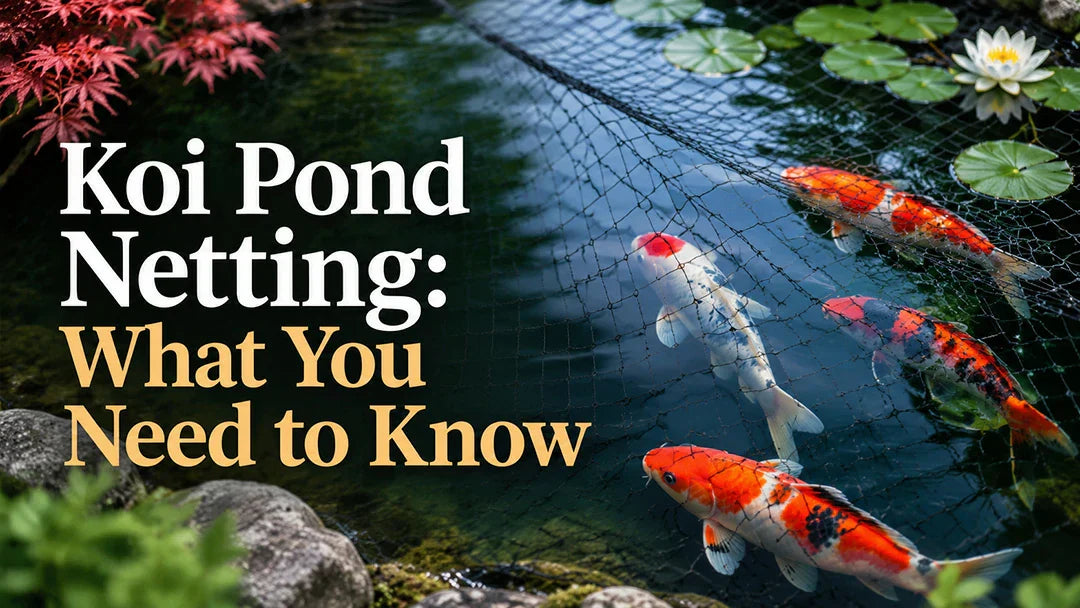
Netting for ponds is one of those things you always think you'll get around to later. Solar fountain Pumps are more exciting. Your fish are more fascinating. Your plants are more intriguing. Safety is what matters most.
The average person does not even think about netting for ponds until it is too late — until they have lost a fish or spent an inordinate amount of time cleaning out leaves. In the following article, we'll talk about the ins and outs of netting for ponds.
What Is Pond Netting and Why Is It So Important?
Pond netting is a safety mesh that you place over your pond. It lets sunlight, oxygen, and rain pass through. It also acts as a safety barrier between your fish and the world.

Protection from Pests
Birds, such as herons, are very skilled predators. They are able to remain completely still for long periods of time. When they spot a fish, they strike quickly. In fact, herons primarily feed on fish and amphibians.
Koi pond netting prevents a bird from reaching into your pond and catching your fish. It does not hurt the bird. It simply does not let the bird get into your pond.
Keeping Leaves and Debris under Control
Leaves falling into your pond might seem harmless. Once they fall into your pond, however, they start to break down and release waste (decomposing plant material). This increases the level of ammonia (a toxic nitrogen compound) in your pond.
Netting for ponds catches most leaves before they fall into your pond. This makes your life easier.
Preventing Your Fish from Jumping Out
Koi can jump, especially during feeding or spawning. A securely fastened net minimises the chances of escapees. This is especially crucial for shallow ponds.
Added Safety Layer
Netting does not qualify as a safety cover. However, it may serve as an additional layer to keep pets or children out.
Types of Netting for Ponds and How to Choose
There are different types of netting available for ponds. What to choose depends on your geographical location and pond configuration.
Lightweight Leaf Netting

This type of netting is light and thin. This makes it easy to remove and store.
Best for:
- Autumn leaf season
- Temporary installation
- Small ponds
Cons: It may not be sufficient to withstand heavy predator attacks.
Heavy-Duty Koi Pond Netting

This type of netting is thick and sturdy. This minimises tears and stretches.
Best for:
- Heron-prone areas
- Koi pond collections
- Year-round installation
This netting type should be chosen to keep birds out but still allow air to circulate.
Raised Frame Net Systems

Some people choose to cover their ponds with a simple frame. This frame ensures that the netting stays above water level.
Pros:
- Keeps netting from sagging
- Prevents debris from sinking to the pond floor
- Increases durability
This system is ideal for larger koi ponds.
How to Cover a Pond with Netting: Step-by-Step Guide
If you are wondering how to cover a pond with netting, here are some steps to follow.
- Measure carefully. Measure your pond by determining its longest and widest dimensions. Add some extra to account for anchoring. If your pond is curved, be sure to add some extra to avoid tension problems.
- Choose the proper mesh size. Smaller mesh size prevents predators from getting to your fish. Larger mesh size may be necessary to keep leaves out. Large gaps should be avoided. Birds can reach through surprisingly small openings.
-
Secure the edges. You can use the following materials for securing the edges of the netting:
- Ground stakes
- Landscape pins
- Heavy stones
- Edge clips
- Elevate when possible. When the netting is placed directly on the water, the leaves may sink below the netting. It is therefore recommended that the netting be slightly elevated for better performance.
- Inspect regularly. After heavy rain or wind, the netting may sag or be torn. It is therefore recommended that the netting be inspected regularly for any damage.

Maintenance Tips and Common Mistakes with Koi Pond Netting
Koi pond netting is a great product for koi ponds, but like any other product, it has its maintenance tips and common mistakes associated with its use.
Maintenance Tips
- Remove the leaves caught in the netting weekly.
- Check the netting after a storm.
- Store the netting after the end of the season.
- Replace the netting if it is damaged.
Common Mistakes
- Installing the netting loosely. The netting may trap animals or may not prevent predators from going through the netting since it is loosely installed.
- Not considering the water quality. The netting may trap the unwanted materials in the pond, but it does not clean the water. Water cleaning is still important.
- Using the netting as the sole security measure. It is worth noting that the use of the net reduces the amount of organic waste in the water, while the water's quality is still dependent on the filtration system. The Poposoap filtration series can assist in the management of suspended waste in the water. Therefore, the use of the net provides a protective balance.
Conclusion
Pond netting may not appear to have a great impact on the protection of ponds, but it is worth noting that it plays a significant role in the protection of ponds, as discussed in the article. Therefore, the use of the net in ponds is of great importance, as it helps reduce the amount of waste in the water.
Regardless of the type of net used, such as the lightweight leaf net or the heavy-duty koi pond net, the installation process is of great importance. Therefore, it is worth noting that the installation of the pond net should be done carefully, as discussed in the article.
Poposoap believes that having a beautiful pond should not mean that it should not have easy maintenance. Therefore, the use of the net in ponds provides a protective balance, as discussed in the article.
If safety is your next concern, you can check the following article, which provides an in-depth discussion on the design of a kid-safe pond: Kid-Safe Pond Design Guide.

P3203 20W 280GPH Solar Pond Filter Fountain
$119.99
Clean and oxygenate your pond with this 20W solar pond filter pump. Eco-friendly 280GPH flow ideal for small to medium backyard water features.
Frequently Asked Questions
1. Is the Pond Net Necessary for the Entire Year?
No, the pond net is not necessary for the entire year. Some ponds need the pond net for only part of the year.
2. Can the Pond Net Cause Damage to the Koi in the Water?
Yes, the pond net can cause damage to the koi in the water. The koi will press against the pond net.
3. Does Netting Prevent Sunlight from Entering the Pond?
Netting permits sunlight and rain to pass through. The mesh size of the netting controls the flow of sunlight.
4. Will the Pond Net Stop Predators?
It will greatly reduce the predators.

Leave a comment
All comments are moderated before being published.
This site is protected by hCaptcha and the hCaptcha Privacy Policy and Terms of Service apply.