

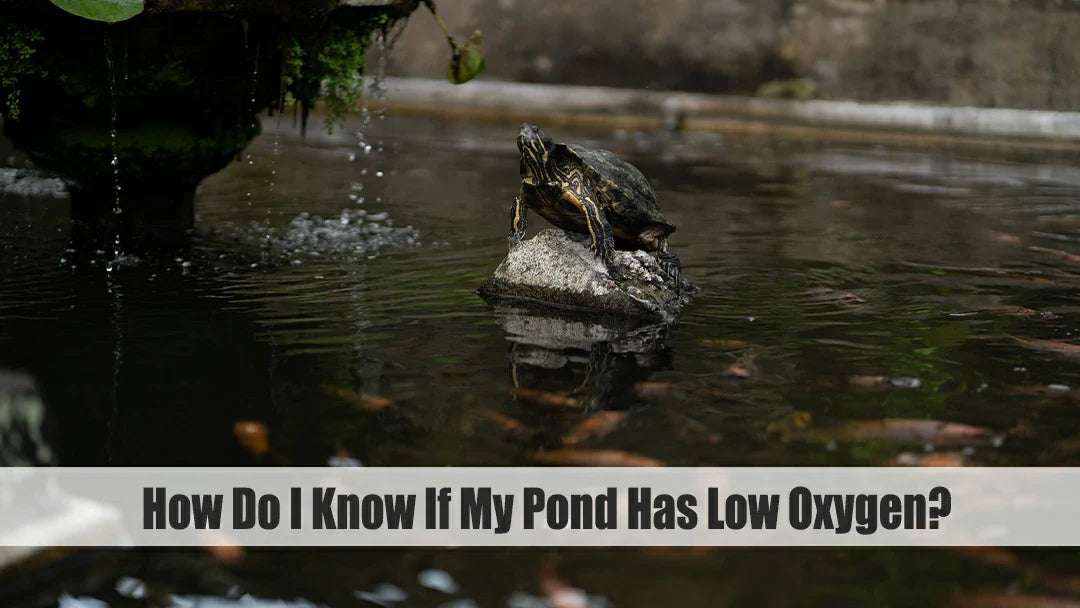
Low oxygen in a pond is one of those issues that people don't usually plan for. Pond owners usually notice it only after something feels "off." The fish are still living. The water looks fine. But the pond feels "off."
Dissolved oxygen refers to the oxygen that is blended into pond water. Fish breathe oxygen using their gills. Beneficial bacteria require oxygen to help degrade pond wastes. When pond oxygen drops, the pond does not collapse. It goes into trouble silently.
Unlike a river or a stream, ponds do not replenish oxygen on their own. In fact, oxygen depletion is a quite common issue in ponds, due to a lack of water surface contact, plant action, or water movement. In this article, we'll discuss how a pond loses oxygen, how you can detect this issue, and what you should do before it gets critical.
Why Oxygen in Ponds Drops Even When All Appears to Be Fine

Oxygen does not simply vanish. It is consumed.
Oxygen is constantly being consumed in fish respiration and the decomposition of fish wastes, fallen leaves, and other organic materials. Warm water, on the other hand, contains less oxygen compared to cold water. It is for these reasons that the early morning hours of summer are the most dangerous time for ponds.
Ponds do not have current either. The rate at which water with no current absorbs oxygen is low. If there is little movement on the surface of water, then plants are relied on heavily. Plants put out oxygen during the day and use it at night. This makes oxygen crashes common just before sunrise.
The U.S. Geological Survey describes the way in which dissolved oxygen varies naturally in water and how low levels act as a stress on aquatic life: Dissolved Oxygen and Water.
The key thing to remember is that oxygen-related issues are rarely the result of one problem. Usually, they occur when several minor issues happen to come together at the wrong time.
Signs of Low Oxygen in a Fish Pond

Subtle but Important Changes
If you're attempting to determine if the oxygen in the pond is low, don't pay attention to the water — observe the fish instead.
The initial changes are often difficult to spot:
- Fish begin to spend more time at the surface.
- Fish begin to congregate in areas with water movement, such as in front of a waterfall or a return pipe.
- Feeding reactions become slower — fish move toward the feeding site, but they hold back.
These symptoms are often thought to be weather-related or normal, but they are actually some of the first indicators of low oxygen in a fish pond.
When It Becomes an Emergency
With less oxygen, fish start to gulp at the surface. That's not curiosity — that's distress. They might experience problems with balance. They might tilt or freeze at the surface.
Timing is a consideration. Levels of oxygen tend to be at their lowest in the early morning. Seasonal changes are also a consideration. Heat waves, algae die-off events, or the sudden calm following a storm can all be contributing factors.
Sometimes people worry about the opposite issue and look for symptoms of "too much" oxygen in fish tank arrangements. In an outdoor pond, an overabundance of oxygen is almost inconceivable. It is the lack of oxygen that is the problem.
How to Measure Oxygen Content in Water

Observation is the recognition that a problem exists. Measurement helps you understand the magnitude of a problem.
- Dissolved oxygen meter — provides the most accurate results.
- Test kits — can also be used and provide a reliable estimate.
Such tools help answer the question of how to measure the oxygen content of water. With a small system, one may wonder how to check the oxygen content in an aquarium environment. The testing process is similar, but since ponds are impacted by more variables, the readings can vary.
Even without instruments, water motion is a good indicator. Still surfaces decrease oxygen. Motion, bubbles, and dripping water all increase it.
What Actually Helps When Oxygen Is Low
When fish are gasping, splashing water to disturb the surface can be helpful. Turning on existing pumps and splashing the water back into the pond can temporarily increase oxygen levels.

For overall stability, aeration should occur regularly. Steps to take include:
- Install a dedicated aeration system — such as the Pond Aerator, 15W Solar Oxygen Pump for Outdoor Fish Ponds by Poposoap. This ensures a continuous supply of air in the pond when the sun is up.
- Add a waterfall or pump — a 40W 660GPH Electric Waterfall Pump Kit with Spillway increases water circulation and surface agitation, assisting in the efficient transfer of oxygen into the water.
- Reduce oxygen demand — reduce feeding during warm weather conditions, remove excess debris, and do not overcrowd. It's easier to avoid oxygen problems than to repair them.
Why Oxygen Problems Keep Returning
Quite often, ponds will recover from a low-oxygen situation and then suffer another one within a couple of weeks.
This is what happens when symptoms are treated but the underlying cause is overlooked. Poor circulation, too much nutrition, and too much organic buildup remain in the background, continuously consuming oxygen.
Oxygen is like breathing. If one breathes through a narrow passage, it does not matter how healthy a person is. The same applies to ponds.
Conclusion
How can you determine that your pond has low oxygen?
You begin by observing the fish. Certain behaviors will give you early warnings: hovering at the surface, slow movement, gasping. Then you can verify the presence of the problem through appropriate testing and act promptly. This is one area where pond problems progress quickly compared to most other issues.
Good circulation, proper aeration, and careful feeding practices can eliminate most oxygen crashes before they occur. If you would like to examine a particular style of aeration in depth, the following article is recommended: Advantages of Bubble-Style Aerator Nozzles

40W 660GPH Electric Waterfall Pump Kit with 8"x4.3" Spillway
$119.99
Create stunning waterfalls with this 40W 660GPH pond waterfall kit. Perfect for small ponds & backyard water features. Durable, efficient & easy to install.
Frequently Asked Questions
What Is a Safe Oxygen Level for Pond Fish?
Generally, fish will remain healthy above 5 mg/L.
Why Do Fish Gasp More in the Morning?
Oxygen levels are lowest just before sunrise.
Are Plants Alone Sufficient in Providing Oxygen?
No. Plants require oxygen at night, so they cannot be relied upon alone. Cloudy water doesn't necessarily mean that the water contains low levels of oxygen.
Should Aeration Be Done Throughout the Year?
Yes. The demand for oxygen varies but is never eliminated.

Leave a comment
All comments are moderated before being published.
This site is protected by hCaptcha and the hCaptcha Privacy Policy and Terms of Service apply.